
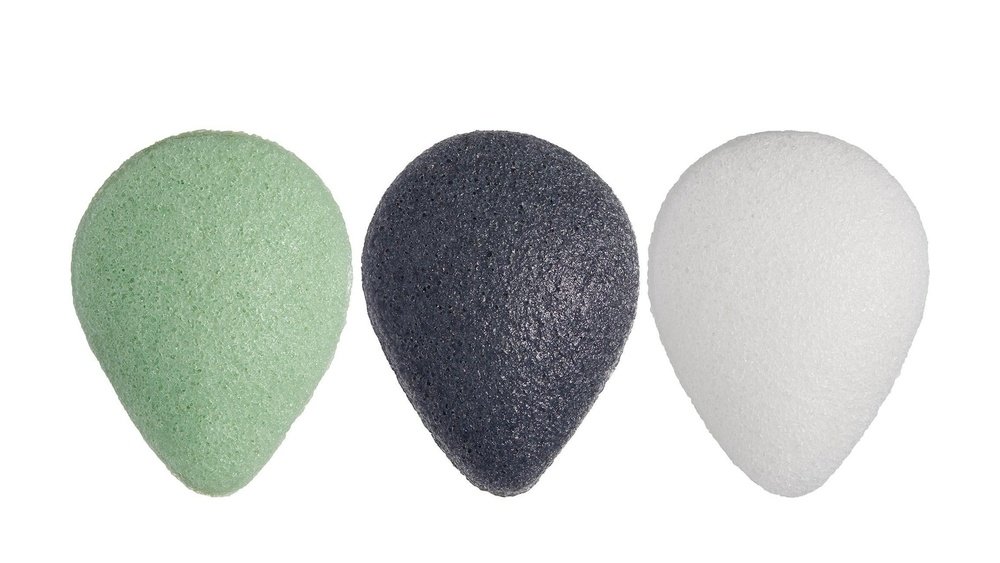
Konjac Sponge: What It Really Does, Charcoal vs Plain, and How to Use It Safely
Here is an awkward fact for anyone shopping for a konjac sponge: the American Academy of Dermatology’s face-washing advice says that anything other than your fingertips can irritate your skin. So is a soft plant sponge a gentle upgrade, or just one more thing to rub on your face? The honest answer depends on your skin, your technique and how well you dry it.
Quick answer: a konjac sponge is a porous pad made from the fiber of the konjac root, and it turns soft and springy once it soaks up water. It gives very mild mechanical exfoliation and helps you spread and rinse off a gentle cleanser. We found no clinical trial showing that it clears acne or changes skin long term, and charcoal versions have no proven extra benefit. Used lightly on skin that tolerates it, and replaced every one to three months, it is a reasonable budget tool.
The evidence is thin but points one way. Dermatologists class any sponge or cloth as mechanical exfoliation, which the AAD says suits oily, thicker skin better than sensitive, dry or acne-prone skin. A 2020 review in Clinics in Dermatology found that clinical evidence does not support claims that activated charcoal treats acne. Even the makers say one sponge lasts only one to three months.
None of that makes the sponge useless. It simply means you should buy it for comfort and gentle cleansing, not for miracle results.
Below: what the sponge is made of, the common myths, what charcoal really adds, a quick skin self-check, a step-by-step routine, drying and replacement, and when to skip it.
Recommended Konjac Sponges: Plain and Charcoal Options
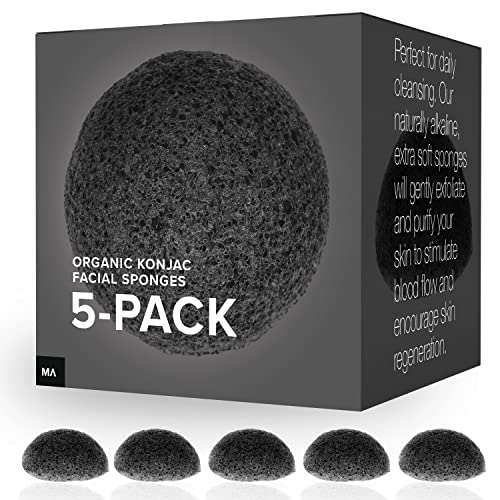
Every pick below is a konjac sponge: plain facial sponges, a teardrop set, and several charcoal versions for readers who want one. Treat the charcoal as a color and texture choice, and check each listing for size and whether it is meant for the face or the body. See how we test and choose products for the rules behind every pick.




Key Takeaways
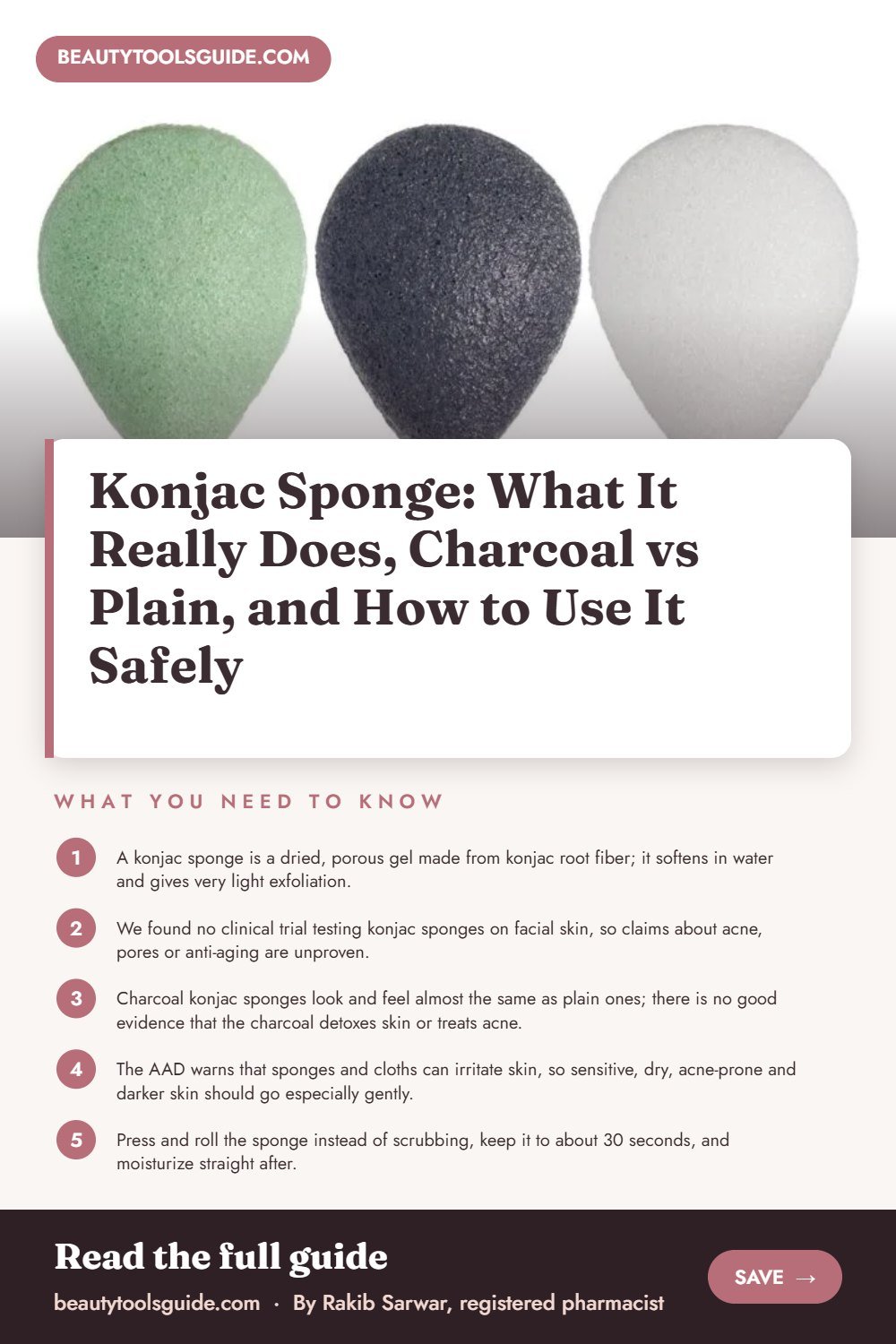
- A konjac sponge is a dried, porous gel made from konjac root fiber; it softens in water and gives very light exfoliation.
- We found no clinical trial testing konjac sponges on facial skin, so claims about acne, pores or anti-aging are unproven.
- Charcoal konjac sponges look and feel almost the same as plain ones; there is no good evidence that the charcoal detoxes skin or treats acne.
- The AAD warns that sponges and cloths can irritate skin, so sensitive, dry, acne-prone and darker skin should go especially gently.
- Press and roll the sponge instead of scrubbing, keep it to about 30 seconds, and moisturize straight after.
- Squeeze it (never wring it), dry it in open air, and replace it every one to three months.
- Stop if your skin stings, flakes or turns red, and skip it on broken, sunburned or inflamed skin.
What a Konjac Sponge Is Made Of
Konjac (Amorphophallus konjac) is a plant grown mainly in East Asia. Its root, often called a corm, is rich in a soluble fiber called glucomannan. The same fiber thickens foods and makes konjac noodles chewy.
To make a sponge, manufacturers turn that fiber into a firm gel and then give it an open, bubbly structure. One US patent for a glucomannan sponge describes the basic route: mix the fiber with water, set it with an alkali such as lime water, freeze the mass, rinse it with hot water, then dry it. The result is a light, hard puck full of tiny cells. The patent itself names cosmetic puffs and baby skin cleaners as intended uses.
That structure explains how a konjac sponge behaves. Dry, it feels stiff and scratchy. Once it soaks in warm water, the gel walls swell and soften, and the sponge becomes springy and slippery. The soft ridges give a faint polishing effect as they move over skin. Meanwhile, the open cells hold water and cleanser, so a little product spreads a long way.
Konjac Sponge Myths vs What the Evidence Says
Marketing for konjac sponges runs well ahead of the research. We searched the medical literature for trials that tested konjac sponges on skin and did not find any. Most claims come from product pages, not studies. Here is how the common promises hold up.
| Common claim | What we could verify | Fair takeaway |
|---|---|---|
| “Gentle enough for any skin” | The AAD says a washcloth, mesh sponge or anything other than fingertips can irritate skin. | Softer than many tools, but still friction. Some skin will not like it. |
| “Exfoliates dead skin” | Any textured tool gives mechanical exfoliation. The effect of a wet konjac sponge is very light. | A mild polish, not a replacement for a proper exfoliant if you need one. |
| “Clears acne and pores” | No clinical trial of konjac sponges for acne turned up in our search. | Unproven. Acne needs proven treatments. |
| “Balances skin pH” | We found no study measuring skin pH after konjac sponge use. | Treat as marketing. |
| “Charcoal draws out toxins” | A 2020 dermatology review found no clinical support for charcoal skin claims. | The charcoal is mostly cosmetic. |
| “Lasts for ages” | One maker says a sponge lasts one to three months. | Plan to replace it regularly. |
Lab research on konjac fiber does exist, but it looks at food, gut health and wound dressings. Those findings do not tell you what happens when you rub a dried konjac sponge on your cheeks, so we have left them out.
Charcoal Konjac Sponge: What the Charcoal Does and Does Not Do
A charcoal konjac sponge is a regular konjac sponge with powdered charcoal, often from bamboo, mixed into the gel. That is why it looks gray or black. Many listings call it detoxifying, pore-clearing or ideal for acne.
Activated charcoal has a real medical use: doctors give it by mouth to bind some swallowed poisons in the gut. However, binding a poison in the stomach is a very different job from treating skin. A 2020 review in Clinics in Dermatology looked at charcoal in cosmetics. It concluded that clinical evidence does not support claims that charcoal products treat acne or dandruff. It also found no evidence for exfoliating or anti-aging effects, though it described charcoal as generally safe.
A sponge also adds a practical problem. Charcoal is locked inside the dried gel, and you only touch skin with it for seconds before rinsing. So even if charcoal did something special, a brief wipe gives it little chance to work.
| Feature | Plain konjac sponge | Charcoal konjac sponge |
|---|---|---|
| Base material | Konjac fiber gel | Konjac fiber gel plus charcoal powder |
| Feel when wet | Soft and springy | About the same; some feel slightly firmer |
| Proven skin benefit from the additive | Not applicable | None shown in clinical studies |
| Shows dirt and wear | Discoloration is easy to spot | Dark color hides stains and early mold |
| Who it suits | Anyone who wants the gentlest version | Anyone who prefers the look; not a special acne tool |
Our view: choose charcoal if you like it, but not because you expect it to clear breakouts. The dark color has one downside, too. Mold or residue is harder to see, so dry and replace a charcoal sponge on schedule rather than waiting for visible changes.
Is a Konjac Sponge Right for Your Skin? A Quick Self-Check
Run through these questions before you use one. They follow the AAD’s exfoliation advice, which says to match the method to your skin type.
Green light: try it, gently
- Your skin is normal, combination or oily and rarely stings.
- You like a cleansing tool but find brushes or washcloths too rough.
- You are not using retinoids or benzoyl peroxide on the same area.
Amber light: go slow, a few times a week at most
- Your skin is dry, sensitive or darker, and prone to dark spots after irritation.
- You use retinoids, benzoyl peroxide or acid exfoliants.
- You have mild, non-inflamed breakouts.
Red light: skip it for now
- Your skin is sunburned, cut, cracked or freshly treated with a peel or laser.
- You have active eczema, rosacea flares or painful, inflamed acne.
- Your skin already burns, flakes or turns red after cleansing.
The AAD’s guide on how to safely exfoliate at home also notes that people with darker skin tones may develop dark spots after strong exfoliation. That makes light pressure more important than any sponge feature.
How to Use a Konjac Sponge Step by Step
The goal is to let the soft, wet sponge carry cleanser across your skin with almost no pressure. These steps combine the AAD’s face-washing tips with the care advice makers give.
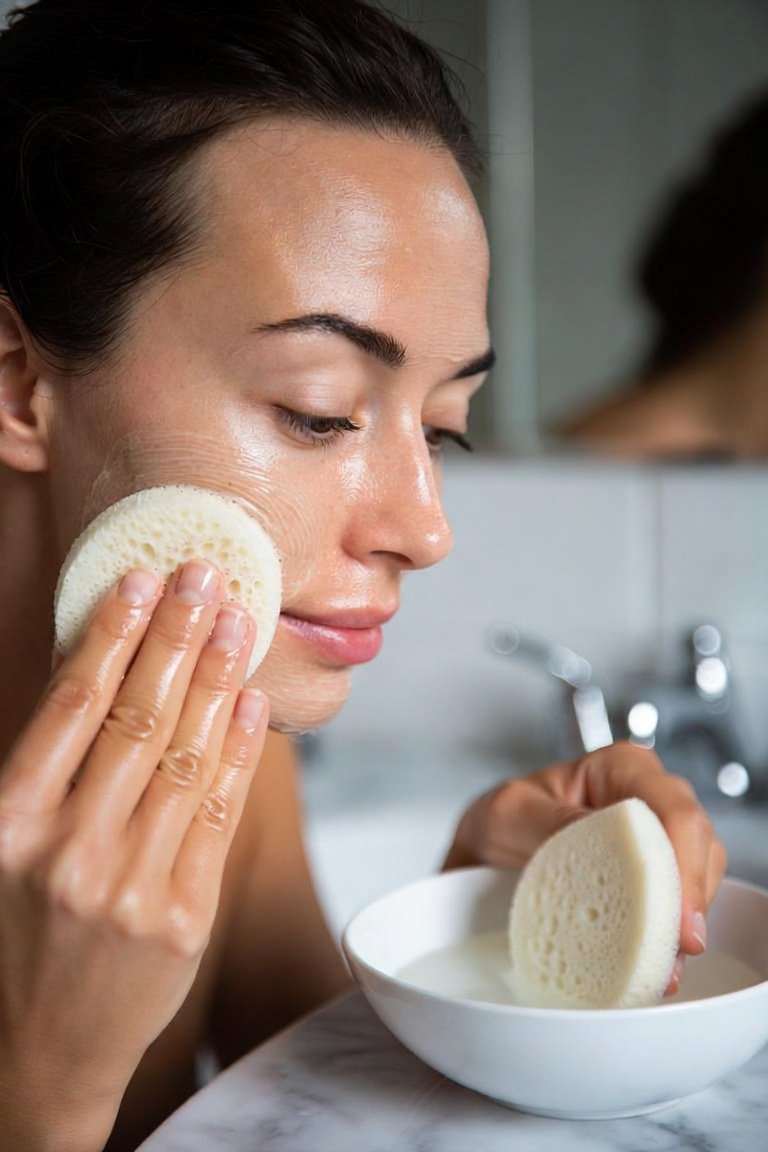
- Soak it fully. Place the dry sponge in warm water for a few minutes until it is soft all the way through. A half-soaked sponge still has hard, scratchy spots.
- Squeeze, do not wring. Press the water out between your palms. Twisting can tear the delicate fibers.
- Add a gentle cleanser if you like. A small amount of a mild, non-abrasive cleanser works well. Plain water is fine for a quick morning rinse.
- Press and roll in small circles. Move over the face with light, circular motions, and avoid the eye area. Keep the whole pass to about 30 seconds.
- Rinse with lukewarm water. Hot water dries skin, so keep it comfortably warm, then pat dry with a soft towel.
- Moisturize right away. The AAD advises applying moisturizer immediately after exfoliating to limit dryness.
- Rinse and dry the sponge. Rinse out all cleanser, squeeze it firmly, and hang it somewhere airy.
How Often to Use a Konjac Sponge, by Skin Type
There is no research-based schedule for konjac sponges. The AAD simply says that the more aggressive the exfoliation, the less often you should do it. Because a wet konjac sponge is at the mild end, many people can use it more often than a scrub. Still, your skin sets the limit.
- Oily or combination skin: once a day is usually a comfortable starting point. Twice a day is the AAD’s upper limit for face washing in general.
- Normal skin: daily or every other day, depending on how it feels.
- Dry or sensitive skin: two or three times a week, with very light pressure.
- Acne-prone skin: fingertips are often the better choice; if you try a sponge, keep it occasional and gentle.
- Body: larger body versions suit elbows, shoulders and the back, where skin is thicker.
Watch for tightness, stinging, flaking or pink patches. Any of these means you should cut back or stop.
Konjac Sponge vs Other Cleansing Tools
A konjac sponge sits at the soft end of the tool range. The comparison below helps you decide whether it suits your routine better than a cloth, brush or a different sponge.
| Tool | Texture when wet | Exfoliation | Typical lifespan | Best for |
|---|---|---|---|---|
| Fingertips | Softest | None | Not applicable | Sensitive, reactive or acne-prone skin |
| Konjac sponge | Soft, springy, slippery | Very light | One to three months | Gentle daily cleansing for most skin |
| Cellulose sponge | Soft but firmer | Light | Varies by use | Removing cleanser, masks and makeup |
| Muslin or bamboo cloth | Soft woven fabric | Light to moderate | Long, if washed often | Balm and oil cleanser removal |
| Silicone cleansing brush | Flexible bristles | Light to moderate | Long | Oily skin; easy to keep clean |
If you mainly want to wipe away masks and makeup, our guide to cellulose sponges for the face covers a firmer, longer-lasting option. For balm cleansers, a muslin cleansing cloth is a common choice. For a device you can rinse and dry fast, see our silicone cleansing brush guide.
Mistakes That Make the Sponge Harsher
Most problems come from treating the sponge like a scrub or storing it wet. Small habits make the difference.
- Soak it until soft right through
- Press out water between your palms
- Glide with light, circular strokes
- Keep each pass short
- Follow with moisturizer
- Hang it to dry in open air
- Scrub while it is still stiff
- Twist or wring it out
- Share it with another person
- Leave it in a damp shower corner
- Use it on sunburn or broken skin
- Keep one past its useful life
Drying, Cleaning and Replacing Your Konjac Sponge
Care matters more with konjac than with synthetic sponges. The material is a plant gel, so it breaks down with use and holds moisture. The Konjac Sponge Company’s use and care page gives simple rules.
- Squeeze out water thoroughly after every use, without wringing.
- Dry it in an airy spot between uses, away from standing water in the shower. The maker even suggests the fridge in very humid homes.
- Expect it to shrink and harden when dry. That is normal, and it softens again when you soak it.
- Replace it every one to three months, or sooner if it tears, smells or discolors.
- Compost it when you are done, because it is plant-based.
Some people rinse their sponge in very hot water now and then to freshen it. The maker does not list boiling or microwaving, so we would not rely on either. A fresh sponge is the safer fix.
Honest Limits
The biggest limit is evidence. We could not find a published clinical trial on konjac sponges for facial skin, so what they do rests on how they are built, dermatology basics and user experience. Claims about acne, pores, pH or anti-aging have not been tested in a way that supports them.
A konjac sponge also cannot replace a good cleanser, sunscreen or treatment. It does not remove waterproof makeup well on its own, and it will not fix dryness, eczema or breakouts. For some people, especially those with reactive skin, fingertips remain the gentler option.
Finally, product listings vary. Sizes, densities and additives differ between brands. Ratings tell you about general satisfaction, not how a sponge will suit your particular skin.
When to See a Professional
A konjac sponge is a comfort tool, not a treatment. See a dermatologist or doctor if:
- You have acne that is painful, leaves marks or is not improving with basic care
- Your skin stays red, burning or flaky even after you stop using tools
- Eczema, rosacea or psoriasis makes you unsure what your skin can tolerate
- You notice dark patches after irritation, especially on darker skin
- You are using prescription retinoids or other strong treatments and want a safe routine
- Reusable cotton rounds: washable pads that replace disposable cotton.
- Sonic facial cleansing brushes: how vibrating brushes differ from spinning ones.
- Microfiber makeup remover cloths: removing makeup with water alone, and where they fall short.
- Ice rollers for face: what cold rolling can and cannot do for puffiness.
- How long a konjac sponge lasts: the signs it is done.
- Using a dermaplaning tool safely: steps, limits and aftercare.
Konjac Sponge FAQ
What does a konjac sponge do?
It helps spread and rinse off cleanser and gives a very light polishing effect. Think of it as a gentle cleansing tool, not a treatment.
Is a konjac sponge good for sensitive skin?
Softer than many tools, yes, but any sponge can irritate. Sensitive skin should use it rarely and with very light pressure, or stick to fingertips.
Can I use a konjac sponge every day?
Many people with oily or normal skin can, if their skin stays comfortable. Dry or sensitive skin usually does better with two or three uses a week.
Does a charcoal konjac sponge help acne?
There is no good clinical evidence that it does. A 2020 dermatology review found no support for charcoal acne claims.
Do I need a cleanser with a konjac sponge?
No, but a mild cleanser helps remove sunscreen and makeup. Water alone is fine for a quick rinse.
How long does a konjac sponge last?
One maker says one to three months. Replace it sooner if it tears, smells or changes color.
Why did my sponge turn hard overnight?
It dries out between uses. That is normal; soak it in warm water until it softens again.
Can it grow mold?
Yes. It is a plant material that holds water, so squeeze it out, dry it in open air and replace it regularly.
Can I use one on my body?
Yes. Larger body versions work well on thicker skin such as the back, elbows and shoulders.
Is konjac safe for babies?
Some sponges are sold for babies, but baby skin is delicate. Ask your pediatrician before using any tool on an infant.
Bottom Line
A konjac sponge is a pleasant, low-cost way to cleanse with a little extra softness and a hint of exfoliation. It is not a proven acne fix, and the charcoal in darker versions is mostly about looks. Choose it for comfort, not for promises.
Soak it well, glide rather than scrub, moisturize afterward, dry it in open air and swap it out every few months. If your skin stings or flares, put the sponge down and go back to your fingertips, or ask a dermatologist what your skin needs.


8 Comments