
Can You Use Regular Scissors to Cut Hair? What Really Happens
The kitchen scissors are right there, and the fringe is in your eyes. Using regular scissors to cut hair is possible for a small, one-off trim, but it is not the same job that hair shears do. The difference shows up in the blades, the edge and the way each tool treats a strand.
Quick answer: yes, you can use regular scissors to cut hair in an emergency, but expect a rougher result. Hanzo, a shear maker, says regular scissors often push, fold and tear strands instead of cutting them cleanly. Use a sharp, clean pair, cut small amounts of dry or damp hair, and never use your hair shears for paper or fabric afterward. For regular trims, a dedicated pair of hair shears is the better tool.
Most of the evidence here comes from shear makers and sellers, so it reflects their interests. There is no published trial that compares household scissors with hair shears on hair. What the makers describe does match how blades work, so it is a useful guide as long as you keep that in mind.
Below you will find a short self-check for your scissors, a table that sets regular scissors against hair shears, and a safe method for an emergency trim. You will also see how to protect a good pair of shears from everyday use, and when it is time to buy your own.
Recommended Hair Cutting Scissors, Beyond Regular Scissors
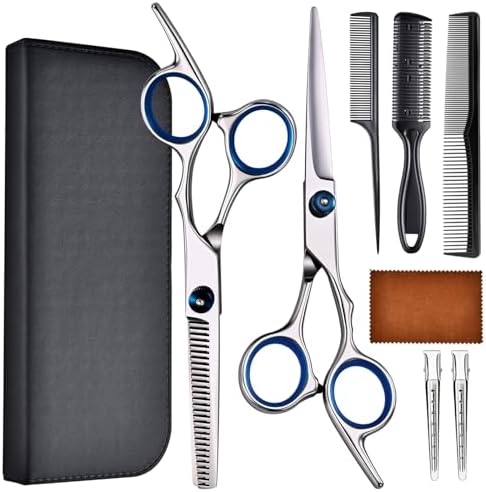
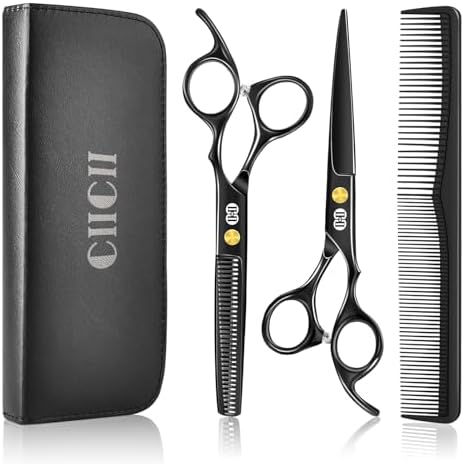
If you want to stop borrowing the kitchen scissors, these are hair-cutting scissors and kits aimed at home and salon use. Check the blade length, the included extras and the tension screw on each listing. See how we test and choose products for the rules behind every pick.



Key Takeaways
- Regular scissors can trim hair in an emergency, but they often push, fold or tear strands instead of cutting cleanly.
- Hair shears differ in steel, edge shape, handle design and how they are sharpened.
- Sharpness and cleanliness matter more than the label, so test scissors on a few loose strands first.
- Cut small amounts and keep sections thin, because dull or mismatched blades struggle with thick bunches.
- Never use hair shears on paper, fabric or other materials, because that dulls the blades.
- Dull blades damage hair, so a pair that has seen heavy use is a poor choice.
- For regular trims, a pair made for hair is a better investment than repeated improvised cuts.

What Happens When Regular Scissors Cut Hair
A hair strand is thin, springy and slippery. To cut it cleanly, two blades must meet exactly at the cutting point and pass each other with almost no gap. If they do not, the strand bends away and slips along the blades.

That is the problem with many household scissors. Their blades are made for paper, card or fabric, which are flat and easy to hold in place. On hair, the same blades can push strands, fold them against the edge or tear them as they close.
Hanzo describes the outcome as pushing, folding and tearing instead of a clean cut, which can leave rough ends. Scissortec adds that dull blades then damage the hair. In practice, the first snip may look fine, while later ones leave uneven strands.
Hair type changes how obvious the problem is. Fine hair is light and slides easily, so it can slip away from a blunt blade. Thick or coarse hair resists, which puts more stress on the blades and exposes weak edges. Wet hair clumps together, while dry hair separates, so the same scissors can behave differently depending on the state of the hair.
Regular Scissors to Cut Hair vs Hair Shears: What Differs
Hair shears are not just regular scissors with a different name. Hanzo lists five differences.
| Feature | Regular scissors | Hair shears |
|---|---|---|
| Steel | Usually basic stainless steel | Often higher-grade steel, such as high-carbon Japanese steel, which holds a fine edge longer |
| Edge shape | Simple flat-ground blade | Convex, semi-convex or beveled edges suited to specific techniques |
| Handle | Straight and symmetrical | Ergonomic designs such as offset, crane and swivel-thumb |
| Sharpening | Not built for repeated precision sharpening, so often replaced | Can be professionally serviced and sharpened |
| Effect on hair | Often pushes, bends and tears strands | Designed to cut cleanly |
Scissortec makes a useful counterpoint. It says the real difference between types of hair shears lies in technique and the hair’s length and type, and that either type can do either cut. The takeaway is that the label matters less than the edge, the sharpness and the way you hold the tool. Our guide to hairdressing scissors shows how hair-specific blades are built.
Will Your Regular Scissors Cut Hair Cleanly? A Quick Check
Before you cut, spend one minute on these questions. They help you decide whether to cut, wait or borrow a better tool.
- Have these scissors cut anything tough? Cardboard, tape, wire, plastic or packaging all dull a blade. If yes, do not use them on hair.
- Are the blades clean and smooth? Look for rust, residue, nicks or a wobbling screw.
- Do they cut a loose strand cleanly? Hold a few hairs and cut the ends. Any folding or slipping is a warning sign.
- Is the job tiny? A few millimeters off the ends or fringe suits an emergency cut. A full haircut does not.
Four good answers: an emergency trim is reasonable. One or two doubtful answers: wait and borrow or buy a pair made for hair. Three or more: do not cut.
How to Use Regular Scissors to Cut Hair Safely
If you decide to go ahead, keep the cut small and slow, because regular scissors leave less room for error than hair shears do. These steps reduce the chance of folded strands and uneven ends.
- Wash and dry the scissors. Wipe the blades so no residue remains, then dry them fully.
- Test on a few loose strands. Cut the ends of a few hairs from your brush. Stop if they fold or slip.
- Comb the hair smooth. Detangled hair shows where the ends are, so you cut less and miss less.
- Take a thin section. Hold it between two fingers and keep it flat, not bunched.
- Cut a little at a time. Use the middle of the blades and make short, clean closes, not big bites.
- Check in good light. Compare both sides and see how the hair falls before you cut more.
- Clean the scissors afterward. Wipe off hair, dry them, and put them away from kitchen or craft use.
Mistakes That Make Regular Scissors Cut Hair Badly
- Use the sharpest, cleanest pair you have
- Cut thin sections of hair
- Test on a few strands first
- Stop if the hair folds
- Keep the job to a small trim
- Use scissors that have cut cardboard or tape
- Cut a thick bunch in one snip
- Saw back and forth through the hair
- Try to cut layers or a full style
- Reuse the scissors on household jobs without cleaning
Which Household Scissors Come Closest?
Not every pair in the drawer is equally risky. The table below is general guidance based on what each tool is built to cut, not the result of a test, so treat it as a rough ranking.
| Scissors | Built to cut | Main concern on hair |
|---|---|---|
| Kitchen scissors | Food, herbs and packaging | Often worn or dull, and may carry residue |
| Office or school scissors | Paper and card | Rounded tips and blunt edges that push strands |
| Fabric or sewing scissors | Cloth and thread | Sharp, but cutting hair can dull them for fabric |
| Small embroidery or nail scissors | Thread and nails | Short blades give little control for more than a few strands |
| Hair-cutting scissors | Hair | Designed for the job, though low-end pairs still vary in sharpness and alignment |
If you must pick from the drawer, choose the sharpest and cleanest pair with a fine tip. Then run the test on loose strands before you touch your head. A pair that already shows nicks or rust is a no.
Why Hair Shears Should Not Cut Anything Else
The question also works in reverse, and the answer matters if you already own a good pair. Scissortec says haircutting shears should be used only on hair, because using them on paper or other everyday jobs can dull the blades. Dull blades then damage the hair.
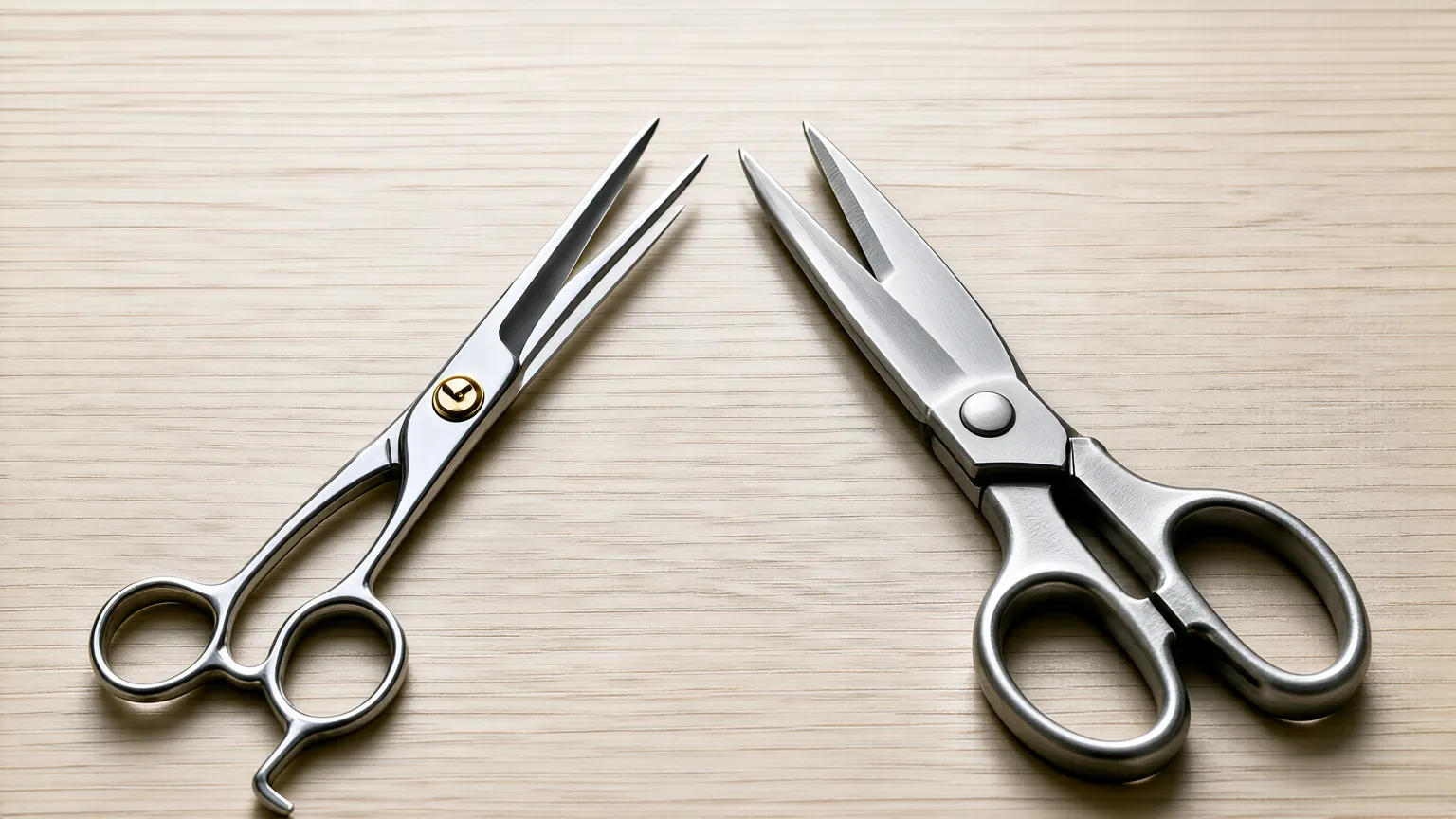
So if you own a good pair, keep it separate. A drawer for hair shears alone, with a simple label, saves you from the common mistake of lending them for gift wrapping or craft projects.
Offset handles and other ergonomic shapes are covered in our guide to offset handle shears, which helps if you plan to cut often.
After the Trim: Check the Ends and Fix Mistakes
Once you have cut, give the hair a minute to settle. Brush it through and look at the ends in good light, because a rough cut can look fine while the hair is wet or pinned up.
- Look for ragged ends. Frayed or uneven tips suggest the blades pushed strands instead of cutting them.
- Check both sides. Compare lengths against a mirror, not by feel alone.
- Stop if it looks uneven. More cutting with the same scissors tends to make a small error larger.
- Book a tidy-up if needed. A stylist can even out the ends with proper shears in minutes.
Then clean the scissors, dry them and return them to their usual place. If they were also your kitchen or craft pair, mention that to the next user, so nobody assumes they are still sharp.
Myths About Household Scissors and Hair
- “Sharp is sharp.” A sharp edge is only part of it. Edge shape, steel and alignment also affect how a blade treats a strand.
- “Expensive kitchen scissors are fine.” They are built for food and packaging, and their blades are not designed for hair.
- “Hair shears are just a marketing upgrade.” The steel, edge and handle differ, as the table shows, though the label alone does not guarantee quality.
- “A rough cut grows out unnoticed.” Frayed or uneven ends can look untidy until they are trimmed again.
- “I will just sharpen the scissors myself.” Home sharpening of any scissors is hit or miss. Hanzo says regular scissors are often replaced rather than repaired, and uneven sharpening can leave any blade worse than before.
- “One quick cut will not dull anything.” A single trim is unlikely to ruin a pair. Repeated use on hair, then paper, then fabric is what wears the edge down.
When to Buy a Pair Made for Hair
If you trim your own hair more than once, a dedicated pair pays for itself in fewer botched cuts. You do not need salon-grade tools, but a few features help.
- Adjustable tension screw: lets you stop the blades from separating as they close.
- Sharp, fine-tipped blades: help with small, controlled cuts around the fringe and neckline.
- Comfortable handles: reduce strain, and an offset design can sit better in the hand.
- A case or pouch: keeps the edges safe and keeps the shears away from other jobs.
- Left-handed options: available if you cut with your left hand. See our guide to left-handed shears.
Kits can be a sensible first purchase because they bundle a cutting shear with a comb, clips and sometimes a thinning shear. The shear is the part that matters most, so check its length, its tension screw and whether it is described as hair-cutting rather than general-purpose. A shorter blade of about six inches is easier to control for self-trims, and a longer one covers more hair per cut but is harder to steer near the ears.
Once you own a pair, look after it. Wipe the blades after each use, add a drop of shear oil at the pivot when the joint feels dry, and have the edge serviced when it starts to push hair.

Honest Limits
This guide cannot tell you exactly how your scissors will perform. Sharpness, steel, alignment and hair type all change the result, and no test can replace trying a few loose strands.
The sources are shear makers, so they have a stake in the answer. They also describe tendencies, not guarantees, since words like “often” and “can” appear throughout. Treat regular scissors as a fallback for a tiny trim, not a replacement for proper tools.
When to See a Professional
- A new shape, layers or a big change in length is what you want
- Uneven ends or a visible mistake needs correcting
- A child is the client and cannot stay still
- Curly or coily hair springs up after cutting
- How much to remove is unclear, and the cut would be hard to reverse
A stylist can fix an improvised trim far more easily than you can with the same scissors.
- Cutting your own bangs: a dry-cut method that avoids the too-short trap.
- Razor comb: how it cuts and when to use it instead of scissors.
Frequently Asked Questions
Can you use regular scissors to cut hair?
Yes, for a small emergency trim, but they often push, fold or tear strands. Use a sharp, clean pair and cut small amounts.
Do regular scissors cut hair cleanly?
They can be if the blades are dull or poorly aligned, because dull blades damage hair. A sharp, clean pair is less risky for a tiny trim.
How do regular scissors cut hair differently from hair shears?
Hair shears use finer steel, special edge shapes and ergonomic handles, and they can be professionally sharpened. Regular scissors are simpler and usually replaced when dull.
Can I use kitchen scissors to cut my hair?
They are a poor choice. Kitchen scissors usually cut food and packaging, which dulls the blades and leaves them unsuitable for hair.
Can I use sewing scissors to cut hair?
Fabric scissors can be sharp, but cutting hair with them may dull them for fabric, and their edge shape is not made for hair.
Will regular scissors cut hair and cause split ends?
Makers say rough blades can leave rough or frayed ends. Studies that compare scissor types are not available, so treat this as a likely risk, not a proven result.
Can I use hair shears on paper or fabric?
No. Using hair shears for other materials can dull the blades, and dull blades then damage hair.
How do I cut my own hair with regular scissors?
Test on a few strands, take thin sections, cut a little at a time and check in good light. Avoid layers or full cuts.
Is it OK to use regular scissors to cut hair for a trim only?
For a tiny trim of the ends or fringe, a sharp, clean pair is acceptable. For anything larger, use hair shears or see a stylist.
When should I buy proper hair scissors?
Buy them when you trim hair regularly, because a dedicated pair cuts more cleanly and stays sharp longer if you keep it for hair only.
The Bottom Line
Using regular scissors to cut hair can work for a tiny, careful trim, but they are not made for hair. Their blades, edge and steel differ from hair shears, and they often push or fold strands. Sharp, clean scissors and small sections keep the damage low.
If you cut hair more than once or twice, buy a pair made for it and use it for hair only. Keep it clean and oiled, and leave bigger changes to a stylist.


3 Comments