Razor Comb Guide: How It Cuts, Who It Suits and How to Use It Safely
A razor comb looks like a harmless styling comb, which is exactly why it catches people out. Hidden in its teeth is a real blade, as sharp as a shaving razor. Used well, it softens heavy ends and blends a fringe in minutes. Used on dry, tangled hair or pressed too hard, it snags, frays ends and can take out far more than you meant.
Quick answer: a razor comb is a comb with a replaceable razor blade set between its teeth, so hair is sliced at an angle as you glide it through. It thins bulk, tapers ends and softens hard lines. Use it on damp, detangled hair with light, short strokes away from the roots, and swap the blade as soon as it drags. Never share one, because razors can carry traces of blood.
That last point is not a scare tactic. The US Centers for Disease Control and Prevention lists sharing razors among the ways hepatitis C can spread, alongside nail clippers and toothbrushes. So a razor comb belongs in the same category as your own shaving razor, not in a shared drawer.
The cutting action also differs from scissors. Instead of a blunt snip, the blade slices each strand on a slant and leaves a tapered tip. That taper is what makes razored hair look soft and airy, and it is also why some hair types fray.
Ahead: how it compares with styling razors and thinning shears, a self-check, a hair-type table, a safe method, blade care and when to leave it to a stylist.
Recommended Razor Comb Picks
Each pick is a hair razor comb with replaceable blades, from single combs to multi-packs with spares. Check how the blade guard looks and how many spare blades come in the box before choosing. See how we test and choose products for the rules behind every pick.


Key Takeaways
- A razor comb hides a real razor blade between comb teeth, so it cuts as you glide it through the hair.
- It slices strands at an angle, which tapers the ends and makes hair look softer and lighter.
- Damp, detangled hair and light strokes give the cleanest result; dry, knotted hair snags and frays.
- Fine, curly, coily or damaged hair is the riskiest to razor, so go slowly or choose shears instead.
- Change the blade when it starts to drag, and handle blades by their blunt ends or with a no-touch system.
- Never share a razor comb: the CDC lists shared razors as a route for hepatitis C.
- Dispose of used blades in a sharps container or closed box, never loose in the bin.

What a Razor Comb Is, and What It Is Not
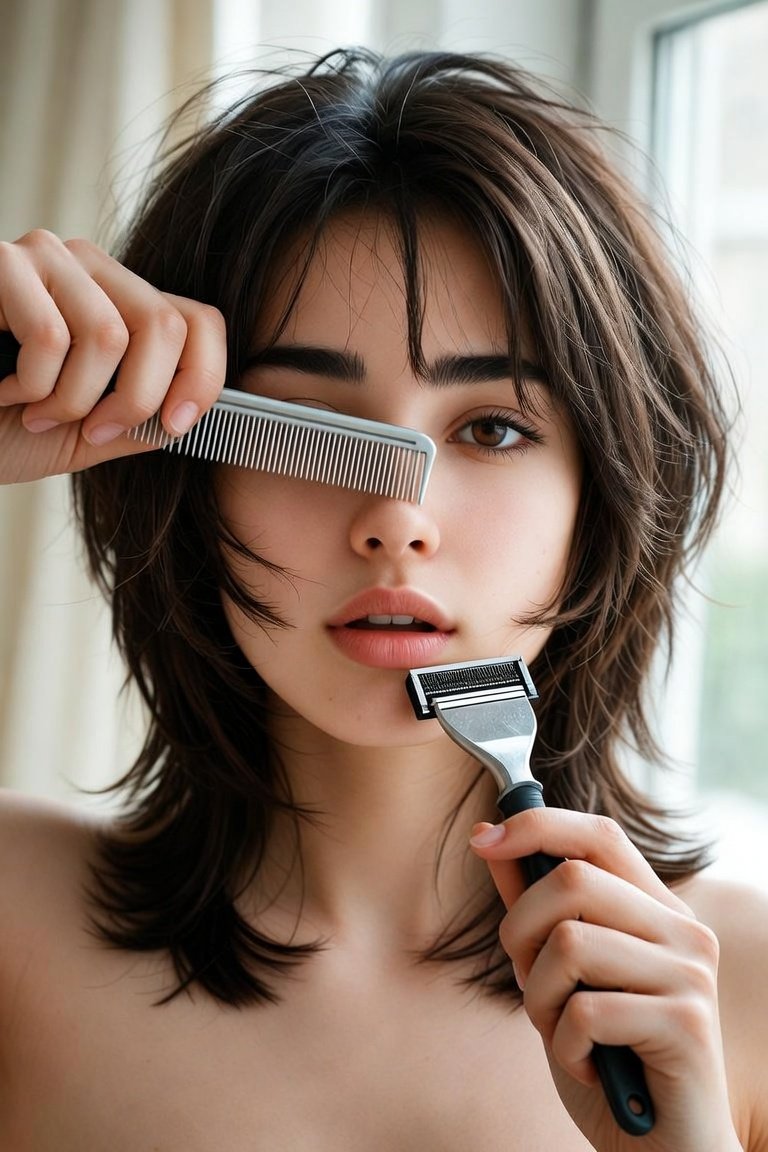
A razor comb is a plastic or metal comb with a slot that holds a small razor blade. Most models put the blade on one side and plain comb teeth on the other, or blades on both edges for faster work. A row of teeth or a guard sits over the edge, so only hair that slips between the teeth meets the blade.
As you glide the comb down a section, the blade slices some strands on a slant. Each cut strand ends in a long, tapered point instead of a flat, blunt tip. Tapered ends sit closer together and move more freely, so the hair looks lighter and the outline looks softer.
It is not a precision cutting tool. You cannot cut a sharp, straight line with it, and it gives less control over exactly how much comes off than scissors do. Think of it as a finishing tool for bulk and softness, not a way to create a whole haircut.
Razor Comb vs Styling Razor vs Thinning Shears
These three tools all remove bulk, so shoppers often treat them as interchangeable. They are not. Each one cuts differently and suits a different level of skill.
| Tool | How it cuts | What the ends look like | Control | Best for |
|---|---|---|---|---|
| Razor comb | Guarded blade inside a comb; slices as you glide | Tapered, soft | Moderate; the comb guides the depth | Home thinning, softening ends and blending a fringe |
| Styling (feather) razor | Handheld razor with an exposed or partly guarded blade | Tapered, very soft or piecey | High in trained hands, low for beginners | Stylists creating texture and movement |
| Thinning shears | Toothed blade meets a straight blade; removes a share of hair per close | Blunt tips at mixed lengths | High; each close is measured | Controlled bulk removal on most hair types |
| Straight hair scissors | Two straight blades cut everything between them | Blunt | Highest | Length, outlines and precise shapes |
The key difference is the tip. Razors leave a tapered point, while shears leave a flat, blunt end. So if you want controlled bulk removal with blunt tips, a pair of toothed shears is the safer route. Our guide to thinning shears and cut rate explains how they compare.
Self-Check: Should You Use a Razor Comb?
Answer these quickly and honestly. Two or more answers in the caution column mean shears or a stylist will serve you better.
- Is your hair straight or loosely wavy? Yes: good fit. Curly or coily: caution.
- Is your hair medium to thick? Yes: good fit. Fine or thinning: caution.
- Are your ends healthy? Yes: good fit. Bleached, brittle or splitting: caution.
- Do you want softness rather than a sharp line? Softness: good fit. A crisp, blunt edge: use scissors instead.
- Can you see and reach the area clearly? A fringe or the sides: good fit. The back of your own head: caution.
Mostly good fit: a razor comb is a reasonable home tool. Start with light strokes on damp hair.
Mixed: test on a hidden underneath section first, and stop after a few strokes to check.
Mostly caution: choose thinning shears or book a stylist, especially for curly or fragile hair.
Razor Comb Results by Hair Type
Hair texture changes how a razored end behaves. The table below sums up what to expect.
| Hair type | Likely result | How to adjust |
|---|---|---|
| Thick and straight | Good; removes weight and softens bulky ends | Work underneath layers first; keep strokes short |
| Medium and wavy | Usually good; adds movement | Stay at mid-lengths to ends; check once dry |
| Fine or thin | Can look wispy or see-through | Only a few strokes on the very ends, or skip it |
| Curly or coily | Tapered ends may frizz or lose curl definition | Many curly stylists prefer scissors on dry curls instead |
| Chemically treated or damaged | Higher risk of fraying and breakage | Trim with sharp scissors instead until ends recover |
Blade Safety and Hygiene: Handling, Changing and Never Sharing
A razor comb blade is small, but it is a real razor. The riskiest moments are often changing the blade or cleaning the comb, when fingers get close to the edge. So set up a routine and follow it every time.
- Handle blades by the blunt edges. Hold a blade by its short ends or back, and slide it in and out of the slot rather than pushing on the edge.
- Use tools where you can. Some professional razors use a no-touch cartridge system. The distributor Jatai describes Feather’s system as letting you insert and remove blades without touching them.
- Keep the guard on. Store the comb with its cover or in a case, and keep it out of reach of children.
- Dispose of blades properly. Used blades stay sharp. Drop them into a sharps container or a sealed, labelled tin, never loose in a bin bag.
- Never share. The CDC’s hepatitis C prevention page states that you can be infected by sharing razors, nail clippers or toothbrushes. Tiny nicks can leave blood on a blade that you cannot see.
How to Use a Razor Comb Step by Step
The goal is many light passes, not a few heavy ones. You can always take a little more, but razored hair cannot be put back.
- Fit a fresh blade. Check the blade is sharp, seated in its slot and covered by the guard before you start.
- Wash and detangle. Work on clean, damp hair that you have combed free of knots. A dull pull on dry hair tends to snag and fray the ends.
- Section the hair. Clip the top away and begin with an underneath section where small mistakes stay hidden.
- Hold the section taut. Lift a thin section between two fingers and hold it slightly away from the head.
- Angle the comb. Tilt the blade side at a shallow angle to the hair, not flat against it and not straight across.
- Glide in short strokes. Start at mid-length and stroke toward the ends with light pressure, then move on to the next section.
- Comb out and check. After every few sections, comb out loose hair, match both sides, and let a test area dry before you do more.
Razor Comb Habits: Do This, Not That
Most bad results trace back to a handful of habits. These swaps prevent the common ones.
- Work on damp, detangled hair
- Use light pressure and short strokes
- Start underneath and check often
- Replace the blade as soon as it drags
- Rinse and dry the comb after each use
- Keep your comb for your own hair only
- Drag a dull blade through dry hair
- Start the stroke at the scalp
- Press the blade flat against the head
- Razor fragile, bleached or curly ends
- Touch the edge while changing blades
- Lend the comb or borrow someone else’s
How Often to Change Razor Comb Blades, and How to Clean Them
There is no fixed schedule, because blade life depends on hair thickness and how much you cut. The best signal is feel. A sharp blade glides and cuts quietly. A dull one tugs, drags or leaves fuzzy, broken-looking ends.
Many salons fit a new blade for each client, both for hygiene and for a clean cut. At home, change it whenever it starts to pull, after any nick, and whenever rust spots appear.
- Brush loose hair out of the teeth with a small brush or old toothbrush kept only for tools.
- Rinse the comb under running water with a little mild soap, keeping fingers away from the blade.
- Dry it completely with a paper towel, blotting from the spine side.
- Wipe the comb with a disinfectant suitable for grooming tools, following the label.
- Store it dry, closed and covered.
Moisture is the main enemy between uses. Carbon-steel blades in particular can spot with rust if the comb is packed away damp or left in a steamy bathroom. A rusty or pitted blade drags and is harder to clean, so throw it away rather than trying to scrub it back to shape. Keep a few spares in their original wrapper so a fresh one is always ready.
Choosing a Razor Comb That Is Safe to Use
Most home razor combs look similar, but a few details make them safer and easier to control.
- A clear blade guard. Teeth or a cover over the edge limit how much hair meets the blade and protect your skin.
- Easy blade changes. A slot that holds the blade firmly but releases it without force reduces the risk of cuts.
- Spare blades included. Packs with extra blades encourage you to swap them when they dull.
- Single or double edge. A single blade with plain teeth on the other side is easier for beginners. Double-edge models work faster but need more care.
- Grip. A textured or wider handle is easier to hold with damp hands.
Also think about handedness. A razor comb is symmetric and works in either hand, unlike scissors. Left-handed home cutters who also want shears should read our guide to true lefty hair scissors.
Honest Limits
A razor comb removes bulk and softens edges. It cannot build a new shape, fix uneven lengths or give you a sharp bob line. Those jobs need scissors and, often, a stylist.
It also has more room for error than shears. Because the comb slices as you move, pressure and angle matter a lot, and those are hard to judge on your own head. Two strokes too many in one spot can leave a thin patch that takes months to grow back.
Finally, results on curly, fine or damaged hair are hard to predict. A taper that looks airy on thick straight hair may look frizzy or sparse on other textures.
When to See a Professional
Home razor work suits light maintenance. Book a stylist or barber instead when:
- You want a new shape, layers or a large change in length
- Your hair is curly, coily, fine or chemically treated
- A previous razor cut left frayed ends or a see-through patch
- You need to reach the back of your head without help
See a doctor if a nick becomes red, swollen, warm or painful, or if you are concerned about exposure after sharing a razor. A pharmacist can also advise on first aid for small cuts.
- Swivel thumb shears: a rotating thumb ring for stylists with wrist or shoulder pain.
- Chunking shears: taking weight out of very thick hair, and why they are easy to overdo.
- Texturizing shears: adding movement and separation to shorter, choppier styles.
- Regular scissors on hair: why they fray ends and what to use instead.
- Cutting a bob at home: sectioning, the line and point cutting the ends.
Razor Comb FAQ
What does a razor comb do?
It thins bulk and tapers the ends of hair by slicing strands with a guarded blade as you glide it through, which softens heavy or blunt areas.
Should hair be wet or dry for razor cutting?
Damp, detangled hair is the usual choice. Dry hair tends to snag and fray under a razor, especially if the blade is not fresh.
Can razoring damage hair?
It can if the blade is dull, the hair is dry or tangled, or the hair is already fragile. A sharp blade and light strokes reduce the risk.
Is razor cutting good for curly hair?
Usually not. Tapered ends can frizz and loosen curl pattern, so many curly-hair stylists prefer scissors.
How often should I change the blade?
Whenever it starts to pull or drag, after any nick, and if you see rust. Many salons use a new blade for every client.
Can I share a razor comb with family?
No. Razors can carry invisible traces of blood, and the CDC lists shared razors as a way hepatitis C can spread.
How do I dispose of used blades?
Put them in a sharps container or a sealed, labelled tin. Some pharmacies and recycling centres accept sharps.
Is a razor comb the same as a feather razor?
No. A feather or styling razor is a handheld razor used mostly by stylists. A razor comb hides the blade inside a comb, which is easier for home use.
Can I soften bangs this way?
Yes, for softening a fringe. Cut the length with scissors first, then use light strokes to blend the edge.
How do I clean the comb and blade?
Brush out hair, rinse with mild soap, dry fully and wipe with a disinfectant made for grooming tools. Store it covered.
Bottom Line
A razor comb is a small tool with a real blade. On damp, detangled, straight or wavy hair, a few light strokes soften bulk and blend edges in a way that shears cannot quite match. On fine, curly or damaged hair, it can fray ends and thin too much.
So treat it like a razor. Keep blades fresh, handle them by the blunt edges, dispose of them safely and never share the comb. Then use it for maintenance, and leave big changes to a stylist.





7 Comments