
How to Use a Topsy Turvy Hair Tool: Steps, Fixes and Easy Styles
Most people who give up on a topsy turvy hair tool blame the tool. Usually, though, the real problem is a ponytail tied too tight to leave room for the flip. Once you leave a little slack above the elastic, the loop slides through easily and the twist looks neat instead of lumpy.
Quick answer: tie a loose ponytail, then split the hair just above the elastic to make a small gap. Push the tool down through that gap with the loop on top, and drop the ponytail into the loop. Next, pull the tool down and out, so the tail flips through itself. Finally, snug the elastic up by pulling the two halves apart, and loosen the twist with your fingers.
That is the same basic method that hair tutorials such as Hair Romance describe: loop side up, hair through the loop, then pull it down behind the elastic. The tool is simply a plastic or wire loop on a short handle. So you can do the same move with your fingers, but the loop makes it faster and neater.
Gentleness matters as well. The American Academy of Dermatology warns that styles which keep pulling on hair can lead to traction alopecia. It advises wearing hair loosely pulled back and using covered bands made for hair.
Below you will find the core steps, fixes for common problems, a style picker by hair type, five looks to try, and tips for kids’ hair.
Recommended Topsy Turvy Hair Tool Sets
Every pick includes at least one topsy tail loop tool. Some are simple kits with hair ties, while others add braiding helpers, a rat tail comb or a slick back brush. Check the loop size and the number of pieces on each listing. See how we test and choose products for the rules behind every pick.


Key Takeaways
- A topsy tail tool is just a loop on a handle; it pulls a ponytail through a gap above its own elastic.
- Loose is the secret, because a tight ponytail leaves no room for the flip.
- Always insert the tool with the loop on top, then pull it down and out.
- Snug the elastic up afterwards by pulling the two halves of the tail apart.
- Stacked flips can look like a braid, but they are not one, so they hold differently.
- Covered elastics and loose styles are kinder to hair, as the AAD advises.
- The plastic loop can snap under force, so ease it through rather than yank.

How a Topsy Turvy Hair Tool Works
The tool goes by several names, such as topsy tail, topsy turvy tool, hair loop tool or ponytail flipper. However, they all do one job. Each has a thin loop at one end and a short handle or a second loop at the other.
The trick is simple. First you tie a ponytail and open a small gap in the hair just above the elastic. Then the loop carries the ponytail through that gap. As a result, the hair on each side of the gap twists around the elastic, and the elastic disappears inside a smooth roll.
So there is no special mechanism and nothing to plug in. The loop is simply a guide, because hair is floppy and hard to push through a small gap by hand. With the loop, you pull instead of push, and that is much easier.
How to Use a Topsy Turvy Hair Tool Step by Step
This method works for a single flip. Once it feels natural, you can repeat it down the length for stacked styles.
- Brush and detangle. Start with smooth hair, because knots jam in the loop and make the twist bumpy.
- Tie a loose ponytail. Use a covered elastic and place the tail where you want the style to sit. Then slide the elastic down slightly to leave some slack.
- Open a gap above the elastic. Split the hair between the elastic and your head into two halves with your fingers, so you create a small hole.
- Insert the tool loop side up. Push the handle down through the gap, so the loop rests on top of the hole.
- Drop the ponytail into the loop. Gather the tail and lay it through the loop. For long hair, twist the ends loosely first so no strands escape.
- Pull the tool down and out. Draw the handle down gently, so the loop carries the tail through the gap and out underneath.
- Snug and soften. Split the tail into two halves and pull them apart to push the elastic up. Then loosen the twisted sides with your fingertips for a fuller look.
That whole sequence is one flip. In short, the key moments are the loose tie in step 2 and the loop-on-top insertion in step 4.
Why Your Flip Looks Messy, and How to Fix It
Most problems trace back to tension, gaps or loose strands. Therefore, check this list before you blame your hair.
- Leave slack above the elastic before you flip
- Keep the loop on top when you insert it
- Twist long ends so they pass through as one
- Pull the halves apart to tighten afterwards
- Use clear or covered elastics so they hide well
- Loosen the twist gently for more volume
- Flip a ponytail that is already tight
- Force the loop when it catches on a knot
- Use bare rubber bands that grab and snap hair
- Open a gap so wide that the scalp shows
- Yank the handle, because thin loops can snap
- Stack many flips on very short or fine hair
If the twist looks lopsided, the gap was probably off-center. So undo the flip, move the gap to the middle and try again. Also, if strands escape, twist the ponytail before it goes into the loop.
Which Topsy Turvy Hair Tool Style Suits Your Hair?
Use this quick picker to choose a first style. Then pick the answer that sounds most like you in each row.
- Length: shoulder length or shorter (A), past the shoulders (B), mid-back or longer (C).
- Texture: fine and slippery (A), medium (B), thick or very curly (C).
- Occasion: quick everyday style (A), work or school (B), event or photos (C).
- Time: under five minutes (A), about ten minutes (B), happy to take longer (C).
Mostly A: a single low flip or a half-up flip. Both hold well on short and fine hair, and they need only one pass.
Mostly B: a flipped low bun or a side flip. The extra length lets you tuck and pin the ends.
Mostly C: a stacked “faux braid” with three or four flips down the tail. Long, thick hair fills out each section nicely.
Very curly or coily hair can still use the tool. However, it often works best on stretched or detangled hair, and a larger loop helps thick sections pass through.
Five Styles to Try
Each style below uses the same core flip. Only the placement and the number of passes change.
- Classic low flip: one flip at the nape. It looks polished, and it also hides the elastic.
- Half-up flip: take the top section only, flip it, and leave the rest down. It is ideal for short hair.
- Stacked faux braid: tie and flip, then add a new elastic lower down and flip again. Repeat three or four times.
- Flipped bun: do one flip, then roll the tail up into the gap and pin it. As a result, you get a neat chignon.
- Side flip: gather the hair over one shoulder and flip it there. Then loosen the twist for a soft, casual shape.
Upstyle, a hair styling site, describes a similar set of topsy tail looks, from a wrap style to a braided ponytail. Meanwhile, Hair Romance shows the stacked version as a no-braid side braid.
Flipped Ponytail vs Real Braid: Not the Same Thing
A stacked topsy style is often called a “braid”. It looks similar from a distance. Yet it is built differently, and that changes how it behaves.
| Feature | Stacked flips | Real braid |
|---|---|---|
| How it is made | Sections held by elastics, then flipped | Three strands woven over each other |
| Skill needed | Low, so beginners manage it quickly | Moderate, and it takes practice |
| What holds it | The elastics | The weave itself, plus one elastic |
| How to take it out | Snip or unroll each elastic carefully | Unweave from the end |
| Best for | Quick, braid-like looks and fine hair | Longer wear and very active days |
Because the elastics carry the style, the choice of elastic matters. So use soft, covered bands, and never stack so many that the tail feels tight.
Using It on Kids’ Hair
A loop tool is popular for school styles, because it is quick. Still, children’s scalps can be sensitive, so keep every step light.
- Detangle first with a wide-tooth comb and a little conditioner or spray, so the loop never snags.
- Keep the tail loose and check that it does not pull at the hairline or cause pain.
- Use soft elastics made for hair rather than office rubber bands.
- Take it out before bed, because sleeping in elastics adds friction and tension.
Also, keep the tool away from very young children when you are not using it. The thin loop is small and can break into sharp pieces.
Keeping It Gentle on Your Hair and Scalp
Topsy styles are usually low-tension, because the flip needs slack. Even so, the same elastic sits in the same spot all day. Over time, repeated pulling in one place adds up.
The American Academy of Dermatology explains that hairstyles which constantly pull on hair can cause traction alopecia. It also warns that this hair loss can become permanent if the pulling continues. Therefore, it advises avoiding frequent pulled styles and switching hairstyles often.
In its tips to stop damaging your hair, the AAD also suggests covered rubber bands made for styling hair, loosely pulled-back styles, and removing tangles gently with a wide-tooth comb.
- Move the ponytail position from day to day.
- Choose covered or clear elastics without metal joins.
- Take elastics out slowly, or snip them, instead of ripping them free.
The same gentle approach applies to other hair accessories. For example, our guide to taking out hair tinsel safely uses the same slow, low-tension method.
Choosing a Topsy Turvy Hair Tool That Lasts
Most loop tools are simple and look alike. However, a few details decide whether yours snaps in a week or lasts for years.
| Feature | Why it matters |
|---|---|
| Loop size | A bigger loop suits thick or long hair, while a small one suits fine hair and kids |
| Loop material | Flexible plastic bends without cracking; stiff plastic can snap under force |
| Handle | A longer handle is easier to grip when you style your own hair behind your head |
| Kit extras | Covered elastics and a tail comb are useful, so you need fewer separate purchases |
| Number of tools | Multi-packs give you spares, which helps because loops do break |
Care is simple. Wipe the loop after use, because product builds up and makes hair stick. Then store it flat, so the loop does not bend out of shape. Our guide to keeping styling tools tidy and safe covers storage ideas for small accessories like this.
Honest Limits
A loop tool will not add length, volume or hold on its own. On very short hair, there may not be enough length to flip. Also, on very slippery hair, the twist can slide loose during the day unless you pin it.
Stacked flips can look like a braid, but they depend entirely on the elastics. So if one band slips, that section loosens. On thick or coily hair, a small plastic loop may simply be too tight to pull through, and a larger loop or finger method works better.
Finally, product ratings mostly reflect how easy the kit felt and how long the plastic lasted. They cannot tell you whether a style will suit your hair, so start with one simple flip.
When to See a Professional
A topsy style is a home job. Nevertheless, some situations call for a stylist or a doctor:
- You want a formal updo for a wedding or event and need it to last all day
- Your hair keeps breaking near the elastic line, even with covered bands
- You notice thinning at the hairline or where your ponytail usually sits
- Your scalp stings, itches or shows bumps after pulled-back styles
- A child’s hair is badly matted, and detangling at home hurts
For hair loss or scalp symptoms, see a dermatologist. As the AAD notes, traction alopecia is easier to deal with when it is caught early.
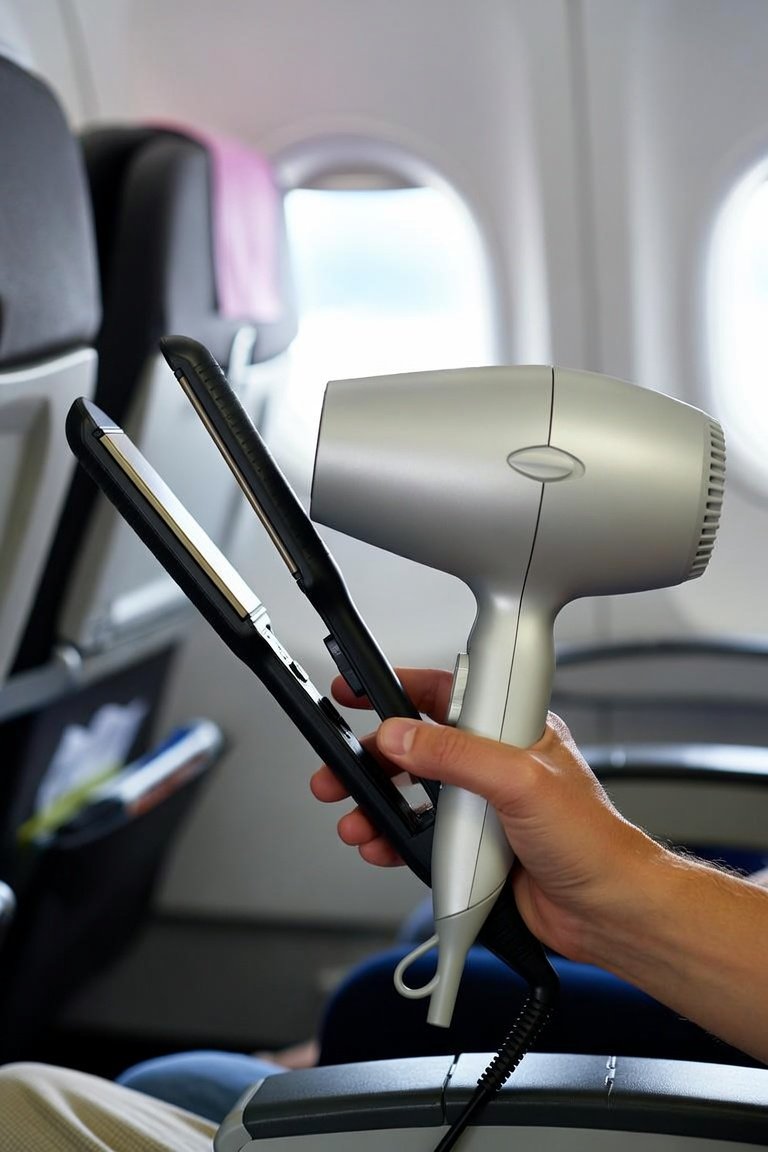
- Taking hair tools on a plane: carry-on and checked-bag rules for straighteners and dryers.
- Electric shavers for sensitive skin: foil versus rotary heads and how to limit irritation.
- Razor combs: how a razor comb softens and thins hair, and when to avoid it.
Frequently Asked Questions
What is a topsy turvy hair tool?
It is a thin loop on a handle. It pulls a ponytail through a small gap above its elastic, so the hair twists around and hides the band.
Is a topsy tail the same as a topsy turvy hair tool?
Yes. Topsy Tail is a well-known brand name, while sellers use names like turvy tool or hair loop tool for the same shape.
Which way do you insert the tool?
Push the handle down through the gap above the elastic, so the loop sits on top. Then put the ponytail in the loop and pull down.
Why does my topsy tail flip look messy?
Usually the ponytail was too tight or the gap was off-center. So loosen the elastic first, then open the gap in the middle.
Can I use a topsy turvy hair tool on short hair?
Yes, if your hair reaches a small ponytail. A half-up flip or single low flip works best on shorter lengths.
Does it work on curly or thick hair?
It can. Detangle or stretch the hair first, and choose a larger loop so thick sections pass through without force.
Can I do a topsy flip without the tool?
Yes. Poke two fingers through the gap, grab the tail and pull it through. However, the loop keeps strands together more easily.
What elastics work best with a topsy turvy hair tool?
Soft, covered or clear elastics made for hair. The AAD recommends covered bands for styling, and clear ones hide well in flips.
Is a topsy tail style bad for your hair?
Not usually, because the style is loose. Still, avoid wearing any pulled-back style tightly in the same spot every day.
How do I make a topsy style last longer?
Snug the elastic up after the flip, add a bobby pin at the twist, and use a light hold spray if you like.
The Bottom Line
This little loop is one of the easiest ways to make a plain ponytail look finished. The whole method comes down to a loose tie, a centered gap, the loop on top, and a gentle pull down.
Start with one simple flip, then build up to stacked styles once it feels natural. Also, keep your elastics soft and your styles loose, and switch positions often. That way, your hair stays healthy while you enjoy quick, polished looks.



4 Comments