
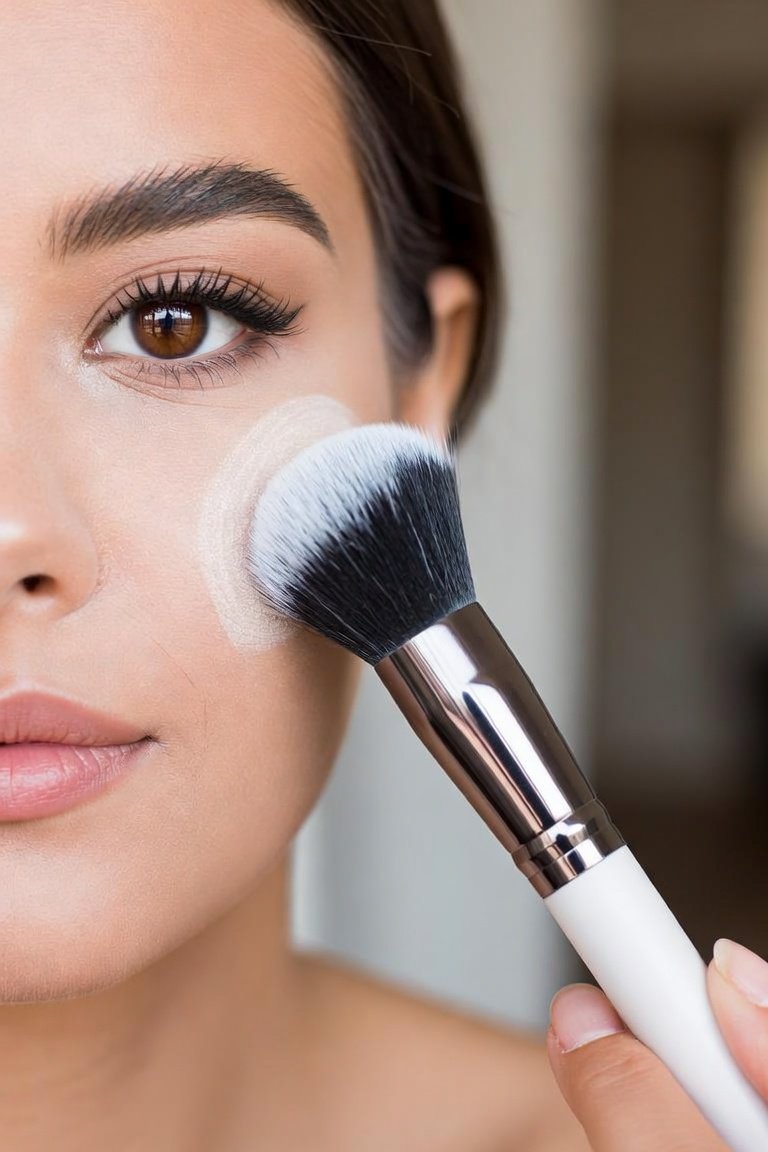
Powder Brush Guide: Choosing and Using One for Loose and Pressed Powder
Here is a myth that ruins a lot of base makeup: the bigger and fluffier the powder brush, the lighter the finish. Size helps, but density, shape and how much product you load decide whether powder melts into skin or sits on top of it.
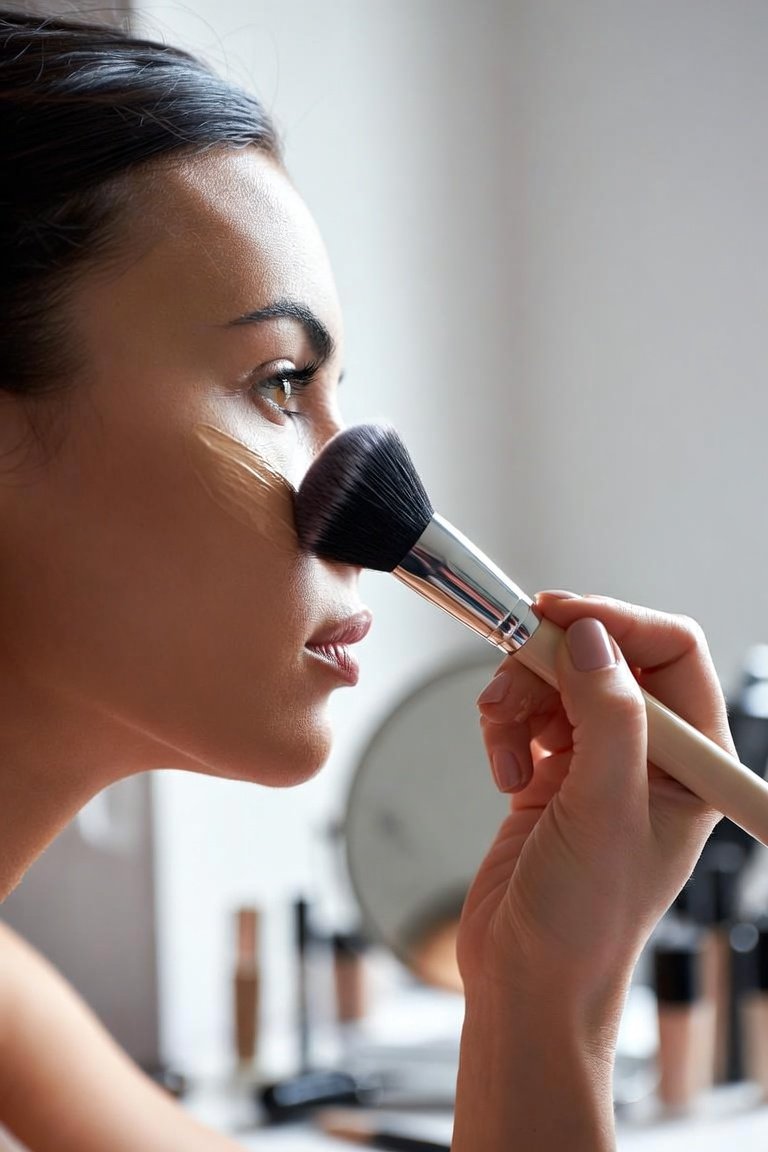
Quick answer: a powder brush is a large, soft face brush that spreads a thin, even layer of powder over foundation or bare skin. A loose, fluffy head gives the sheerest result, while a denser head gives more coverage and suits pressed powder. Tap off the excess, press or sweep lightly from the center of the face outward, and keep a smaller brush for under the eyes and around the nose.
Care matters as much as the brush. The American Academy of Dermatology advises washing makeup brushes every 7 to 10 days. Cleveland Clinic gives a looser rule for brushes used with dry products like powder: about once a month. Both agree on the basics: gentle shampoo, clear rinse, and flat drying.
Loose and pressed powder also behave differently on the bristles. Loose powder is fine and airy, so it clings to fluffy fibers and needs a firm tap. Pressed powder is compacted, so a slightly denser brush picks it up more easily.
This guide walks through the common myths, how brush shape changes the finish, a quick self-check, a step-by-step method, and cleaning advice.
Recommended Powder Brushes for Loose and Pressed Powder
Each pick below is a powder brush: large domed brushes for all-over setting, a denser option for pressed powder, and a smaller blurring brush for detail areas. Match the head size and density to the self-check further down. See how we test and choose products for the rules behind every pick.


Key Takeaways
- Density and shape change the finish more than head size alone: fluffy means sheer, dense means more coverage.
- Loose powder suits a soft, airy brush and a firm tap; pressed powder picks up better with a slightly denser head.
- Load a little, tap off the excess, and apply from the center of the face outward.
- Press or roll powder over foundation that is still settling; sweep only once the base has set.
- Use a small brush for under the eyes and around the nose, where a big head drops too much product.
- Dermatologists advise washing brushes every 7 to 10 days; Cleveland Clinic allows about monthly for dry-product brushes.
- Always dry brushes flat with the head over the counter edge, never upright, to protect the glue that holds the head in place.

Powder Brush Myths That Lead to a Cakey Finish
Most powder problems come from a few beliefs that sound sensible but work against you. Clearing them up first makes the rest of this guide easier to follow.
Myth 1: bigger always means lighter. A huge head spreads product over a wide area, so each spot gets less. However, a huge head that is also densely packed can still deposit a lot. The number and stiffness of the fibers matter as much as the diameter.
Myth 2: more powder means longer wear. Extra powder does not lock makeup in place for longer. Instead, it sits in fine lines and pores, and it can look dry or grey by midday. A thin, even layer usually lasts better than a thick one.
Myth 3: you should buff powder in hard circles. Firm circles can move the foundation underneath, especially if it has not set. Light pressing or gentle sweeps keep the base where you put it.
Myth 4: one brush does everything. A single large brush is fine for the cheeks and forehead. Still, it is too big for the under-eye area, the sides of the nose and the chin crease, where most creasing and patchiness start.
How a Powder Brush Works: Density, Shape and Size
Think of the head as a sponge for dry particles. Powder settles between the fibers when you dip or swirl. Then, when the brush touches skin, the tips release some of that powder in the direction you move.
Three features control how that release happens:
- Density: loosely packed fibers hold less product and flex more, so they spread a sheer veil. Tightly packed fibers hold more and push it into the skin, which gives more coverage.
- Shape: a domed or rounded head follows the curves of the cheeks and forehead. A tapered head concentrates product at the tip. A flat top presses product in, much like a buffing brush.
- Size: a large head covers the face in a few strokes. A small head gives control in tight spots. Most people end up using one of each.
Fiber length plays a part too. Longer, floppier fibers bend on contact and spread product thinly. Shorter fibers stay stiff and press more product down. That is why two brushes of the same width can give very different results.
Loose vs Pressed Powder: Does Each Need a Different Powder Brush?
Loose and pressed powder are often treated as the same product in a different container. They are not. Loose powder is a free-flowing, very fine powder. Pressed powder is compacted into a pan, usually with binders that help it hold together and grip the brush.
That difference changes how each one loads onto a powder brush and how it lands on skin.
| Feature | Loose powder | Pressed powder |
|---|---|---|
| Texture | Very fine and airy; can fly off the brush | Compacted; stays in the pan until you swirl |
| How it loads | Clings deep in fluffy fibers; easy to overload | Picks up mostly on the tips; can be too little on a very soft head |
| Best brush density | Soft, fluffy, loosely packed | Medium to dense |
| Loading method | Tap a little into the lid, dip, then tap the handle firmly | Swirl lightly two or three times, then tap once |
| Typical use | Setting the whole face at home | Touch-ups during the day and on the go |
| Common mistake | Too much product in the fibers, which looks chalky | Hard swirling that breaks up the pan and loads unevenly |
In short, one soft, domed powder brush can handle both, as long as you adjust the loading. If you use pressed powder most days and find a fluffy head picks up too little, a denser brush is the simpler fix. If you also apply liquid foundation with a brush, our guide to choosing a foundation brush covers that step.
Which Powder Brush Fits You? A Quick Self-Check
Go through these statements and note which ones sound like you. Then read the matching result.
- A. My main goal is the most natural finish possible, mainly to take down shine.
- B. I use loose powder at home to set my whole face.
- C. Pressed powder is my usual choice, and I want more coverage from it.
- D. My under-eyes crease or my foundation separates around my nose.
- E. Touch-ups away from home are part of my day.
Mostly A or B: a large, fluffy, domed brush with long, soft fibers. It spreads the thinnest layer.
Mostly C: a medium-sized, denser round or flat-top head that presses product into the skin.
D in your answers: add a small, tapered or blurring brush for detail areas, whatever else you pick.
E in your answers: a compact or retractable brush that fits a bag, used with pressed powder.
Most people land on two brushes: one large head for the face and one small head for the details. That pair covers almost every powder routine.
Powder Brush Shapes Compared
Brand names vary, but most face brushes for powder fall into a handful of shapes. Here is what each one does well and where it struggles.
| Shape | Finish | Good for | Watch out for |
|---|---|---|---|
| Large domed or round | Sheer, soft | All-over setting with loose or pressed powder | Too big for under the eyes |
| Tapered | Sheer to medium | Placing powder on the T-zone and cheekbones | Can leave a stripe if you drag the tip |
| Flat-top or dense kabuki | Medium to full | Pressing pressed powder or mineral powder into skin | Easy to overdo on dry skin |
| Angled | Sheer to medium | Cheeks and the sides of the face | Less even across the forehead |
| Small blurring | Medium, targeted | Under the eyes, around the nose, the chin crease | Slow for the whole face |
Dense kabuki heads also double as foundation buffers, which is why they often appear in both categories. Our flat-top kabuki guide explains that shape in detail.
How to Apply Powder With a Powder Brush, Step by Step
This method works with loose or pressed powder. The aim is a thin, even layer that you can build up only where you need it.
- Let your base settle. Give foundation and concealer a minute or two to set. If they are still very wet, powder can grab in patches.
- Load a small amount. For loose powder, shake a little into the lid and dip the brush. For pressed powder, swirl lightly two or three times.
- Tap off the excess. Tap the handle on the edge of the container or on the back of your hand. Most of the heavy look comes from skipping this step.
- Start where you get shiny. Begin on the forehead, nose and chin, since these areas usually need the most control.
- Press, then sweep. Press or roll the brush over areas where the base is still fresh, so you do not drag it. Then use light, outward sweeps on the rest.
- Switch to a small brush for detail. Use a small head under the eyes, beside the nose and at the chin crease with very little product.
- Blend the edges with a clean brush. Sweep a clean, fluffy brush over the face to soften any visible powder along the hairline and jaw.
Technique by Skin Type
The same brush behaves differently on different skin. So adjust how much powder you use and where, rather than buying a new brush for every change.
- Oily skin: focus powder on the T-zone and press it in with a slightly denser head. Blotting first removes oil that would otherwise turn powder patchy.
- Dry skin: use the fluffiest brush you have and very little product. Keep powder to the center of the face and skip areas that flake.
- Combination skin: treat it as two zones. Use a dense head on the oily areas and a soft sweep elsewhere.
- Mature skin or fine lines: less is better. Use a small brush under the eyes and a light hand, because powder settles into lines when it is heavy.
- Sensitive skin: choose soft, smooth fibers and keep the brush clean, since rough or dirty bristles can irritate.
Habits That Help and Habits That Hurt
A few habits separate a smooth, soft finish from a dusty or streaky one. Most of them take seconds.
- Tap off excess before every pass
- Press over fresh foundation
- Work from the center outward
- Keep a small brush for detail areas
- Wash brushes on a regular schedule
- Dry them flat, head over the counter edge
- Dip straight into a full jar of loose powder
- Scrub in hard circles over wet base
- Use the same large brush under the eyes
- Share brushes with friends
- Stand wet brushes upright in a cup
- Keep using a brush that sheds or smells
Cleaning and Drying Your Powder Brush
Advice on how often to clean differs, and the gap is worth knowing. The American Academy of Dermatology recommends washing makeup brushes every 7 to 10 days. By contrast, Cleveland Clinic suggests about once a week for brushes used with wet products and about once a month for dry-product brushes such as powder and blush.
A sensible middle ground: if you have acne-prone or sensitive skin, or you use the brush with liquid or cream products too, follow the weekly schedule. If it only ever touches powder and your skin is calm, every few weeks is reasonable.
Both sources describe a similar method:
- Rinse the tips under lukewarm water, keeping the handle and base dry.
- Work in a small amount of gentle shampoo or mild soap with your fingers or palm.
- Rinse until the water runs clear, then repeat if needed.
- Squeeze out excess water gently with a clean towel or paper towel.
- Lay the brush flat with the head hanging over the edge of the counter, and let it dry fully, often overnight.
Drying position matters. The AAD explains that drying brushes upright lets water run down into the base, which loosens the glue that holds the head to the handle. That is a common reason big fluffy brushes start to shed.
Buying Checklist: Synthetic vs Natural Bristles and More
You do not need a premium brush to get a good finish. Several budget brushes have large followings. Instead of the label, check the details below.
- Fiber type: modern synthetic fibers are soft, easy to wash and dry quickly. They also work with cream and liquid products. Natural hair can feel soft with powder, yet it needs gentler washing and is not vegan.
- Density you can feel: press the head against your palm. If it splays wide, it will be sheer. If it holds its shape, it will give more coverage.
- Head size: large for the whole face, small for detail. A medium head is a fair compromise if you want only one.
- Ferrule and glue: the metal band should be firm and not wobble. A loose ferrule leads to shedding.
- Handle: a longer handle gives a lighter touch; a short handle gives more control and travels well.
- Shedding reports: a few loose fibers at first are common. Constant shedding after the first washes is not.
Honest Limits
Even the best brush cannot rescue a powder that does not suit your skin. If a formula looks chalky, flashes white in photos or clings to dry patches, the answer is usually a different powder or less of it.
A brush also cannot stop oil. On very oily skin, powder buys time, but shine will return during the day. Blotting and touch-ups are normal, not a sign of a bad tool.
Finally, product listings describe softness and density in marketing terms. Customer ratings tell you about general satisfaction, not how a brush will behave with your skin and your powder. Be ready to adjust your technique for the first week with any new brush.
When to See a Professional
A brush and a good routine handle most everyday makeup. However, it makes sense to get outside help when:
- You have a big event, such as a wedding or photoshoot, and want makeup that holds up under flash.
- You cannot find a powder shade or formula that looks natural on you.
- Your skin reacts with redness, bumps or itching after makeup, even with clean brushes.
- Breakouts get worse when you wear powder, and changing products has not helped.
A makeup artist can help with shade, formula and technique. For skin reactions or breakouts that do not settle, a dermatologist is the right person to ask.
- Small brushes for baking makeup: smaller, denser brushes for setting under the eyes.
- Round kabuki brushes: domed brushes for powder, bronzer and mineral makeup.
- Buffing brushes: blending foundation into the skin with small circular motions.
- Cleaning makeup brushes: how often, what to use and safe substitutes.
- When to replace makeup brushes: shedding, wobbly heads and the other signs.
Frequently Asked Questions
What is a powder brush used for?
It applies a thin, even layer of loose or pressed powder to set makeup, reduce shine or give bare skin a soft finish.
Can I use a powder brush with loose powder?
Yes. Pour a little into the lid, dip the brush, and tap off the excess before you apply it.
Which powder brush is best for pressed powder?
A medium-sized, slightly denser head picks up pressed powder more easily than a very fluffy one.
Should I press or sweep powder?
Press over foundation that is still settling, then use light sweeps on areas where the base has set.
Can a powder brush be used for foundation?
A dense kabuki-style head can buff foundation. A fluffy powder head is too soft for liquid and will soak it up.
How often should I wash my powder brush?
The AAD suggests every 7 to 10 days. Cleveland Clinic allows about once a month for brushes used only with dry powder.
Why does powder look cakey on me?
Usually too much product, a brush that is too dense for your skin, or powder pressed over very wet foundation.
Are synthetic bristles good for powder?
Yes. Modern synthetic fibers are soft, spread powder evenly and are easier to clean than natural hair.
Why is my new brush shedding?
A few loose fibers early on are common. Constant shedding points to weak glue or upright drying.
When should I replace a powder brush?
Replace it when the fibers fray, lose their shape, shed a lot or stay stiff and smelly after washing.
The Bottom Line
A powder brush works best when you choose it by density and shape, not just size. Soft and fluffy gives a sheer veil with loose powder, while a denser head helps pressed powder and adds coverage. Add a small brush for the under-eyes and around the nose, and most powder problems disappear.
Then keep the routine simple: load a little, tap off the excess, press before you sweep, and wash the brush on a schedule that suits your skin. If you want extra color on the cheeks too, our guide to choosing a blush brush is a good next read.



9 Comments