How to Clean a Hair Brush Properly: Steps, Timing and Brush-Type Rules
You pull the brush through freshly washed hair, and a gray tangle of lint, oil and old hairspray comes along for the ride. Knowing how to clean a hair brush properly fixes that, because a brush that holds yesterday’s buildup puts some of it straight back on your clean hair.
Quick answer: pull out the trapped hair first, then wash the bristles in warm water with a few drops of gentle shampoo or dish soap. Scrub with an old toothbrush, rinse, and let the brush air-dry bristle-side down. Plastic and metal brushes can take a full dip. Wood, boar and padded brushes need only the bristles wet. Aim for a deep clean every one to two weeks, sooner if you use a lot of product.
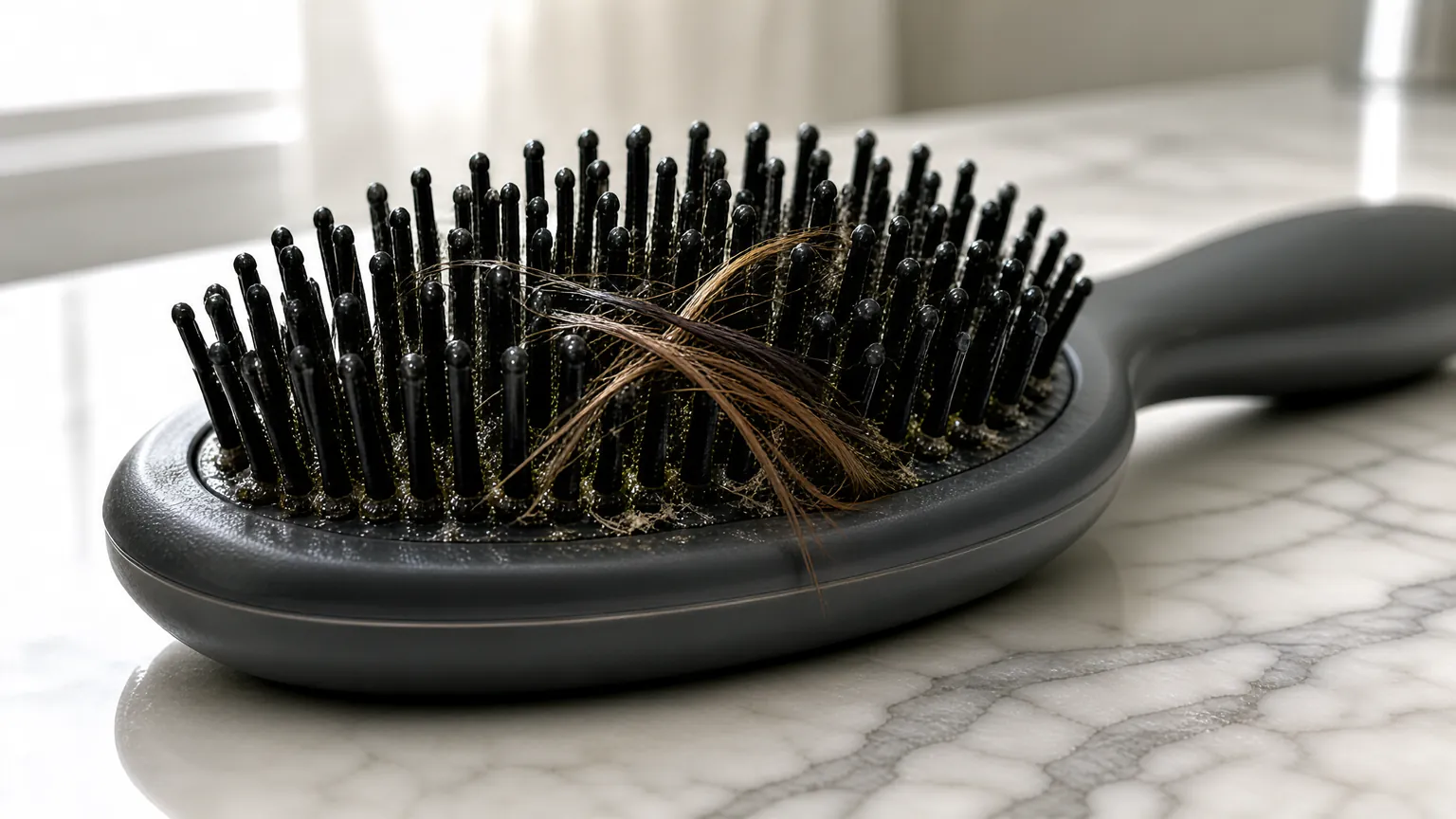
Expert advice on timing varies, so there is no single rule. Healthline says people who use styling creams, gels or hairspray often should wash a brush about once a week, while light product users can wait two to three weeks. Salon stylists quoted by NBC Select suggest every one to two weeks, and every three to four days for fine, oily hair or heavy product use.
The hair itself is normal. The American Academy of Dermatology says it is normal to shed 50 to 100 hairs a day, and some of that ends up in your brush. What matters is what clings to it: oil, product and dust.
Below you will find a quick check, a step-by-step method, a table by brush type, drying and storage rules, the mistakes to skip and the point where replacing beats cleaning.
Recommended Hair Brush Cleaning Tools
These picks are brush cleaner rakes and combs that lift hair from the bristle base, which is the messy first step. A cleaning tool does the lifting, but the soap-and-water wash below still does the real cleaning. See how we test and choose products for the rules behind every pick.


Key Takeaways
- Remove trapped hair first, so the soapy water can reach the base of the bristles.
- Wash with warm water and a few drops of gentle shampoo or dish soap, then scrub the bristles with a toothbrush.
- Match the method to the brush. Plastic and metal can be dipped fully, while wood, boar and padded brushes need only the bristles wet.
- Deep clean about every one to two weeks, and sooner if you use styling products often or have fine, oily hair.
- Air-dry bristle-side down so water drains away from the cushion and the handle.
- Skip long vinegar soaks on metal or wooden brushes, because strong mixtures can rust or crack them.
- Replace a brush with bent or missing bristles, a cracked pad or buildup that returns after several washes.
How to Tell If It Is Time to Clean a Hair Brush
Most people wait until the brush looks gross. A quick check catches the problem earlier, so run through it before your next wash day. Tick each statement that is true for you.
- You can see a mat of hair at the base of the bristles. Hair that is not removed every couple of days piles up.
- The bristles look gray, sticky or coated. That is oil and product, not just dust.
- Your hair feels greasy soon after brushing. A dirty brush can spread residue from one session to the next.
- You use gel, cream, wax or hairspray most days. Product builds up fastest on the brush that styles it.
- Your hair is fine or oily. Stylists quoted by NBC Select suggest more frequent cleaning for these hair types.
- You share the brush with someone else. Shared brushes should be disinfected after each use.
0 to 1 ticks: a surface hair removal every few days and a wash every couple of weeks is likely enough. 2 to 4 ticks: wash weekly. 5 or more: start with a full wash today, then reset your schedule.
Why a Hair Brush Gets Dirty So Fast
A brush works like a comb and a sponge at once. Every stroke collects shed hair, then lifts oil from your scalp and spreads it along the strands. Styling products add a sticky layer, so dust and lint cling to it.
The AAD says shedding 50 to 100 hairs a day is normal, so a brush will always catch some. The hair is not the problem. It simply traps the grime and holds it against the base of the bristles, where a rinse alone will not reach.
The material changes how fast this happens. NBC Select notes that boar bristles absorb scalp oil and get greasy quickly, which is one reason they need a regular wash.
How to Clean a Hair Brush Step by Step
This method blends the advice from Healthline and the stylists quoted by NBC Select. Give yourself about ten minutes plus drying time.
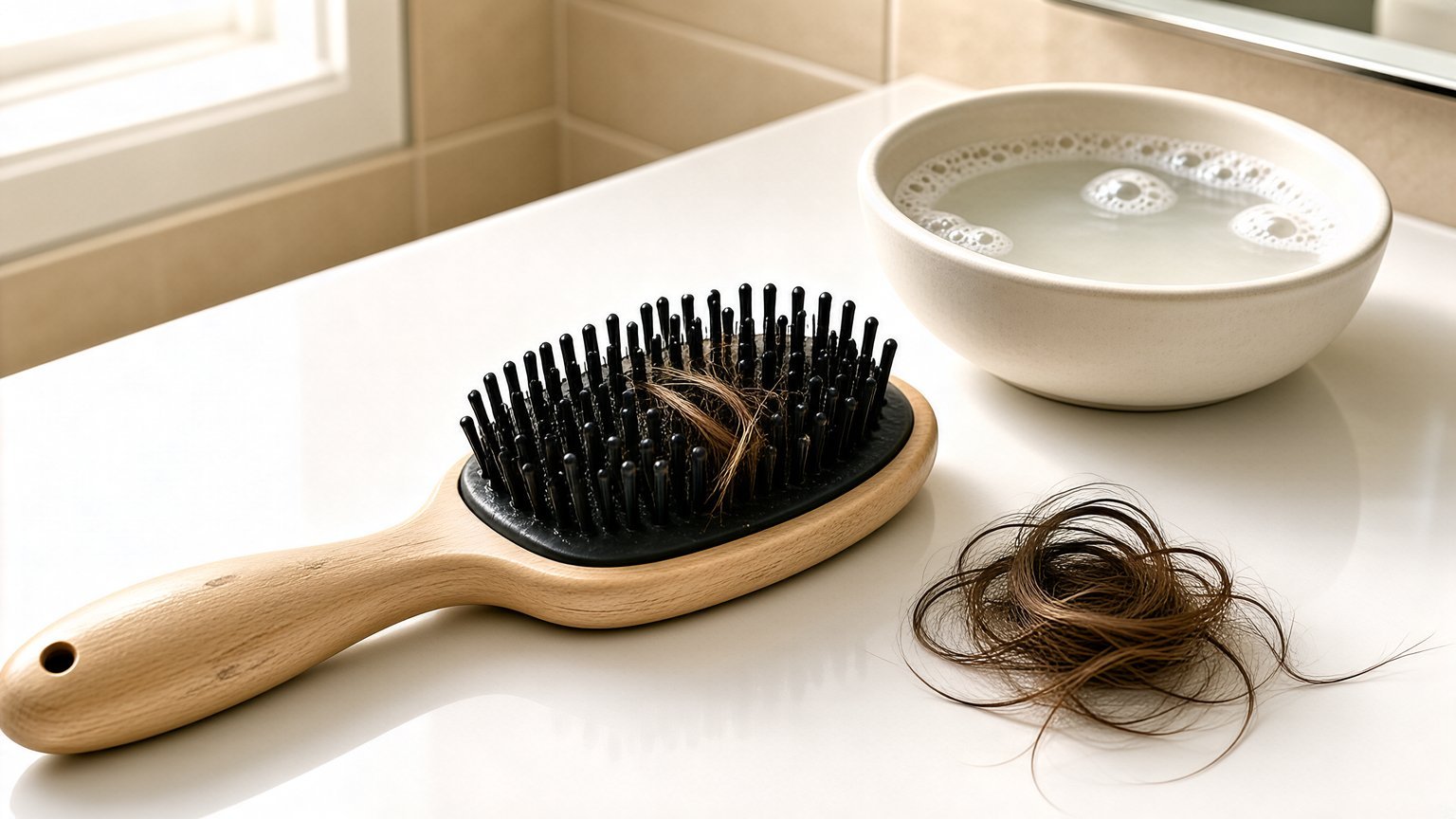
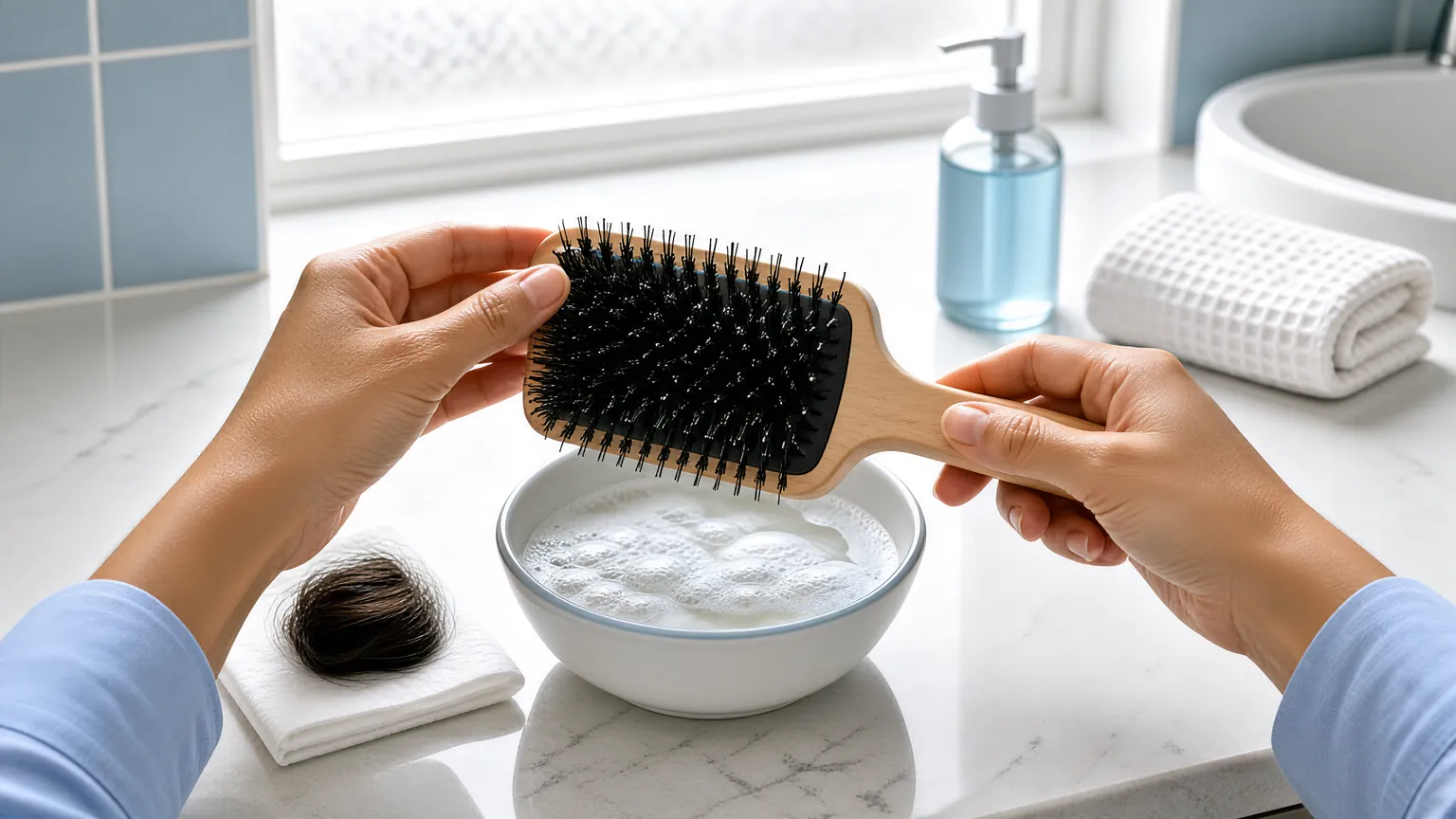
- Pull out the loose hair. Use your fingers, a brush cleaner rake, or the pointed end of a rat-tail comb to lift hair from the base. Cut stubborn tangles with scissors, taking care not to nick the bristles.
- Mix a gentle wash. Add a few drops of mild or clarifying shampoo, or dish soap, to a bowl of warm water. Healthline also mentions an optional 1 to 2 teaspoons of baking soda.
- Dip and shake. For a plastic brush, Healthline suggests soaking for 3 to 5 minutes and dipping the brush several times. For wood, boar or padded brushes, dip only the bristles and keep the base dry.
- Scrub the bristles. Use an old toothbrush and work from the base outward, so you lift the grime instead of pushing it down.
- Rinse out the soap. Rinse under cool water, or for a padded or wooden brush sprinkle water on the bristles and wipe the base with a damp cloth.
- Disinfect if needed. For plastic brushes that are shared, or if you have dandruff, spray or wipe with rubbing alcohol or a diluted barber disinfectant, following the label.
- Dry it properly. Lay a paddle brush bristle-side down on a clean towel, or rest a round brush so it lies flat. Let it dry fully before the next use.
How to Clean a Hair Brush by Type: Plastic, Wood, Boar and Round
Most mistakes come from treating every brush the same. A soaked wooden handle swells, and a padded base can hold water for days. This table separates what to dip from what to keep dry.
| Brush type | How wet can it get? | Watch out for |
|---|---|---|
| Plastic or nylon paddle | The whole brush can go in the bowl, but dip bristles only if the base is padded. | Water trapped under a cushion. NBC Select suggests washing nylon about every five to seven uses. |
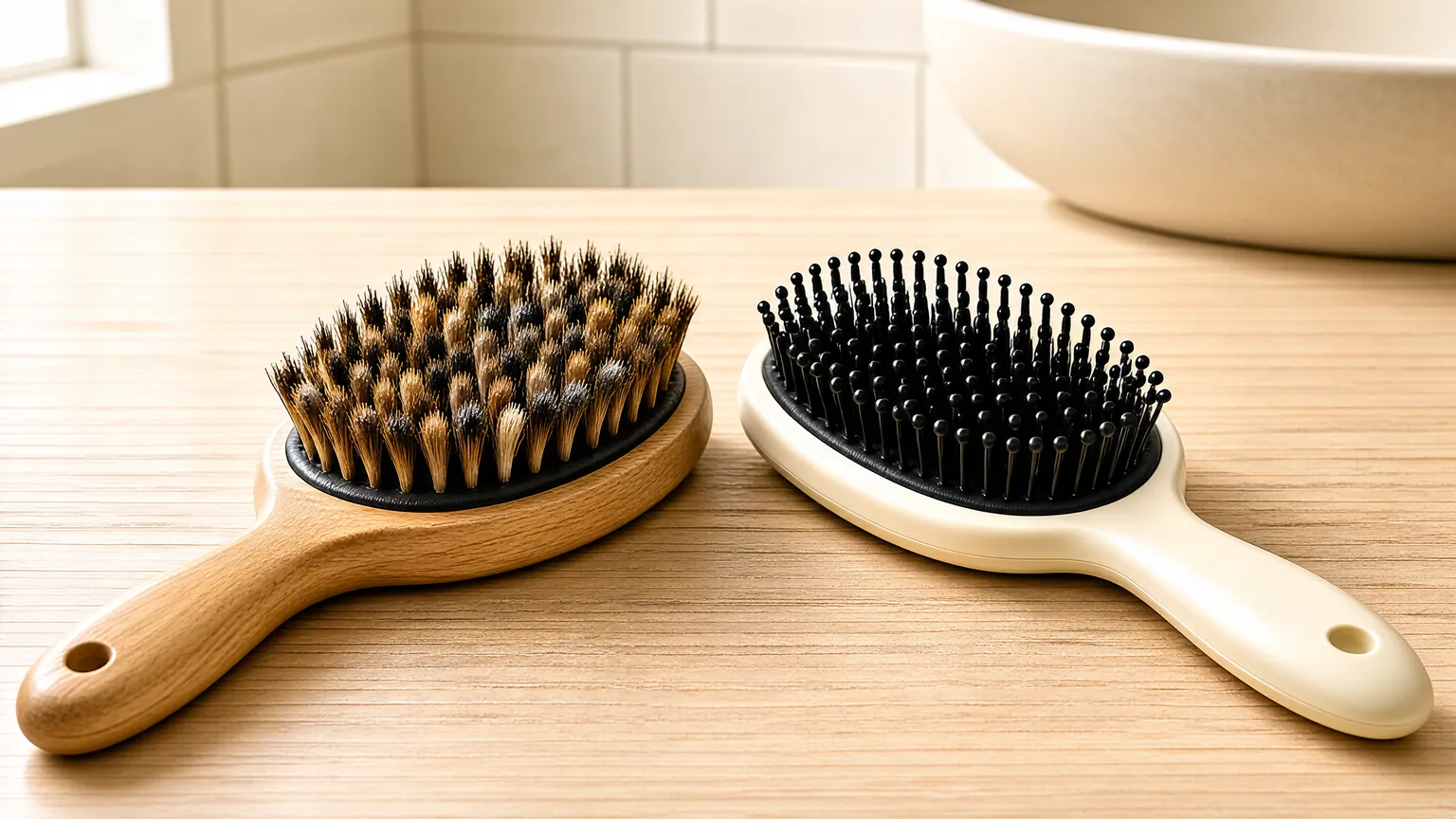
| Wooden handle or wooden body | Dip the bristles only. Healthline warns that full submersion can damage the wood and its finish. | Warping, cracked finish and soaking in harsh mixtures. |
| Boar bristle | Dip the bristles only. They absorb oil and can get greasy quickly. | Over-soaking the cushion. A wash every one to two weeks is the stylist range. |
| Metal or ceramic round brush | Can be fully submerged, according to NBC Select. | Water inside the barrel. Rest it flat so it drains and does not stay damp. |
| Padded or cushion brush (any material) | Bristles only. Keep the padding dry. | A cracked pad lets water in and means it is time to replace it. |
Healthline does not address boar-bristle or round brushes, so the guidance for them comes from the stylists in the NBC Select piece. If your brush maker gives care instructions, follow those first.
How Often to Clean a Hair Brush by Hair Type
Sources agree that frequency depends on your hair and your products, not a calendar. Healthline calls it a matter of no hard rules, and the stylists give a few ranges, which are summarized below.
| Your situation | Suggested deep clean |
|---|---|
| Fine or oily hair | Every three to four days (NBC Select experts) |
| Heavy styling product use | About weekly (Healthline) or every three to four days (NBC Select experts) |
| Thick or curly hair, brushed once or twice daily | Weekly |
| Coily or natural hair | Check around the 10-day mark |
| Dry or damaged hair | Weekly |
| Light product use | Every two to three weeks (Healthline) |
Whatever the schedule, pull hair out of the bristles every couple of days. Healthline gives that as a baseline. Because the ranges overlap, start weekly, look at the bristles, and stretch or shorten the gap from there.
Tools and Disinfectants That Help
You can do the whole job with a bowl, soap and an old toothbrush. A few extra tools make it faster, and they are optional.
- Rake-style brush cleaner. A comb or rake slides under the hair and lifts it from the base in one pull. It is the quickest way to handle step one.
- Rat-tail comb. The pointed end can pick out tight hair and works well on narrow brushes.
- Old toothbrush. It gets between the bristles and into the base.
- Rubbing alcohol or a diluted barber disinfectant. NBC Select experts suggest these for plastic brushes, mainly when a brush is shared or when you deal with dandruff. Follow the dilution on the bottle.
Packing a brush for a trip? Our guide to taking styling tools through airport security covers what to expect. If you keep your brush with other tools, our guide to keeping styling gear organized has storage ideas that stop bristles from collecting lint.
How to Dry and Store a Clean Hair Brush
Trapped water invites mold, so drying is not optional. It is the step people rush, so treat it as part of the wash.
- Paddle brushes: lay them bristle-side down on a clean towel so water drains out of the cushion.
- Round brushes: support them so they lie horizontal. NBC Select says this prevents trapped water and mold.
- Combs: pat them dry before storing them.
- All brushes: wait until the brush is fully dry before you use it or put it in a closed drawer.
Myths About How to Clean a Hair Brush
Some advice is repeated because it sounds sensible. Here is what the sources support.
- “A vinegar soak is harmless.” NBC Select says strong mixtures, such as water and white vinegar, can rust metal combs or crack wooden ones, so keep soaks short or skip them.
- “Soak every brush completely.” Healthline says wood should not be fully submerged, and padded bases should stay dry.
- “Only wash it when it looks dirty.” Oil and product are not always visible, so a schedule works better than waiting.
- “Baking soda is required.” Healthline lists it as optional, and the NBC Select stylists do not mention it. Gentle soap does the main job.
- “Removing the hair is enough.” Hair removal helps, but the oil film stays until you wash the bristles.
Do and Don’t: Quick Reference
Keep this list near the sink. Most brush damage comes from the right-hand column.
- Remove trapped hair every few days
- Use warm water and mild soap
- Scrub bristles with a toothbrush
- Dip only the bristles on wood and padded brushes
- Rinse out all the soap
- Dry bristle-side down
- Disinfect shared brushes
- Soak a wooden brush
- Leave water in the cushion
- Skip the hair removal step
- Use long vinegar soaks on metal or wood
- Put a damp brush in a closed drawer
- Share a brush without cleaning it
- Keep using a cracked or bent brush
When to Replace a Hair Brush Instead of Cleaning It
Cleaning cannot fix damage. NBC Select lists the points at which a brush or comb should be replaced.
- Bristles or teeth are broken, bent or missing.
- The brush pad is cracked or loose.
- The brush still looks dirty after several soaks.
A damaged brush can snag and pull hair, so it undoes the care you put into the rest of your routine.
Honest Limits
This guide uses two main sources, Healthline and a set of salon stylists quoted by NBC Select. Neither is a clinical trial, and we found no study that measures how clean a brush must be to protect your scalp. The timing ranges are expert advice, not proven rules.
The two sources also differ on small points, such as baking soda and how long to soak. Where they disagree, this guide says so. Cleaning tools save time, but star ratings describe buyer experience, not hair science.
When to See a Professional
A clean brush supports scalp care, but it does not treat a scalp condition. See a dermatologist or your doctor if you notice:
- Persistent flaking, itching, redness or sores on the scalp
- Hair shedding that seems much heavier than usual, or patches of hair loss
- Signs of lice or other pests
- A rash after you start using a new hair product or cleaner
- Topsy turvy hair tool: how to use it step by step.
- Removing hair tinsel: with a clamp or without a tool.
Frequently Asked Questions
How often should I clean a hair brush?
Healthline says about weekly with regular product use and every two to three weeks with light use. Stylists suggest every one to two weeks, and sooner for fine, oily hair.
How do I clean a hair brush with a wooden handle?
Dip only the bristles in soapy water and keep the wood out of the bowl. Wipe the base with a damp cloth and let it dry bristle-side down.
How to clean a hair brush with dish soap?
Add a few drops to warm water, dip and swish the bristles, and scrub with a toothbrush. Rinse out all the soap, then let the brush air-dry.
Can I use baking soda to clean a hair brush?
Healthline lists 1 to 2 teaspoons as an optional addition to the soapy water. Gentle soap works on its own, so it is not required.
How do I clean a round hair brush?
Pull the hair out, dip the bristles in soapy water and scrub with a toothbrush. Rinse and rest it horizontally so water drains out and does not stay trapped.
How do I clean a boar bristle hair brush?
Dip only the bristles in warm water with mild shampoo, because boar bristles absorb oil and the cushion should stay dry. Wash about every one to two weeks.
Should I disinfect my brush?
For plastic brushes that are shared or used with dandruff, experts suggest rubbing alcohol or a diluted barber disinfectant. Follow the label, then rinse and dry.
Is vinegar safe for a hair brush?
Be careful. NBC Select says strong mixtures such as water and white vinegar can rust metal or crack wood, so keep any soak short or skip it.
Can I wash a brush with hair still in it?
Remove the hair first, as the Healthline steps do. Once the tangle is gone, the soapy water can reach the base of the bristles.
When should I replace my hair brush?
Replace it if bristles are bent or missing, the pad is cracked, or it stays dirty after several soaks.
The Bottom Line
Knowing how to clean a hair brush is mostly about three habits: pull out the hair often, wash the bristles with mild soap on a schedule that fits your hair, and dry the brush bristle-side down. Match the method to the material, and never soak wood or a padded base.
Start with a weekly wash, then adjust. If the bristles look clean and your hair stays fresh longer, you have found your rhythm. If the brush is damaged, replace it instead of cleaning it again.