

How to Clean Makeup Brushes Without Brush Cleaner (Using What You Already Have)
Your foundation brush feels stiff, your blush brush leaves streaks, and the bottle of brush cleanser ran out last month. The good news: you can clean makeup brushes without brush cleaner using a gentle shampoo and lukewarm water you already have at home. The method matters more than the product.
Quick answer: rinse only the bristle tips under lukewarm water, then swirl them in a bowl of lukewarm water with about a tablespoon of gentle or clarifying shampoo. Work the lather against your palm or a textured mat, rinse until the water runs clear, and squeeze out the water with a paper towel. Then lay each brush flat with the head hanging over the counter edge to dry. Keep water out of the metal ferrule, and skip bleach, boiling water and long soaks.
That routine is not a home hack. It is close to what the American Academy of Dermatology recommends, and the AAD also suggests washing brushes every 7 to 10 days. It even notes that plain soap and water can dry out bristles, which is why shampoo is the first choice and dish soap is a backup for greasy buildup.
Research backs up the habit, with a caveat. Lab studies keep finding bacteria on used makeup tools, yet a 2025 survey found no direct link between how often people washed brushes and skin problems.
Below: a quick cleaner picker, what each household option does, the full steps, fixes for stubborn foundation, and the methods that ruin brushes.
Recommended Supplies to Clean Makeup Brushes Without Brush Cleaner
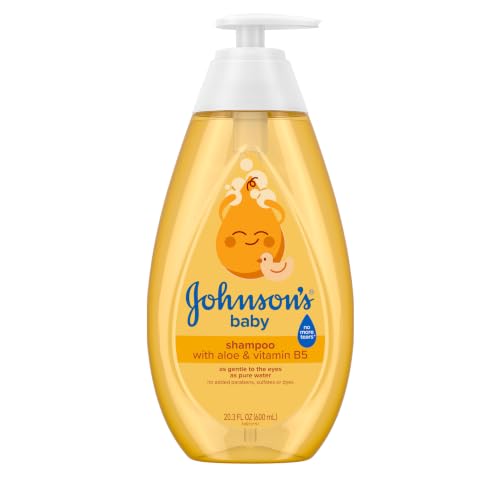
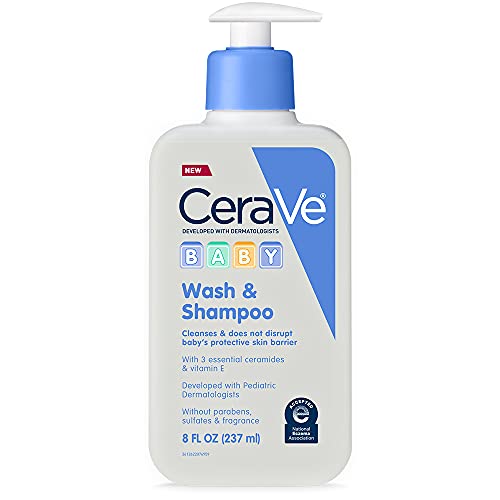
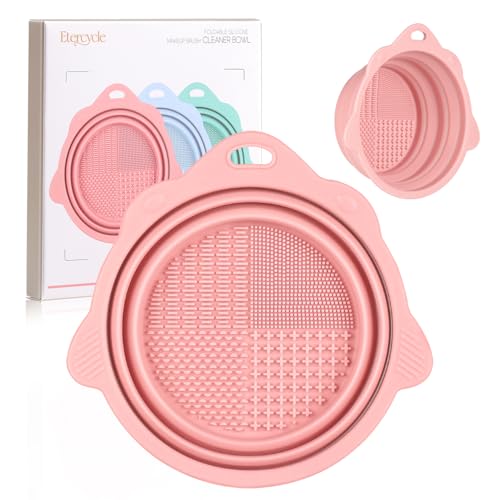
Each pick matches the method in this guide: two gentle, tear-free shampoos, one unscented dish soap for oily buildup, two silicone cleaning surfaces, and two racks that hold brushes head-down while they dry. None of them is a dedicated brush cleanser. See how we test and choose products for the rules behind every pick.




Key Takeaways
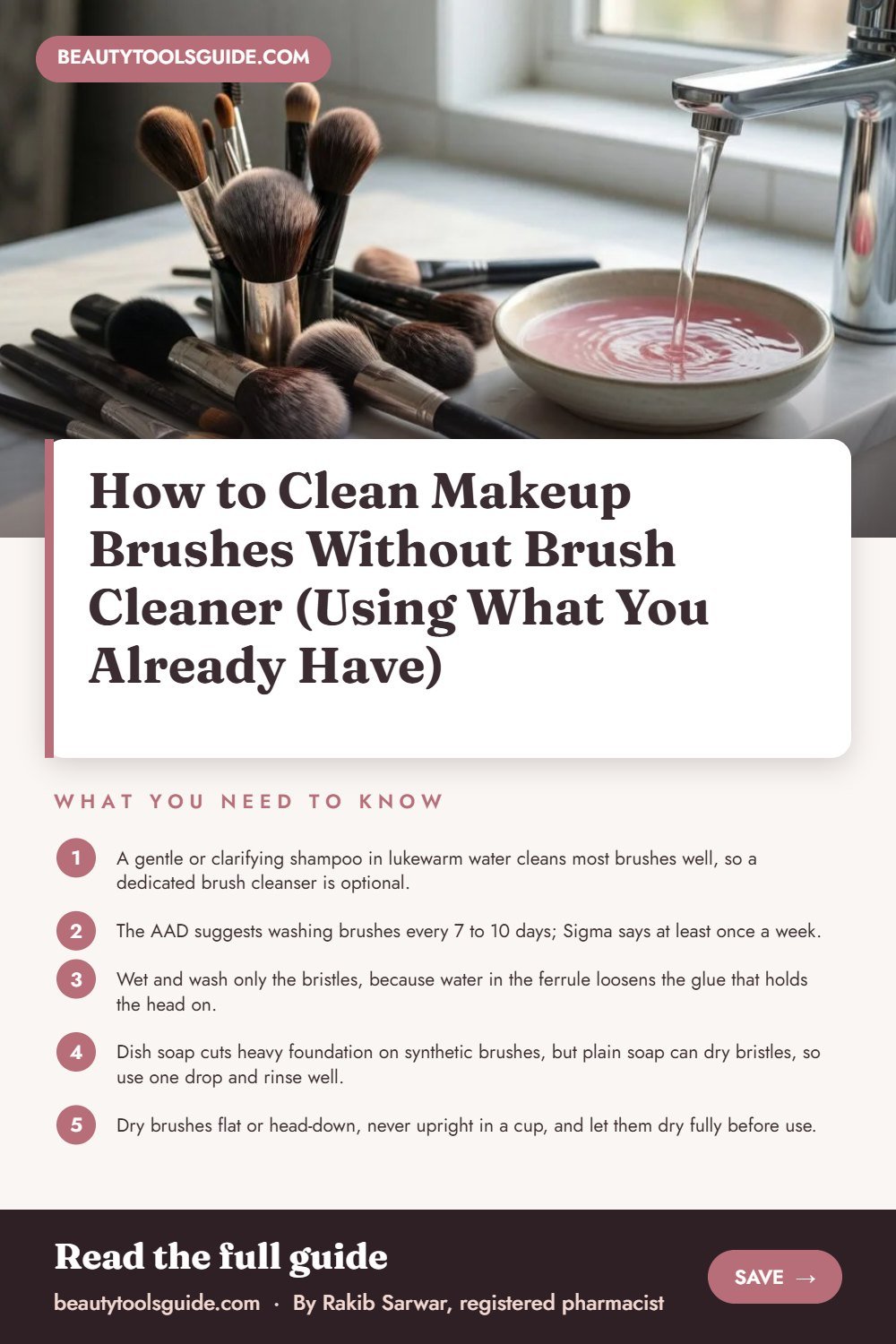
- A gentle or clarifying shampoo in lukewarm water cleans most brushes well, so a dedicated brush cleanser is optional.
- The AAD suggests washing brushes every 7 to 10 days; Sigma says at least once a week.
- Wet and wash only the bristles, because water in the ferrule loosens the glue that holds the head on.
- Dish soap cuts heavy foundation on synthetic brushes, but plain soap can dry bristles, so use one drop and rinse well.
- Dry brushes flat or head-down, never upright in a cup, and let them dry fully before use.
- Bleach, boiling water, long soaks and hot hair dryers damage brushes faster than dirt does.
- Studies find bacteria on used makeup tools, although the link to breakouts is less clear than many guides suggest.
Can You Clean Makeup Brushes Without Brush Cleaner?
Yes. A brush cleanser is a convenience, not a requirement. Its job is the same as any gentle wash: loosen the oil that holds makeup to the bristles so water can carry it away.
Makeup clings to brushes for a simple reason. Foundation, concealer, cream blush and your own skin oils are oily or waxy, and powder sticks to that film. Water alone slides over oil, so it barely moves the residue. A surfactant, the active part of shampoo and soap, grabs oil on one end and water on the other. As a result, the grime lifts off and rinses away.
That is why the American Academy of Dermatology’s own brush-cleaning advice calls for gentle or clarifying shampoo rather than a specialty product. Shampoo is designed to clean hair without stripping it, and many brushes are made of hair or hair-like fibres. So when you clean makeup brushes without brush cleaner, shampoo is the closest match to the job.
Friction does the rest. Swirling the tips in your palm, or on a ridged silicone mat, pushes lather deep into the brush where product collects near the base. In short, a good routine beats a specialty bottle.
What the Evidence Says About Dirty Brushes
The AAD warns that dirty brushes collect product, dirt and oil and can become a breeding ground for bacteria. It links this to breakouts and rashes, and in more serious cases to fungal infections, E. coli or staph infections. It also advises never sharing makeup brushes.
Lab studies show the contamination is real. A 2025 study in the International Journal of Microbiology tested 57 used cosmetic brushes in Jeddah, Saudi Arabia. Gram-positive bacteria made up 81 percent of the isolates, including Staphylococcus species, and some brushes also carried Pseudomonas. In a survey of 370 people, 44.3 percent said they rarely cleaned their brushes.
Sponges look worse. A 2020 Aston University study in the Journal of Applied Microbiology found that 79 to 90 percent of used makeup products were contaminated. Beauty blenders carried the heaviest loads, and 93 percent of them had never been cleaned. That study did not test brushes, though, so treat it as a warning about applicators in general.
Now the contradicting part. The same Jeddah survey found no direct statistical link between how often people cleaned their brushes and the skin problems they reported. In other words, bacteria on a brush do not guarantee a breakout. Even so, regular washing is low-effort insurance, and it also keeps colours true and application smooth.
Pick Your Household Cleaner in One Minute
Not every brush needs the same wash. Answer these questions, then use the matching cleaner in the step-by-step section below.
- What are the bristles made of? Natural hair, such as goat or squirrel (A), or synthetic fibres like nylon or taklon (B)? Check the packaging or brand site if you are unsure.
- What product does the brush use? Powder, bronzer or eyeshadow (A), or liquid and cream products such as foundation and concealer (B)?
- Is the product long-wear or waterproof? If yes, add an oil pre-cleanse before you wash (see the stubborn-makeup section).
- Does the brush still look stained after one wash? If yes, repeat the shampoo step rather than switching to something harsher.
Mostly A: gentle baby shampoo or a mild everyday shampoo. Skip dish soap.
Mostly B: gentle shampoo first. For thick foundation, add one small drop of unscented dish soap, then rinse very well.
Mixed answers: wash natural brushes with shampoo only, and save dish soap for synthetic face brushes.
What to Use to Clean Makeup Brushes Without Brush Cleaner
Most homes have at least two good options. The table below sorts common household cleaners by how well they suit makeup brushes, from best to worst.
| Cleaner | Best for | Watch out for | Verdict |
|---|---|---|---|
| Gentle or baby shampoo | All brushes, especially natural hair | Strongly scented formulas can linger on bristles | First choice |
| Clarifying shampoo | Heavy product buildup on any brush | Can feel drying with very frequent use | Good for an occasional deep wash |
| Unscented dish soap | Synthetic brushes with thick liquid foundation | Strong degreaser; plain soap can dry bristles | One drop, synthetic only |
| Olive or other cooking oil | Loosening waterproof and long-wear makeup | Leaves residue unless washed out with shampoo | Pre-cleanse only |
| Bar or hand soap | Emergencies | Hard to rinse; may leave film or dry bristles | Last resort |
| Rubbing alcohol | Quick spot-cleaning of synthetic tips | Dries natural hair; does not remove oil well alone | Occasional only |
| Bleach or harsh disinfectants | Nothing on a brush | Damages fibres; residue can irritate skin | Avoid |
The AAD’s guidance is the reason shampoo leads the list. It specifically notes that plain soap and water can dry out bristles. Dish soap is still useful, because grease cutting is exactly what dense foundation calls for. However, keep it for sturdy synthetic brushes and rinse until no slippery feel remains.
How to Clean Makeup Brushes Without Brush Cleaner, Step by Step
This method follows the AAD’s steps, plus a few details from brush maker Sigma Beauty’s cleaning guide. Plan on a few minutes per brush, then several hours of drying.
- Rinse the tips. Hold the brush with the bristles pointing down and run lukewarm water over the tips only. Keep the water away from the metal ferrule and handle.
- Make a shampoo bath. Fill a small bowl with lukewarm water and stir in about a tablespoon of gentle or clarifying shampoo.
- Swirl and lather. Dip the tips into the bowl, then massage them in circles in your palm or on a silicone cleaning mat to work the lather in.
- Rinse under running water. Keep the brush pointing down so water drains away from the ferrule rather than into it.
- Repeat until the water runs clear. Foundation brushes often need two or three rounds. Stop when no colour comes out.
- Squeeze, then reshape. Press the bristles gently in a clean, dry paper towel or cloth, then smooth them back into their original shape with your fingers.
- Dry flat or head-down. Lay the brush on a towel with the head hanging over the counter edge, or use a rack that holds it upside down. Wait until it is completely dry before using it.
Stubborn Foundation, Waterproof Makeup and Oily Buildup
Some brushes still feel tacky after a shampoo wash. Long-wear foundation, waterproof eyeliner and cream products are designed to resist water, so they also resist washing. Two tweaks help.
Oil first, then shampoo. Oil dissolves oily makeup, the same way a cleansing balm melts mascara. So work a few drops of olive or another light oil into the dry bristle tips. Then wipe the loosened colour onto a paper towel. Next, wash with shampoo as usual, because any oil you leave behind will attract more dirt and can make the bristles clump.
A drop of dish soap for synthetic brushes. For a dense foundation or concealer brush made of synthetic fibre, add one small drop of unscented dish soap to your palm along with the shampoo. Swirl, then rinse thoroughly. Unscented formulas are a sensible choice for brushes that touch your face, because fragrance is one more ingredient that could stay on the fibres.
Finally, be patient. A second or third lather removes more pigment than one long scrub, and it is far kinder to the bristles than rubbing hard.
Methods That Ruin Brushes: Bleach, Boiling and Soaking
Online hacks promise a deep clean in seconds. Most of them trade a slightly cleaner brush for a shorter brush life, or for a risk to your skin.
- Bleach: it can weaken and discolour bristles, and residue left in a dense brush may irritate the skin it touches later. Gentle washing removes the makeup that bacteria feed on without that trade-off.
- Boiling or very hot water: both the AAD and Sigma call for lukewarm water. Heat can soften the glue in the ferrule and may bend or frizz synthetic fibres.
- Soaking overnight: water creeps up into the ferrule, loosens the glue and can swell wooden handles. Also, damp hair trapped in the base dries slowly.
- Hair dryer on high heat: hot air can loosen glue and frizz bristles. If you must speed things up, use a cool setting from a distance.
- The dishwasher or washing machine: long hot cycles and harsh detergents combine every risk on this list.
Washing, Sanitizing and Replacing Are Different Jobs
Many guides blur these three ideas together. They solve different problems, so it helps to know which one you actually need.
| Job | What it does | How to do it at home | When it matters |
|---|---|---|---|
| Washing | Removes makeup, oil and dead skin, plus many of the microbes stuck in them | Shampoo, lukewarm water and friction | Every 7 to 10 days for personal brushes |
| Spot-cleaning | Takes surface colour off between washes | Wipe on a tissue or dry cloth; a quick spray cleaner for synthetic tips | Between shades or daily, if you like |
| Sanitizing | Aims to reduce microbes after washing | Not usually needed for one person’s brushes; pros follow their own hygiene rules | Shared kits, makeup artists, after a skin infection |
| Replacing | Swaps out a brush that no longer cleans or performs well | Retire it when it sheds, splays or keeps smelling | When washing no longer fixes the problem |
For most people, regular washing is the whole job. A brush that sheds heavily, has a loose head or still smells musty after drying is a sign to stop washing and replace it instead.
Drying and Aftercare That Protect the Brush
Drying is where many brushes get damaged. Water that runs down into the ferrule loosens the glue, and that is why the AAD tells you not to dry brushes upright in a cup. Sigma gives the same reason: standing brushes let water seep into the ferrule.
Instead, lay each brush flat on a clean towel with the head hanging just past the counter edge. That way, air reaches every side of the bristles. Alternatively, use a drying rack, which Sigma also suggests, and pick one that holds brushes upside down. Either way, reshape the bristles first, because they set in whatever shape they dry in.
Give dense brushes plenty of time. Kabuki and foundation brushes can stay damp in the centre for many hours, so leave them overnight. Sigma advises letting brushes dry completely before using them again to prevent mould. If a brush still feels cool at the base, wait longer.
Once dry, store brushes upright in a clean holder or in a case that lets air in. A sealed bag is a poor home for a brush that might still be slightly damp.
Mistakes to Avoid When You Clean Makeup Brushes Without Brush Cleaner
Small habits decide whether a brush lasts for years or falls apart early. Here is a quick checklist.
- Use lukewarm water and gentle shampoo
- Point bristles down while rinsing
- Repeat the lather until water runs clear
- Reshape the head before drying
- Dry brushes flat or head-down
- Wait until they are fully dry
- Soak the head or the ferrule
- Use bleach, boiling water or high heat
- Scrub hard against rough surfaces
- Leave oil or soap in the bristles
- Dry brushes upright in a cup
- Share brushes with other people
The biggest mistake is simply waiting too long. Heavy buildup takes more scrubbing to remove, and scrubbing wears bristles faster. Short, regular washes are gentler overall. If you also use sponges, wash them at the same time, since the research above found them to be even dirtier than most products.
How Often to Wash Makeup Brushes
The American Academy of Dermatology advises washing makeup brushes every 7 to 10 days. Brushes that touch cream or liquid products, such as foundation and concealer brushes, collect residue fastest and are the first to need a wash; powder and blush brushes can stretch toward the ten-day end.
The AAD method is a gentle or clarifying shampoo in lukewarm water, which is why plain bar soap, a known drier of natural bristles, is not the first choice. Whatever you use, rinse only the bristle tips: soaking the whole head lets water reach the glue that holds the bristles in the ferrule, and that is the usual cause of shedding and wobbly heads.
Sponges are a separate case. A university study found that makeup sponges carried the highest bacterial levels of all the items tested, so they need washing after every few uses, not every ten days. Never share brushes or sponges, and if a rash or breakout keeps returning around the areas you apply makeup, see a doctor rather than guessing.
Honest Limits
Home washing removes most makeup and grime, but it does not sterilize a brush. Shampoo is not a disinfectant, and no household routine makes a used brush as clean as a new one.
The evidence also has gaps. The AAD’s 7 to 10 day schedule is practical advice, not a figure from a trial. Meanwhile, the brush study cited above was small and found no direct link between cleaning frequency and reported skin problems. Many things cause breakouts, so clean brushes alone may not clear your skin.
Finally, product advice varies by brand. Some premium natural-hair brushes come with their own care instructions. When a brand gives specific guidance, follow it over general tips, including the ones here.
When to See a Professional
Most brush problems are solved at the sink. Talk to a dermatologist or doctor instead when:
- You have a rash, painful bumps or swelling where you apply makeup
- An eye becomes red, sore or crusty after using eye brushes or eye makeup
- Breakouts persist even though you wash your brushes and skin regularly
- You think a shared brush may have spread an infection
During any skin or eye infection, stop using the brushes involved. Afterwards, wash them carefully, or replace them if your doctor suggests it.
- Choosing a foundation brush: dense synthetic heads for liquid formulas.
- Powder brush guide: soft, fluffy heads for setting powder.
- Stippling brush basics: duo-fibre heads for a light, airbrushed finish.
- When to replace brushes and sponges: lifespans and the signs a tool is past its best.
- Drying makeup brushes: how to protect the glue in the ferrule.
- Cleaning a stained beauty blender: what comes out and what means replace.
Frequently Asked Questions
What is the best way to clean makeup brushes without brush cleaner?
Swirl the bristle tips in lukewarm water mixed with a little gentle or clarifying shampoo, rinse until clear, then dry the brushes flat or head-down.
Can I use dish soap on makeup brushes?
Yes, sparingly. One drop of unscented dish soap helps with thick foundation on synthetic brushes. Rinse well, since plain soap can dry bristles.
Is baby shampoo good for makeup brushes?
It is a popular choice because it is mild. The AAD recommends gentle or clarifying shampoo, and baby shampoo fits the gentle category.
How often should I clean makeup brushes without brush cleaner?
The AAD suggests every 7 to 10 days, and Sigma says at least weekly. Wash liquid and cream brushes at the shorter end of that range.
Can I use hand soap?
In a pinch, but it is harder to rinse out and may dry the bristles. Shampoo is the better everyday option.
How long do brushes take to dry?
Often several hours, and dense brushes can take overnight. Wait until the base feels fully dry before using them again.
Does it work to clean makeup brushes without brush cleaner using olive oil?
Oil helps loosen waterproof and long-wear makeup, but it is a pre-cleanse. Always follow with shampoo so no oily film stays behind.
Should I use hot water to kill bacteria?
No. Both the AAD and Sigma call for lukewarm water. Hot water can loosen the glue and damage synthetic fibres.
Will I damage natural-hair brushes if I clean makeup brushes without brush cleaner?
Not with gentle shampoo and lukewarm water. Skip dish soap and alcohol on natural hair, because they dry it out.
Why does my brush smell after washing?
Usually because water stayed trapped in the base. Dry it head-down with airflow. If the smell remains once dry, replace the brush.
How often should you wash makeup brushes?
Every 7 to 10 days, per the American Academy of Dermatology. Liquid and cream brushes need the shorter end of that range.
Is it bad to never wash makeup brushes?
Dirty brushes can contribute to breakouts, rashes and, rarely, skin infections. Brush-specific studies are limited, but the sponge data is clear enough to take the risk seriously.
Should eye makeup brushes be washed more often?
Yes if they touch cream or gel products or are used near the lash line, because residue there sits close to the eye. Powder eyeshadow brushes can follow the standard schedule.
The Bottom Line
You do not need a special product for clean brushes. Gentle shampoo, lukewarm water and a little friction remove makeup and oil, and they match what dermatologists recommend. Save dish soap for greasy synthetic brushes, and use oil only as a pre-cleanse.
Then protect the brush. Keep water out of the ferrule, avoid bleach and heat, and dry each brush flat or head-down until it is fully dry. Wash every week or so, and replace any brush that sheds, smells or falls apart.


4 Comments