
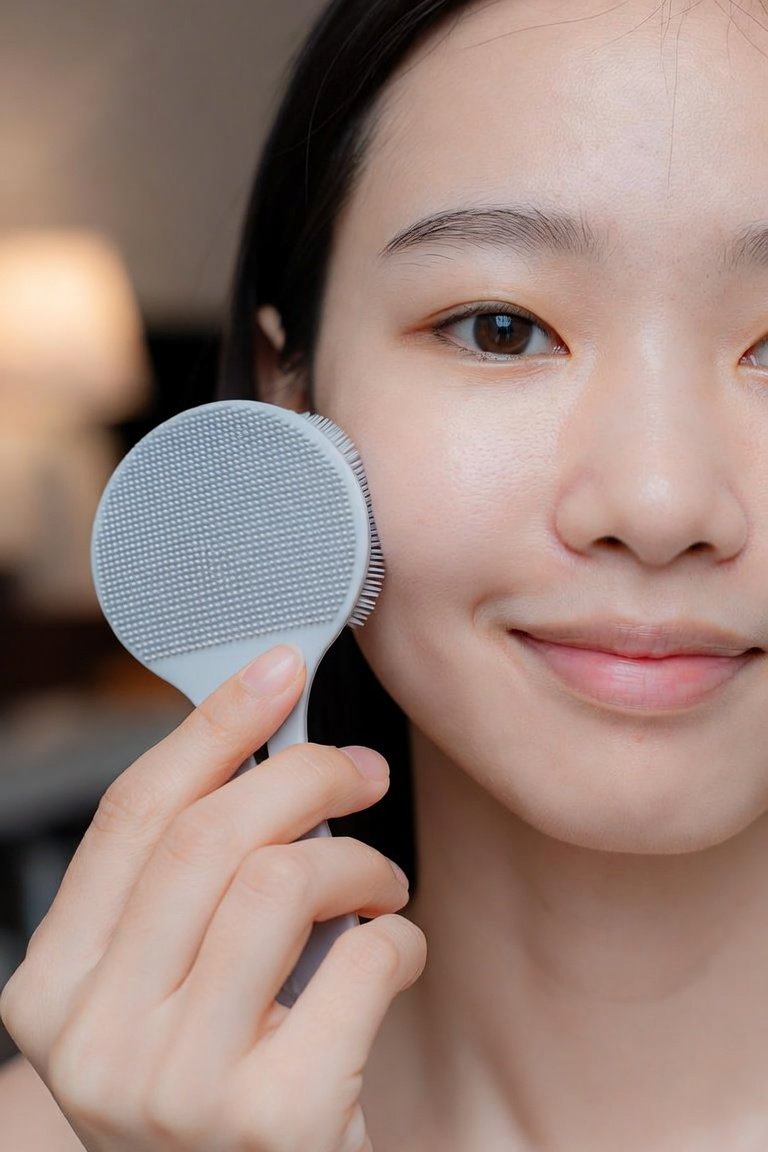
Silicone Facial Cleansing Brush: Manual vs Electric, Silicone vs Bristles, and How to Use One Gently
“Never needs replacing” and “35 times more hygienic” are two of the boldest lines you will see on a silicone facial cleansing brush. Both come from a device maker’s own blog, and we found no independent study behind either one. Even so, silicone does have real, practical strengths. The trick is knowing which claims hold up.
Quick answer: a silicone facial cleansing brush uses soft, flexible silicone nubs instead of nylon bristles, either as a simple hand-held pad or as an electric brush that vibrates. Silicone is non-porous, so it rinses clean and dries fast, and it usually feels gentler than bristles. However, it is still a friction tool. Use light pressure with a mild cleanser, wash the brush often, and stop if your skin stings or turns red.
Dermatologists stay cautious here. The AAD’s face-washing advice says that anything other than your fingertips can irritate skin. Meanwhile, a 2025 study of used cosmetic brushes found common skin bacteria on them, and many surveyed users admitted they rarely cleaned their tools. So a soft material helps, yet your care routine still matters most.
That balance runs through the whole guide. A silicone brush is a comfortable way to spread cleanser and lift sunscreen, and it is easy to rinse. On the other hand, it is not a treatment, and it can still irritate skin that is sensitive or already inflamed.
Ahead: common myths, manual vs electric, silicone vs nylon vs spin brushes, a fit finder, the routine, and cleaning.
Recommended Silicone Facial Cleansing Brushes
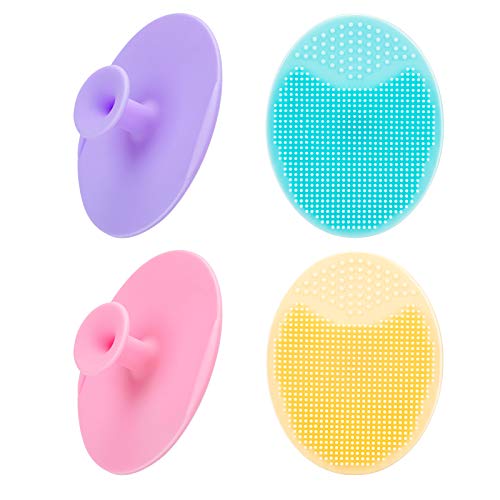
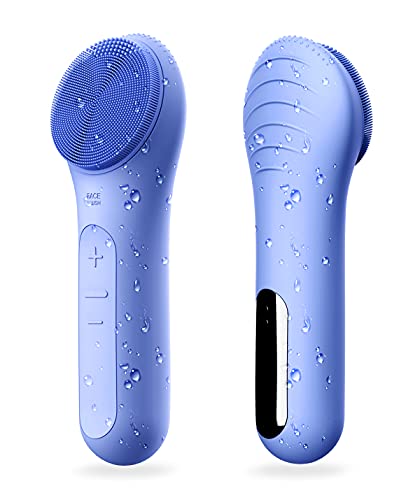
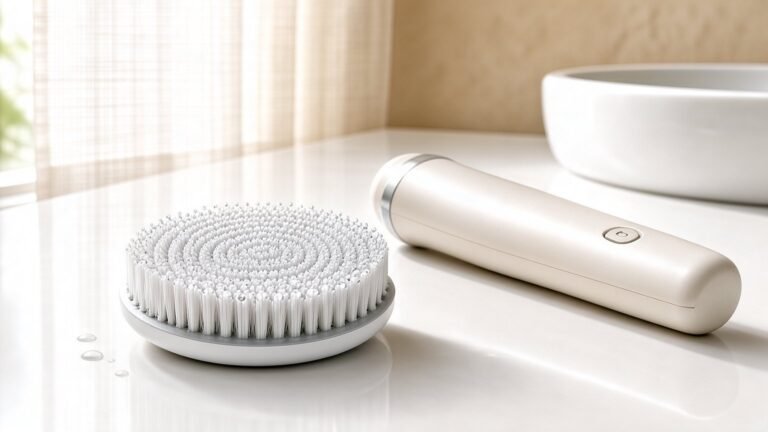
Every pick below is a silicone face brush. The list includes simple manual scrubbers, multi-packs so you always have a fresh spare, and rechargeable electric models that vibrate. Start with a manual pad if you are new to face tools, and choose electric if you want a hands-off feel. See how we test and choose products for the rules behind every pick.




Key Takeaways
- Silicone brushes come in two forms: manual pads you move by hand and electric brushes that vibrate or pulse.
- Silicone is non-porous, so it rinses clean and dries faster than nylon bristles. The popular “35 times more hygienic” figure is a maker claim we could not verify.
- Soft silicone nubs usually feel gentler than nylon bristles or a spinning head, but any tool adds friction.
- The AAD says fingertips are the gentlest option and that scrubbing irritates skin.
- Use a mild cleanser, light circles and about a minute per session, then moisturize.
- Wash the brush after every use and deep-clean it weekly; used cosmetic tools can carry skin bacteria.
- Replace a silicone brush when it tears, turns sticky or stays cloudy after washing.

Silicone Facial Cleansing Brush Myths: Five Claims Checked
Silicone face brushes are sold with big promises. Some rest on basic material science. Others come only from marketing copy. Here is how the common claims compare with what we could actually find.
| Claim | What we found | Fair verdict |
|---|---|---|
| “35 times more hygienic than nylon” | FOREO states this on its own blog. We found no independent study testing it on face brushes. | Plausible direction, unverified number |
| “Never needs replacing” | Also a FOREO blog claim. Silicone does not splay like bristles, but it can tear, stain or turn sticky. | Lasts long, not forever |
| “Removes 99 percent of dirt and oil” | These figures appear on brand pages and listings without published methods we could check. | Treat as marketing |
| “Gentle enough for any skin” | The AAD says anything other than fingertips can irritate skin. | Gentler than many tools, not risk-free |
| “Helps products absorb better” | We found no clinical study showing this for silicone face brushes. | Unproven |
The claims about material do have a logical base. Silicone is smooth and non-porous, so water and cleanser run off it instead of soaking in. As a result, it dries quickly, and fewer damp crevices remain between uses. That practical edge is real even if the exact numbers are not.
If you want to read the maker’s own case, FOREO lays it out in its post on why it uses silicone. Just remember that it is a sales page, not a study.
Manual vs Electric Silicone Facial Cleansing Brush
Both types share the same soft nubs. The difference is what moves them.
- Manual pads and scrubbers are simple silicone disks, ovals or mitts. You supply the motion, so you also control the pressure. They need no charging, cost little and suit travel.
- Electric silicone brushes add a small motor that makes the nubs vibrate or pulse. Many offer several intensity levels, and some add a warm massage end. They feel more hands-off, but they also add speed you need to manage.
For most beginners, a manual pad is the safer first step. It lets you learn how much friction your skin tolerates. Later, an electric model on its lowest setting can feel more thorough for oily skin or heavy sunscreen. For a closer look at vibrating devices, see our guide to sonic face brushes.
Silicone vs Nylon Bristles vs Rotating Brushes
Many buying guides lump every face brush together. In practice, three designs behave very differently on skin, and the material and the motion both matter.
| Feature | Silicone brush | Nylon-bristle brush | Rotating (spin) brush |
|---|---|---|---|
| Contact surface | Soft, flexible nubs | Dense synthetic bristles | Usually bristles, sometimes a silicone head |
| Motion | Your hand, or gentle vibration | Your hand, vibration or oscillation | A motor spins the head in circles |
| Feel on skin | Softest of the three | Firmer; varies with bristle stiffness | Firmest; drags the same spot repeatedly |
| Exfoliation level | Light | Light to moderate | Moderate to strong |
| Drying and hygiene | Non-porous; rinses clean and dries fast | Water and residue sit between bristles | Bristle heads trap moisture like nylon brushes |
| Wear | Tears or turns sticky over time | Bristles splay and need new heads | Bristles splay; heads need replacing |
| Best suited to | Beginners, normal to sensitive-leaning skin | People who want more polish on resilient skin | Oily, thicker skin that tolerates exfoliation |
The spinning design deserves special care. It keeps sweeping the same patch of skin, which raises friction quickly. We cover that in detail in our explainer on how spin brushes work. In short, if gentleness is your priority, silicone with light hand pressure is the easiest place to start.
Hygiene: Where a Silicone Facial Cleansing Brush Really Wins
Every face tool touches cleanser, oil, dead skin and water. Then it sits in a warm bathroom. That is an ideal setting for microbes, so how well a tool cleans up matters.
A 2025 study in the International Journal of Microbiology tested 57 used cosmetic brushes and found bacteria such as Staphylococcus and Pseudomonas species. In a survey of 370 people, 44.3 percent said they rarely cleaned their brushes. Also, 27.8 percent reported skin problems possibly linked to contaminated tools. These were mostly makeup brushes, not face scrubbers. Still, the lesson carries over: any tool that stays dirty can carry germs back to your skin.
This is where silicone helps. Nylon bristles hold water and residue at their base, and they are hard to rinse fully. Silicone nubs, by contrast, have no gaps inside them. Soap reaches every surface, and the brush dries in open air quickly. Consequently, a silicone brush is simply easier to keep clean, as long as you actually clean it.
Fit Finder: Which Silicone Brush Suits You?
Find the line that sounds most like you. Each one points to a style and a starting schedule, based on the AAD’s advice to match exfoliation to skin type.
- “My skin is oily, and sunscreen never feels fully gone.”
- An electric silicone brush on its lowest setting, or a manual pad with a gel cleanser. Start at three times a week.
- “I am new to face tools and not sure how my skin will react.”
- A soft manual pad. Use it two or three times a week with feather-light pressure.
- “My skin is dry, sensitive or quick to turn pink.”
- Fingertips first. If you want a tool, try a manual pad once a week and stop at the first sting.
- “I use a retinoid, benzoyl peroxide or an acid toner.”
- Keep the brush for nights without those products, or skip it. The AAD warns that extra exfoliation can worsen dryness or breakouts.
- “I have a darker skin tone and get dark spots after irritation.”
- Stick to a manual silicone pad with minimal pressure. The AAD notes that aggressive exfoliation can darken spots.
If none of these fit and your skin is calm and normal, a manual pad a few times a week is a sensible default.
How to Use a Silicone Facial Cleansing Brush Step by Step
This routine follows the AAD’s face-washing basics. The brush simply replaces your fingertips for part of the wash.
- Take off eye makeup separately. Use a gentle remover and your fingertips, because the eye area is too thin for a scrubber.
- Wet your face and the brush. Use lukewarm water. Hot water can dry out skin.
- Apply a mild cleanser. Put it on your skin rather than the brush, so it spreads evenly.
- Move in small, light circles. Let the nubs glide. If you use an electric model, start on the lowest level.
- Keep it short. About 15 seconds each on the forehead, nose and chin, and both cheeks is plenty.
- Rinse and pat dry. Rinse away all cleanser, then pat your face with a soft towel.
- Moisturize right away. The AAD recommends moisturizer straight after exfoliating to limit dryness.
- Wash and dry the brush. Rinse it with a drop of soap, shake off water and leave it to dry in the open.
How Often to Use It, by Skin Type
No study sets a schedule for silicone face brushes. The AAD’s general rule is that gentler exfoliation can be done more often, while stronger methods need more rest. Silicone sits at the gentle end, but skin still sets the limit.
| Skin type | Starting point | Best style |
|---|---|---|
| Oily | Three times a week, up to once a day if comfortable | Manual or electric on low |
| Combination | Two or three times a week, focusing on the T-zone | Manual pad |
| Normal | Two or three times a week | Manual pad or electric on low |
| Dry | Once a week, with extra moisturizer | Manual pad, very light pressure |
| Sensitive or reactive | Rarely, or not at all | Fingertips usually win |
| Acne-prone | Ask your dermatologist first | Avoid inflamed spots entirely |
Watch for tightness, stinging, flaking or pink patches. Any of these means you should cut back or stop.
Good and Bad Habits With Silicone Brushes
Small choices decide whether a brush feels soothing or harsh. Here is a quick side-by-side.
- Use a mild, non-gritty cleanser
- Keep pressure feather-light
- Limit each session to about a minute
- Wash the brush after every use
- Dry it in open air
- Moisturize after cleansing
- Add a gritty scrub on top
- Scrub over active, swollen pimples
- Use it on sunburned or broken skin
- Share it with anyone else
- Store it wet in a closed case
- Keep using one that feels sticky
Also think about your whole routine. For example, a silicone brush, an acid toner and a retinol on the same night stack three kinds of exfoliation. Spread them out instead.
Cleaning, Drying and Replacing Your Brush
Care is simple, which is a big part of silicone’s appeal. Even so, it only works if you do it every time.
- After each use: rinse under warm water with a drop of mild soap, rubbing between the nubs with your fingers.
- Once a week: give it a longer wash with warm, soapy water, then rinse well.
- Drying: shake off water and stand or hang it in open air, away from the shower spray.
- Electric models: check the charging port is dry before charging, and follow the maker’s manual for cleaning.
- Travel: let it dry fully before it goes into a case or bag.
Makers of silicone brushes often say they last far longer than bristle heads, and silicone does not splay. However, “long-lasting” is not “forever”. Replace your brush if the silicone tears, turns sticky or tacky, holds a smell or stays cloudy after a wash.
For other low-friction cleansing options, our guide to the soft konjac sponge covers a plant-based alternative with its own care routine.
Honest Limits
Evidence is the main gap. We found no controlled clinical trial of silicone face brushes on skin health. The strongest hygiene data involves makeup brushes. Meanwhile, the silicone research that exists mostly covers toothbrushes: a 2026 scoping review in PLOS Global Public Health found them effective for plaque with a lower risk of gum injury, yet it also called them under-researched. Gums are not facial skin, so that only hints at silicone’s gentleness.
A brush also cannot replace a suitable cleanser, sunscreen or proven treatments. It will not shrink pores permanently, clear acne or reverse aging. Finally, star ratings show general satisfaction, not how a brush will suit your particular skin.
When to See a Professional
A silicone brush is a cleansing aid, not a treatment. Book a visit with a board-certified dermatologist if:
- Redness, burning or flaking continues after you stop using the brush
- Acne is painful, deep or leaving marks
- Dark patches appear after irritation, especially on darker skin
- Eczema, rosacea or psoriasis makes you unsure what your skin tolerates
- Prescription retinoids or other strong treatments are part of your routine
- Bamboo facial cloths: soft, reusable cloths for wiping away cleanser.
- Cellulose facial sponges: removing cleansers and masks without harsh scrubbing.
- Muslin cleansing cloths: a lightly exfoliating cloth for cream and balm cleansers.
- Are cleansing brushes bad for skin: who should avoid them.
- Cleaning a cleansing brush head: rinse, dry and replacement timing.
Silicone Facial Cleansing Brush FAQ
Is a silicone facial cleansing brush better than a bristle brush?
For most people it feels gentler and is easier to keep clean. A bristle brush gives a little more polish, which some oily skin prefers.
Can I use a silicone facial cleansing brush every day?
Some people with oily skin can, with light pressure. Most skin does better with two or three sessions a week.
Is silicone really more hygienic?
It is non-porous and dries fast, so it is easier to clean. The “35 times” figure is a maker claim we could not verify.
Manual or electric: which should I buy?
Start manual if you are new to face tools. Choose electric if you want a hands-off feel and your skin tolerates it.
Does it help with acne?
We found no study showing it clears acne. Avoid rubbing inflamed spots, and ask a dermatologist about treatment.
Which cleanser works best with it?
A mild, non-gritty cleanser. Skip scrubs with beads or granules, because the brush already adds friction.
Can I use it around my eyes?
No. Remove eye makeup with a gentle remover and your fingertips instead.
How do I clean it?
Rinse it with warm water and mild soap after each use, wash it more thoroughly once a week and dry it in open air.
How long does one last?
Often a long time, since silicone does not splay. Replace it if it tears, turns sticky or smells.
Can I share a brush with my partner?
No. Sharing moves oil and bacteria between faces. Each person should have their own.
Bottom Line
Silicone is the gentlest and easiest-to-clean material among common face brushes. That makes it a sensible first tool for many people. Still, the hype outruns the evidence, and dermatologists still rate fingertips as the gentlest option.
Choose manual to start or electric on its lowest setting, use light circles for about a minute, moisturize and wash the brush every time. If your skin stings, flakes or stays pink, put the brush down and go back to your fingertips, or ask a dermatologist what your skin needs.




9 Comments