

Best Sunscreen for Oily Acne-Prone Skin: Labels, Filters and How to Wear It Without Shine
A common story goes like this: a greasy sunscreen leaves your face shiny by noon, a few new bumps appear, and sunscreen quietly drops out of your routine. That is the real risk. Finding a sunscreen for oily acne-prone skin is mostly about reading the right label words, because skipping sun protection is not a fix.
Quick answer: choose a broad-spectrum sunscreen with SPF 30 or higher that says “non-comedogenic” or “won’t clog pores”, ideally in an oil-free gel or fluid texture. Both mineral filters (zinc oxide, titanium dioxide) and chemical filters can work. Use at least a teaspoon for the face, and reapply every two hours outdoors. If a product stings or seems to trigger breakouts, switch formulas and talk to a dermatologist.
That advice comes straight from the American Academy of Dermatology (AAD). Its guidance names three essentials for any sunscreen: broad-spectrum protection, SPF 30 or higher and water resistance. For acne-prone or oily skin, it adds one more label check: the words “non-comedogenic” or “won’t clog pores”. The AAD also notes that gels suit oily complexions.
None of this makes one brand magic. However, it does turn a confusing shelf into a short checklist that you can apply in the store or on a product page.
Below: common myths, what each label term really promises, mineral vs chemical filters, a quick finder, textures, how to apply without extra shine, and when to get help.
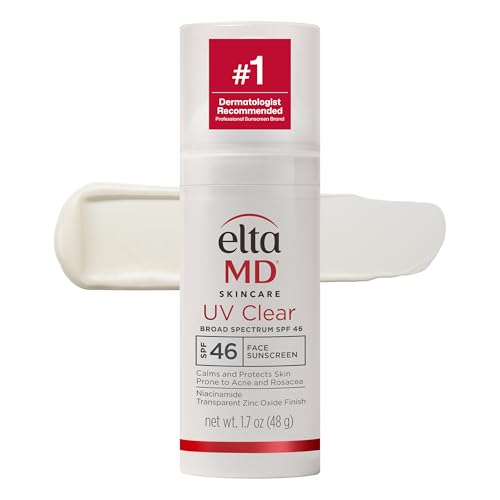
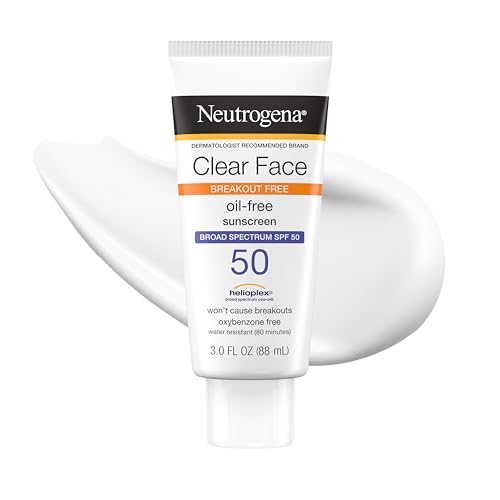
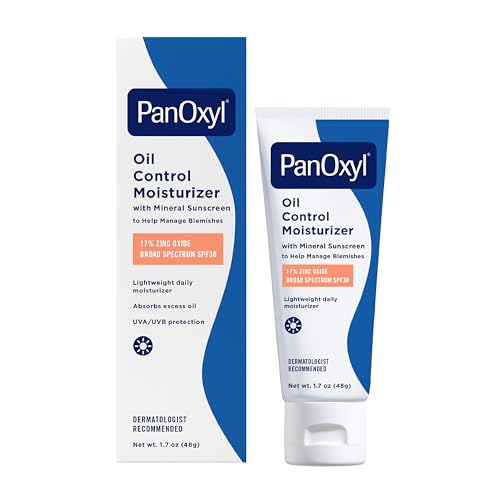
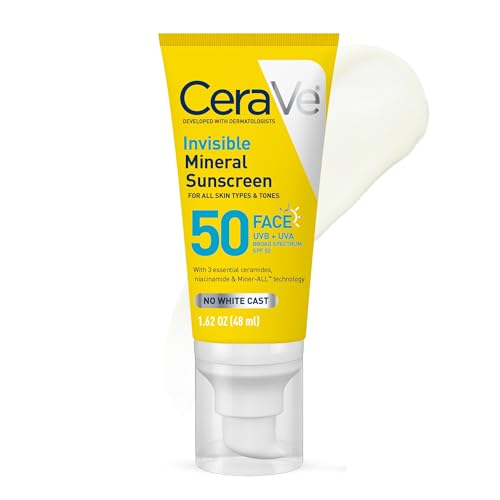
Recommended Sunscreen for Oily Acne-Prone Skin: 7 Picks
Every pick here is a broad-spectrum face sunscreen, SPF 30 or higher, sold for oily, acne-prone or sensitive skin. The list mixes zinc-oxide mineral options with lightweight chemical-filter lotions. Check each Drug Facts panel for the active ingredients and water resistance before you buy. See how we test and choose products for the rules behind every pick.



Key Takeaways
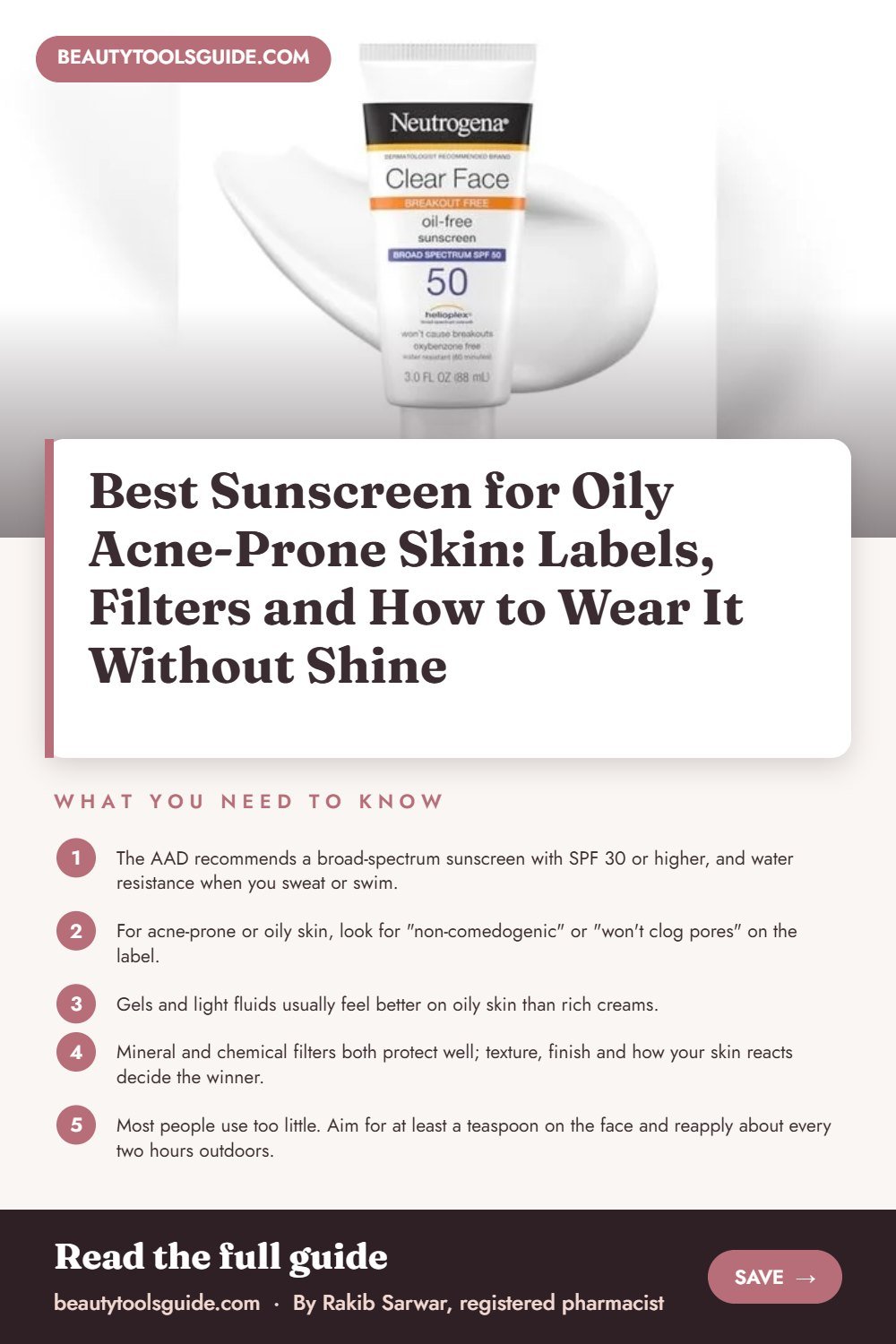
- The AAD recommends a broad-spectrum sunscreen with SPF 30 or higher, and water resistance when you sweat or swim.
- For acne-prone or oily skin, look for “non-comedogenic” or “won’t clog pores” on the label.
- Gels and light fluids usually feel better on oily skin than rich creams.
- Mineral and chemical filters both protect well; texture, finish and how your skin reacts decide the winner.
- Most people use too little. Aim for at least a teaspoon on the face and reapply about every two hours outdoors.
- Sunscreen should be removed each evening with a gentle cleanser, because leftover film and sweat can sit on the skin overnight.
- New or worsening breakouts, stinging or rashes are a reason to switch products and see a dermatologist.
Myths That Keep Oily Skin Away From Sunscreen
Many people with oily or acne-prone skin skip sunscreen because of one bad experience. That reaction makes sense, but it is usually based on a formula that did not suit them, not on sunscreen as a whole. Here are the beliefs that come up most often, and what the evidence supports instead.
| Myth | What the sources say | What to do instead |
|---|---|---|
| “Oily skin does not need sunscreen.” | The AAD’s sunscreen advice applies to every skin type. Oil on the skin does not block UV rays. | Use sunscreen daily on exposed skin. |
| “All sunscreen causes breakouts.” | The AAD points acne-prone skin to products labeled non-comedogenic or “won’t clog pores”. | Change the formula, not the habit. |
| “SPF 15 in my moisturizer is enough.” | The FDA sets SPF 15 as the minimum for broad-spectrum benefit, while the AAD recommends SPF 30 or higher. | Pick SPF 30+ for daily wear. |
| “Mineral sunscreen is always better for acne.” | Cleveland Clinic says mineral formulas are less likely to irritate or clog pores. Even so, many people do well with chemical filters too. | Choose the one you will wear every day. |
| “One morning coat lasts all day.” | The FDA says to reapply at least every two hours, and more often when swimming or sweating. | Reapply when you are outdoors. |
The last point matters most for oily skin. Sebum and sweat can break up a film over the day, so a morning layer alone may not hold up during a long afternoon outside. In short, the product you choose matters less than using enough of it, often enough.
Label Words That Matter for Sunscreen for Oily Acne-Prone Skin
A sunscreen label mixes regulated terms with marketing terms. In the United States, the FDA regulates sunscreens as drugs, so the Drug Facts panel is the most reliable part of the package. The front of the bottle, however, is where most skin-type claims live. This table separates the two.
| Label term | What it tells you | What it does not tell you |
|---|---|---|
| Broad spectrum | Protection against both UVA and UVB rays, according to the FDA. | How the product feels or whether it clogs pores. |
| SPF 30, 50 and so on | UVB protection level. The AAD says SPF 30 blocks about 97 percent of UVB rays. | How long you can stay out; reapplication still matters. |
| Water resistant (40 or 80 minutes) | How long the stated SPF holds while swimming or sweating, per the FDA. | That the product is waterproof. It is not. |
| Non-comedogenic or “won’t clog pores” | The maker designed the formula to avoid blocking pores. The AAD suggests looking for it on acne-prone skin. | A guarantee for your skin. It is a maker’s claim, so your own reaction is the real test. |
| Oil-free | The formula does not use oils as ingredients. | That it will look matte. Other ingredients can still feel slick. |
| Sensitive skin | The AAD suggests this label, and avoiding fragrance, parabens or oxybenzone, if your skin is sensitive. | That it suits every reactive skin type. |
Mineral vs Chemical Filters: Which One Suits Oily Skin?
Shoppers often treat “mineral” and “non-comedogenic” as the same thing. They are not. The filter type describes how a sunscreen protects you, while the comedogenic claim describes how the whole formula behaves on your pores. A mineral sunscreen can still feel heavy, and a chemical one can still be light and pore-friendly.
| Feature | Mineral filters | Chemical filters |
|---|---|---|
| Active ingredients | Zinc oxide and titanium dioxide | Organic UV filters such as avobenzone, homosalate or octisalate |
| How they work | Sit on the skin surface and deflect UV light, as Cleveland Clinic describes it | Absorb UV rays and release the energy as heat |
| When protection starts | Right after application, per Cleveland Clinic | About 20 minutes after application, per Cleveland Clinic |
| Feel and finish | Often thicker; can leave a white cast, especially on deeper skin tones | Usually thinner, clear and easier to blend |
| Oily and acne-prone skin | Cleveland Clinic calls them less likely to clog pores or irritate | Fine for many people when the formula is labeled non-comedogenic |
| Sensitive, stinging skin | The AAD suggests zinc oxide and titanium dioxide only | More likely to sting around the eyes for some people |
| Safety status | The FDA proposed both as safe and effective in 2019 | Under further FDA review; the AAD says the science does not show currently available US filters are harmful |
Is Chemical Sunscreen for Oily Acne-Prone Skin Safe?
There is some mixed evidence here. Cleveland Clinic’s comparison mentions a 2019 study showing that some chemical filters can be absorbed into the bloodstream. By contrast, the AAD states that the science does not show any sunscreen ingredient currently sold in the US is harmful. Absorption is not the same as harm, so both types remain reasonable choices. As Cleveland Clinic’s expert puts it, the best one is the one you will actually use.
Which Sunscreen for Oily Acne-Prone Skin Fits Your Day?
Use this quick finder to narrow the shelf. Pick the line that sounds most like you, then read the matching suggestion.
Very shiny by midday?
- Start with a gel or “dry touch” fluid labeled non-comedogenic and oil-free. Then add blotting papers for touch-ups.
Sunscreen stings, or your skin reddens easily?
- Try a mineral-only formula with zinc oxide or titanium dioxide and no fragrance, as the AAD suggests for sensitive skin.
Deeper skin tone and tired of white cast?
- Look at clear chemical or hybrid fluids, or tinted mineral formulas that blend in.
Sweat a lot or train outdoors?
- Choose a water-resistant product (40 or 80 minutes) and reapply after sweating or toweling off.
Already using acne treatments?
- Keep the sunscreen simple and fragrance-free, and ask your dermatologist which texture pairs best with your routine.
No finder can predict your exact reaction. Therefore, treat the result as a starting point and give any new product a fair two- to four-week trial before you judge it.
Gel, Fluid, Lotion or Stick: Textures for Oily Skin
Texture decides whether you keep wearing a sunscreen. The AAD says gels are good for oily complexions and hairy areas. Beyond that, light fluids and thin lotions are also common picks for shiny skin. Here is how the main formats compare.
- Gel: watery, fast-drying and often matte. It suits very oily skin, but some gels contain alcohol, which can sting dry patches.
- Fluid or “dry touch” lotion: thin and easy to spread in a smooth layer. Many oil-control formulas use this format.
- Lotion: a little richer. It works on combination skin, where cheeks may be dry while the T-zone shines.
- Cream: usually the heaviest option. Oily skin often finds it too slick for daytime wear.
- Stick: handy for reapplying on the go. However, it is easy to apply too thin a layer with a stick.
- Tinted: iron oxides add color. As a result, a tinted mineral formula can hide white cast and act as light coverage.
If your face is oily but your cheeks feel tight, you may have combination skin. In that case, our guide to cleansers for combination skin can help you balance the rest of your routine.
How to Apply Sunscreen for Oily Acne-Prone Skin Step by Step
Good technique cuts shine and helps you get the protection printed on the label. These steps follow AAD amounts and FDA reapplication advice.
- Cleanse gently. Wash with a mild cleanser and lukewarm water, then pat dry. Scrubbing can irritate acne-prone skin.
- Apply treatments first. Put on any acne product your dermatologist prescribed, then let it dry fully so layers do not pill.
- Measure the sunscreen. Use at least one teaspoon for the face, which the AAD compares to the length of your index and middle fingers.
- Dot, then spread. Place dots across the forehead, cheeks, nose and chin, and spread with light strokes instead of rubbing hard.
- Cover the edges. Include ears, hairline, jaw and neck, because these areas are easy to miss.
- Wait before makeup. Give it a few minutes to set. Chemical filters also need about 20 minutes before sun exposure, per Cleveland Clinic.
- Reapply outdoors. Reapply at least every two hours, and after swimming, sweating or toweling off.
Layering With Acne Care, Moisturizer and Makeup
Oily skin still needs a routine that feels comfortable. The key is fewer, lighter layers, so each one can dry down before the next.
First, decide whether you need a separate moisturizer at all. Some oil-control sunscreens are designed to double as a daytime moisturizer. If your skin feels comfortable with sunscreen alone, that is one less layer that could clog pores.
Next, think about acne products. Prescription and over-the-counter treatments can make skin feel dry or sensitive. So a gentle, fragrance-free sunscreen is usually the easiest match. Ask your dermatologist or pharmacist if a treatment label mentions the sun, because they know your full routine.
For makeup, choose oil-free or non-comedogenic products too. Powder on top of sunscreen can help with shine. Still, it will not replace reapplying sunscreen outdoors, since most people use far too little powder for real protection.
Finally, remove everything at night. A gentle cleanse lifts sunscreen, sweat and makeup. If you like a tool for this, see our guide to a silicone face brush for gentle cleansing, and keep pressure light on active breakouts.
Habits That Cause Shine and Clogged Pores
Most problems come from how sunscreen is used, not from the idea of sunscreen. These habits make the biggest difference for oily and breakout-prone faces.
- Pick SPF 30+ and broad spectrum
- Check for “non-comedogenic” on the label
- Use enough product for real coverage
- Blot shine rather than wiping it off
- Cleanse gently every evening
- Patch test a new formula first
- Skip sunscreen on cloudy days
- Rely on SPF in makeup alone
- Scrub your face to remove sunscreen
- Stack several heavy creams underneath
- Keep using a product that stings
- Store sunscreen in a hot car
Storage matters more than people expect. The FDA recommends that you do not leave sunscreen containers in direct sun. It also says a product without an expiration date should be treated as expired three years after purchase, so replace old bottles.
Honest Limits
No sunscreen can promise zero breakouts. Acne has many causes, including hormones, genetics, stress and certain medicines. So a new pimple after switching sunscreen may or may not be caused by the product. Keep a simple note of changes, which will help your dermatologist spot a pattern.
“Non-comedogenic” is also a claim, not a guarantee. It tells you the maker aimed for a pore-friendly formula, yet your skin may still react. Likewise, “oil-free” says nothing about how shiny a formula will look after a few hours in the heat.
Finally, product ratings reflect many different skin types, climates and routines. For that reason, a highly rated sunscreen can still be wrong for you. We have not tested these products ourselves; the picks reflect label claims, dermatology guidance and customer feedback.
When to See a Dermatologist
Sunscreen is a daily habit, not an acne treatment. Talk to a dermatologist or doctor if:
- Breakouts are painful, deep, leave marks or do not improve with gentle care
- Every sunscreen you try seems to cause bumps, itching or a rash
- Your skin burns, stings or swells after applying a product
- You use prescription acne treatments and are unsure how to fit sunscreen in
- You notice a new, changing or unusual spot on your skin
A dermatologist can also check whether the bumps are acne at all. Some rashes look like breakouts but need different care.
- Exercising after laser hair removal: how long to wait before hot, sweaty workouts.
- Reusable cotton rounds: washable pads that replace disposable cotton.
- Are cleansing brushes bad for skin: safety, how often to use one, and acne.
Sunscreen for Oily Acne-Prone Skin: FAQ
What is the best sunscreen for oily acne-prone skin?
One that is broad spectrum, SPF 30 or higher, labeled non-comedogenic, and light enough that you will wear it every day. Gels and fluids are common favorites.
Is mineral sunscreen for oily acne-prone skin better than chemical?
Not always. Mineral filters may be less irritating for some people, but a light chemical formula labeled non-comedogenic can work just as well.
Can sunscreen cause acne?
Some heavy formulas may clog pores in some people. Choosing a non-comedogenic product and cleansing at night can lower that risk.
What SPF should I use?
The AAD recommends SPF 30 or higher, with broad-spectrum protection.
How much sunscreen do I need for my face?
At least one teaspoon for the face, according to the AAD. Most people use less than that.
Do I still need a moisturizer?
Not always. If your sunscreen keeps skin comfortable, it can replace a daytime moisturizer. Dry patches may still need a light, oil-free one.
Does oily skin need sunscreen on cloudy days?
Yes. UV rays can still reach your skin on overcast days, so daily use is the simplest habit.
How can I stop sunscreen from looking greasy?
Try a gel or dry-touch fluid, let it set before makeup, and blot shine with papers instead of wiping sunscreen away.
Can I use sunscreen for oily acne-prone skin with acne treatments?
Usually, yes. Apply the treatment first, let it dry, then apply sunscreen. Ask your dermatologist about your specific routine.
How often should I reapply?
At least every two hours outdoors, and after swimming, sweating or toweling off, per FDA guidance.
Bottom Line
Oily, breakout-prone skin does not need to give up sunscreen. It needs the right label words: broad spectrum, SPF 30 or higher, and non-comedogenic or “won’t clog pores”. After that, texture and finish are personal. Mineral and chemical filters can both do the job.
Use enough, reapply outdoors, and cleanse gently at night. If a product stings, itches or seems to make breakouts worse, stop using it and book a visit with a dermatologist. They can help you build a routine that protects your skin and keeps it comfortable.






6 Comments