

Foundation Brush on Concealer: When It Works and How to Do It
Your concealer brush is in another bag, and a foundation brush is sitting on the counter. Can you use a foundation brush on concealer? Yes, and for many areas it works well, as long as the brush is synthetic and you choose the right spots.
Quick answer: a clean, synthetic foundation brush can apply and blend concealer, especially under the eyes and over larger areas like redness. A dense, flat head gives more coverage, and a soft, fluffy or domed head gives a lighter, blended finish. It is less precise than a small concealer brush, so use a smaller tool for single blemishes. Dot the product on first, tap it in, and keep layers thin to avoid creasing.
Makeup guides explain the logic. Synthetic bristles absorb little liquid or cream product, so they work for both foundation and concealer. Makeup artist Ruby Hammer, quoted by Marie Claire, says tighter, denser bristles give more coverage, while fluffier brushes blend more easily.
However, size and shape change the result. A wide foundation brush can swamp a small blemish, and a flat paddle can drag on delicate skin if you press too hard. So the answer depends on the job, not just the tool.
Below you will find a quick self-check, a comparison of foundation and concealer brushes, a step-by-step method, and the mistakes that cause creasing, so you can decide in seconds.
Recommended Foundation Brushes to Use on Concealer
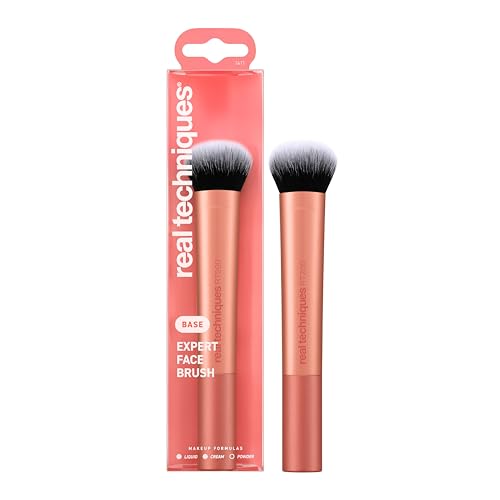
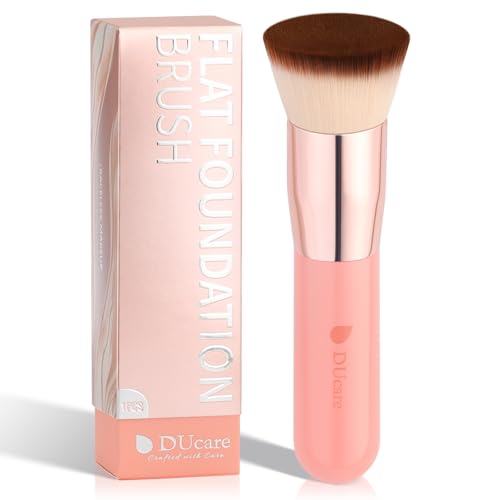
These picks are foundation brushes, from flat-top and domed shapes to a contoured head. Each is a style that can double for concealer on larger areas. Check the listing for the fiber type, since synthetic bristles work best with cream and liquid formulas. See how we test and choose products for the rules behind every pick.





Key Takeaways
- A synthetic foundation brush can apply concealer, because synthetic fibers absorb little liquid or cream product.
- Dense, tight bristles give more coverage, while fluffier bristles give a softer, lighter blend.
- A foundation brush suits under-eyes and larger areas, and a small concealer brush suits single blemishes.
- Dotting concealer on first and tapping it in prevents the streaks that sweeping causes.
- Thin layers resist creasing, so build coverage in two light passes instead of one heavy one.
- Natural bristles soak up cream products and can stain, so keep animal-hair brushes for powder.
- Clean the brush after concealer, since leftover product changes how foundation looks.

Foundation Brush on Concealer: The Short Answer
There is no rule against using a foundation brush on concealer. What matters is the fiber, the shape and how much product you load. A synthetic brush is the safe choice, because liquid and cream concealers rest on its surface instead of sinking in.

Beauty guides point the same way. Bustle notes that synthetic brushes work best with liquid and cream products, and it lists concealers and foundation as examples. Natural animal-hair brushes soak up cream formulas, which can stain or ruin them.
So the question is rarely “can I?” and more often “how well?” A foundation brush is usually larger and flatter than a concealer brush. That is great for spreading product over a wide area, and less great for pinpoint work.
Foundation Brush on Concealer vs a Real Concealer Brush
People often treat the two as the same tool in a different size. They are not quite. A concealer brush is built for control, and a foundation brush is built for coverage across a large area.

| Feature | Foundation brush | Concealer brush |
|---|---|---|
| Head size | Large, covers cheeks and forehead | Small, covers a spot or a thin line |
| Shape | Flat, domed or contoured | Flat, angled or tapered |
| Precision | Moderate, can overshoot small areas | High, suits blemishes and corners |
| Product use | Spreads more product at once | Uses a small amount at a time |
| Best for | Under-eyes, redness and larger patches | Single blemishes, inner eye corners, edges |
The e.l.f. brush guide describes a flat concealer brush as having a wide, flat head of synthetic bristles that blend liquid and cream concealers, with a short handle for control. It adds that the bristles do not absorb excess product, so less is wasted. A foundation brush with synthetic bristles shares that benefit, but not the short handle or the small head.
For more on choosing a base brush, our foundation brush guide explains how shape affects finish.
A 20-Second Self-Check: Is Your Brush Right for Concealer?
Answer these four questions before you load the brush. Each one tells you whether to go ahead or to switch tools.
- Is the brush synthetic? Yes (A). If it is natural hair or you are unsure (C), use it only for powder.
- Is the head larger than the area you are covering? Yes (B). If it fits the area (A), go ahead.
- Does the head feel soft on your skin? Yes (A). A stiff, flat paddle with sharp edges may drag on the delicate under-eye area (B).
- Is the brush clean? Yes (A). If it is full of foundation (B), wash it or wipe it, since leftover base mixes with concealer.
Mostly A: go ahead. The foundation brush will work well for this job.
Mostly B: use the edge or corner of the brush, or switch to a smaller tool.
Any C: choose a different brush, because natural fibers soak up concealer.
Most people land on A. The common exception is a single small blemish, where the head of a foundation brush is simply too big.
How to Apply Concealer With a Foundation Brush
The method below keeps the layer thin and the edges soft. It works for under-eye concealer, redness and larger patches.
- Start with a clean brush. Wipe off any foundation or wash the brush first, so the colors do not mix.
- Dot concealer on the skin. Place small dots where you need coverage, for example along the inner and outer under-eye area, rather than loading the brush directly.
- Load the brush lightly. If you do use the brush to pick up product, touch it once and tap the excess onto the back of your hand or a tissue.
- Tap, do not sweep. Press the brush in short taps over the dots to melt them into skin.
- Blend the edges. Use the outer corner of the brush, or a few light circular touches, to feather the edge into the foundation.
- Let it settle. Wait a minute, then check in daylight before adding more.
- Add a second thin layer only where needed. Build coverage in small steps rather than one heavy coat.

Where a Foundation Brush on Concealer Works Best
The face has a few distinct areas, and each one asks for a different tool. This table matches the area to the head shape, based on guidance from makeup artists.
| Area | Foundation brush works? | Best approach |
|---|---|---|
| Under-eyes | Yes | A rounder, fluffier head follows the curve of the area; tap gently |
| Redness around the nose | Yes, with the corner | Use the edge of a flat head for the creases beside the nostrils |
| Single blemish | Not ideal | A finer brush avoids overloading the area around the spot |
| Forehead or chin patches | Yes | A flat top covers larger areas |
| Inner corners of the eyes | Limited | A slanted or tapered brush reaches tricky spots |
Marie Claire’s concealer brush round-up makes the same points. Finer brushes suit blemishes so you do not overload the surface around them. Rounder, fluffier brushes follow the shape of the under-eye. Flat tops suit larger areas, and slanted brushes reach tight spots.
Foundation First or Concealer First?
The order changes how much concealer you need. Many people apply foundation first, because it evens out the skin and shows which spots still need cover. Others prefer concealer first, then a light layer of foundation tapped around it. Neither order is wrong, so test both on one side of your face.
The one thing to avoid is stacking full layers of both in the same spot. Thick layers add up quickly under the eyes, where skin moves more and creases show. If you apply foundation first, try tapping concealer only where you still see shadow or color. That keeps the total amount lower and makes the brush work easier.
If you use the same brush for both steps, apply the lighter product first, then wipe the brush before you pick up the next one. A clean tissue is enough between steps, and it only takes a few seconds.
Matching the Brush to the Formula
Concealers come in different textures, and the texture changes how the brush behaves.
- Liquid concealer: works best with a dense or domed synthetic brush, because it sits on top and blends. Use a small amount, since liquids spread easily.
- Cream or stick concealer: pressed into the brush it can load heavily. Dot it on the skin first, then tap with the brush.
- Full-coverage formulas: need a thin hand. A dense brush will deposit more, so use fewer taps, and let it settle before adding more.
- Light or sheer formulas: pair well with a fluffy brush, which gives a soft, blended wash of color.
If you like the airbrushed look of a domed head, our buffing brush guide explains how that shape works and when it helps.
Mistakes That Cause Creasing and Cakiness
When concealer looks heavy, it is usually the amount or the technique, not the brush. These are the common slips and the quick fix for each.
- Use a synthetic brush for cream and liquid formulas
- Dot the product on first, then tap
- Build coverage in thin layers
- Check the result in daylight
- Use the corner of the brush for small areas
- Wash the brush after concealer
- Press a natural-hair brush into concealer
- Sweep back and forth across the under-eye
- Load the brush heavily in one go
- Use a stiff brush that drags on skin
- Pile on a second layer before the first sets
- Use one brush for foundation and concealer without cleaning
Brush, Sponge or Fingers for Concealer?
The brush is not the only option. Each tool gives a different finish, so it helps to know what you are choosing.
- Brush: offers control and a smooth surface. Good for coverage and even blending.
- Sponge: presses product into skin and can look more natural. It absorbs some product, so it can use more concealer.
- Fingers: warm the product and work well for a light layer, but they do not blend edges as cleanly and add oils from the skin.
Bustle suggests people who normally use a damp sponge for base could switch to a synthetic brush, because it absorbs less product. The reverse also holds: if you like a softer, diffused finish, a sponge or a fluffy brush can do the final blend.
Cleaning Between Foundation and Concealer
If you use one brush for both, a clean brush keeps colors true. Foundation left in the bristles can lighten or darken concealer, and it can also build up and stiffen the bristles.
- Between products: wipe the bristles on a clean tissue or cloth until little color transfers.
- Weekly: wash with a gentle brush shampoo, with the bristles pointing down and the water kept off the metal band.
- Drying: reshape the head and lay it flat or hang it bristles-down so water does not reach the handle.
If you often switch between base and concealer, owning two foundation-style brushes, one for each, saves cleaning time and keeps colors clean.
Honest Limits
Most of the advice on this topic comes from beauty editors, brand guides and makeup artists. Nobody has run a controlled test comparing finish or coverage between brush types, so treat the rules as sensible practice.
A foundation brush also cannot match a small concealer brush for precision. If you cover blemishes often, the control of a smaller tool is worth having. The e.l.f. guide, for example, only recommends a flat concealer brush for concealer and does not address other brushes.
Finally, results depend on your skin and formula. Dry, textured or mature skin tends to show creasing more, and heavy formulas amplify it. No brush shape removes that on its own.
When to See a Professional
Brush technique is a small matter, but some situations call for more help.
- You cover dark circles or swelling that is new, one-sided or getting worse. Ask a doctor, since makeup only hides what is there.
- Your skin stings, burns or flares after using concealer or a new brush. Stop using the product and ask a pharmacist or dermatologist.
- You want a full-coverage look for a wedding or photo shoot. A makeup artist can match shades and technique to your skin.
- Setting powder brush: locking in concealer without creasing.
- Beauty blender vs foundation brush: which gives the finish you want.
Frequently Asked Questions
Can you use a foundation brush on concealer?
Yes. A clean, synthetic foundation brush can apply and blend concealer, particularly under the eyes and over larger areas.
Is a foundation brush on concealer good for under-eyes?
It can be. A rounder, softer or domed head follows the curve of the under-eye, and tapping keeps the layer thin.
Should you use a dense or fluffy brush for concealer?
Dense bristles give more coverage, and fluffy bristles give a lighter blend. Pick the one that matches how much coverage you want.
Can you use a natural-hair foundation brush on concealer?
It is not ideal. Natural hair soaks up cream and liquid product, which wastes concealer and can stain the brush.
Why does my concealer crease when I use a brush?
Usually the layer is too thick or was swept across the skin. Use less product, tap it in, and let it set before adding more.
Is a foundation brush on concealer better than a sponge?
A brush gives more control and absorbs less product, while a sponge gives a softer, pressed look. Try both and see which suits your skin.
How do you cover a pimple with a foundation brush?
Use the corner of the brush, or choose a smaller tool. A large head can overload the area around a single blemish.
Do I need a separate concealer brush?
Not always. A foundation brush covers many needs, but a small concealer brush gives more precision for blemishes and eye corners.
How do you clean a foundation brush on concealer residue?
Wipe it between products, then wash it weekly with gentle shampoo, bristles down, and dry it flat or angled down.
Which brush is best for liquid concealer?
A dense or domed synthetic brush is a solid choice for liquid concealer because it blends without absorbing much product.
The Bottom Line
A synthetic foundation brush works on concealer for under-eyes, redness and larger patches. Dot the product on, tap it in with a light hand, and build in thin layers. For single blemishes and tight corners, switch to a smaller brush.
For the guidance behind this, see the Bustle guide to synthetic and natural brushes, the Marie Claire concealer brush round-up and the e.l.f. beginner brush guide.


One Comment