
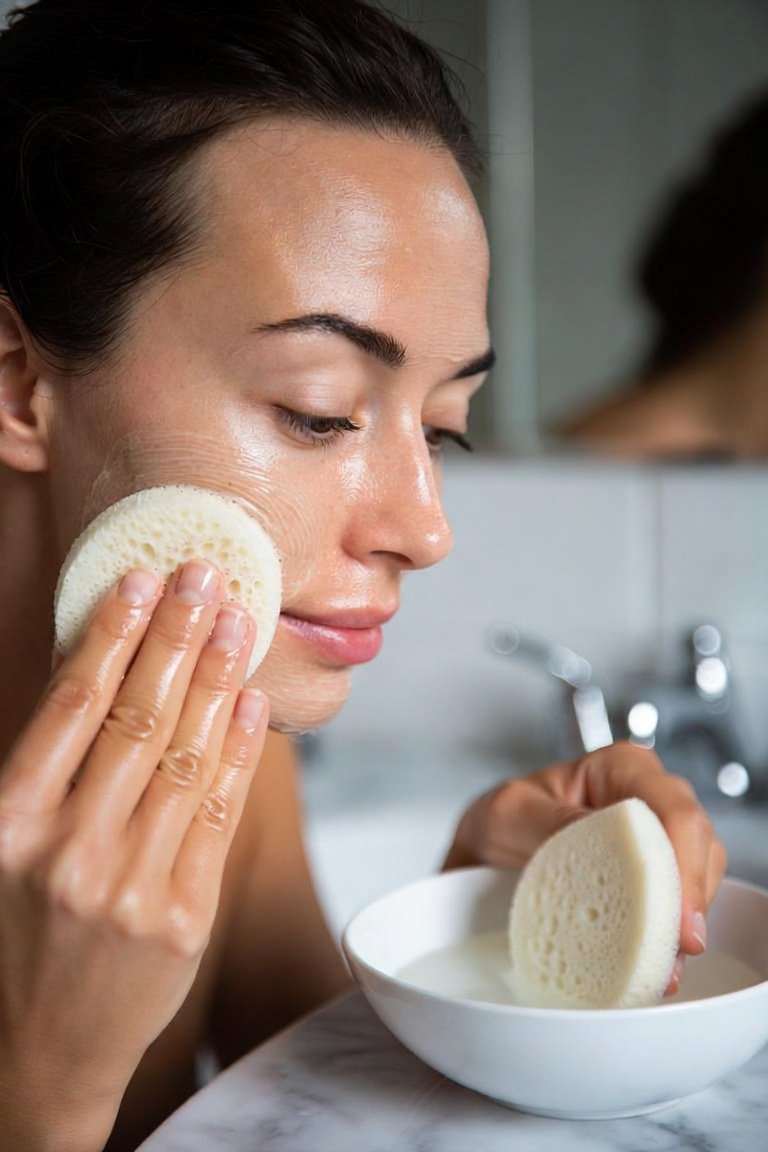
Cellulose Facial Sponge: What It Does Well, How to Use It and When to Replace It
The most common mistake with a cellulose facial sponge is not how you use it. It is how long you keep it. These thin, cracker-like discs puff up into soft pads the moment they touch water, and that same thirst for water is why a damp sponge left by the sink turns into a home for bacteria within days.
Quick answer: a cellulose facial sponge is a plant-based sponge made from wood pulp cellulose, usually sold compressed and flat. It softens and expands in water and is best at one job: lifting away cleanser, clay masks and makeup without dragging the skin. It gives only light exfoliation. Use it with gentle pressure, rinse it well, let it dry completely, and replace it often, because a damp sponge collects microbes quickly.
Two pieces of evidence shape this guide. First, the American Academy of Dermatology notes that a mesh sponge, washcloth or anything other than fingertips can irritate skin, so pressure matters. Second, a 2017 study in Scientific Reports found huge bacterial loads in used kitchen sponges. It also found that regularly sanitized sponges did not carry fewer bacteria, and the authors suggested weekly replacement.
Kitchen sponges are not facial sponges, of course. Still, the lesson carries over: moisture plus trapped residue makes any sponge a short-term tool.
Ahead: what these sponges are, how they differ from konjac, a routine finder, step-by-step use, hygiene rules and when to skip them.
Recommended Cellulose Facial Sponges for Home and Spa-Style Use
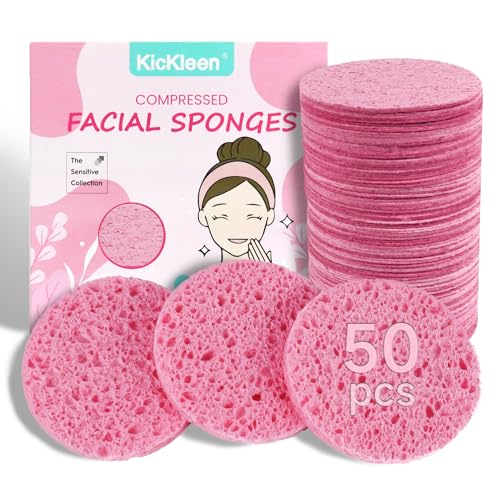
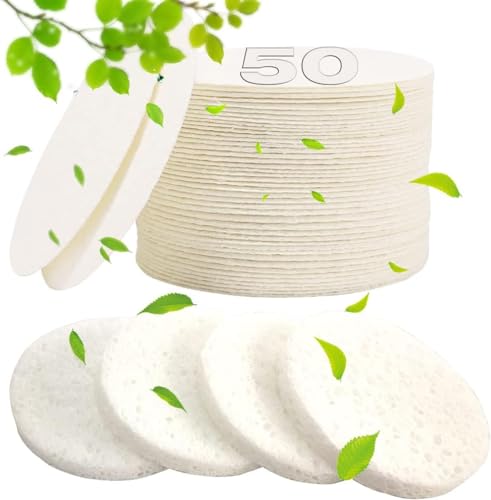
Each pick below is a compressed cellulose facial sponge sold in multi-packs, which suits frequent replacement. Look at shape, color (natural or bleached white) and pack size, and choose the one that matches how often you plan to swap sponges. See how we test and choose products for the rules behind every pick.



Key Takeaways
- A cellulose facial sponge is made from wood pulp cellulose; it arrives flat and dry and expands into a soft pad in water.
- Its main strength is removal: cleanser, clay or cream masks, and makeup lift off with less rubbing than a dry cotton pad.
- Exfoliation is light, but it is still friction, and the AAD warns that sponges can irritate skin.
- Cellulose and konjac sponges are different materials; cellulose is firmer and more durable, konjac is softer and breaks down faster.
- Damp sponges collect bacteria fast, and a study of kitchen sponges found that sanitizing did not reliably lower bacterial counts.
- Rinse it well, squeeze it out, let it dry fully in open air, and replace it often; multi-packs make that easy.
- Skip it on broken, sunburned or inflamed skin, and use fingertips if your skin reacts to any tool.

What a Cellulose Facial Sponge Is and How It Is Made
Cellulose is the structural fiber in plant cell walls. Commercial cellulose sponges start with cellulose from wood pulp, which is softened with chemicals until it turns jelly-like. Manufacturers then mix it with sodium sulfate crystals and reinforcing fibers.
The crystals are the clever part. According to the manufacturing overview at How Products Are Made, the mixture goes into heated molds, and the crystals melt and drain away. The spaces they leave become the pores. Coarse crystals make rough household sponges, while fine crystals make the delicate sponges used on skin. The blocks are then washed, often bleached, dried and cut.
Facial versions are usually pressed flat while dry. That is why a cellulose facial sponge looks like a thin wafer in the pack. Once it meets water, the fibers swell and the pores open, so it grows into a soft, cushiony pad within seconds.
What a Cellulose Facial Sponge Is Good At, and What It Is Not
A cellulose facial sponge works like a soft, absorbent squeegee. The open pores trap water and residue, so they carry product away instead of spreading it around. That is why estheticians often reach for them to take off masks during facials.
| Job | How well it works | Why |
|---|---|---|
| Removing clay or cream masks | Very well | Wet pores soak up thick residue with little rubbing. |
| Rinsing off cleanser | Well | Fewer splashes than hands alone, especially around the hairline. |
| Removing face makeup | Well, after an oil or balm | The oil loosens pigment; the sponge lifts it away. |
| Removing eye makeup | Poorly | Too large and too firm for the thin skin around the eyes. |
| Exfoliating rough skin | Lightly | The texture gives a mild polish, not a deep peel. |
| Treating acne or pores | Not a treatment | No study shows that a sponge treats acne. |
In short, think of it as a removal tool first and an exfoliating tool second. If you want more polish, a gentle chemical exfoliant is usually more predictable than pressing harder. For eyes, a microfiber makeup remover cloth or reusable cotton rounds fit the smaller area better.
Cellulose Facial Sponge vs Konjac Sponge
Many shops list these two side by side, and some articles treat them as the same thing. They are not. A konjac sponge is a dried gel made from the fiber of the konjac root. A cellulose sponge is regenerated wood-pulp fiber with pores formed by melted crystals.
| Feature | Cellulose facial sponge | Konjac sponge |
|---|---|---|
| Source | Wood pulp cellulose | Konjac root fiber (glucomannan) |
| Dry form | Flat, compressed wafer | Hard, shrunken puck |
| Feel when wet | Soft but springy and firm | Very soft, slippery, jelly-like |
| Best job | Lifting off masks, cleanser and makeup | Gentle everyday cleansing |
| Durability | Holds its shape well | Breaks down within a few months |
| Common extras | Dyes or bleaching | Charcoal, clay or plant powders |
Neither is clearly better. They simply suit different habits. If you want the softest possible feel for daily washing, read our konjac guide, which also covers charcoal versions. If you remove masks or heavy makeup often, cellulose usually does that job faster.
Which Routine Fits You? A Quick Finder
Pick the description closest to your routine. Each one points to a sensible way to use a cellulose facial sponge, or a reason to skip it.
- You wear little or no makeup and use a gel cleanser.
- Fingertips may be all you need. A sponge adds little except friction. Save it for mask nights.
- You wear full-face makeup or sunscreen every day.
- Melt makeup with an oil or balm first, then lift it away with a damp sponge. Use a fresh or fully dried sponge each time.
- You use clay or cream masks once or twice a week.
- This is the classic use. Soak the sponge, then press and lift the mask off in sections instead of scrubbing.
- Your skin is dry, sensitive or quick to redden.
- Use it only for mask removal, with light pressure, or switch to a soft cloth. Stop if you notice stinging.
- You have active breakouts, eczema or a sunburn.
- Skip sponges on those areas for now. Let the skin settle first.
How to Use a Cellulose Facial Sponge Step by Step
This routine keeps friction low and hygiene high. It follows the AAD’s face-washing advice, which calls for lukewarm water, a gentle cleanser and patting dry. Because the AAD also warns that sponges can irritate, every step below keeps pressure light.
- Wash your hands. Clean hands keep new germs off the sponge and your face.
- Expand the sponge. Hold the compressed disc under warm running water until it swells to full size and feels soft all over.
- Squeeze out the excess. Press it between your palms so it is damp, not dripping. A soaked sponge slides product around instead of lifting it.
- Cleanse or apply your mask first. Massage cleanser in with your fingertips, or let the mask sit for its listed time.
- Press and lift. Place the sponge on one area, press lightly, then lift or sweep gently outward. Rinse the sponge and repeat on the next area.
- Rinse your face with lukewarm water. Then pat your skin dry with a soft towel rather than rubbing.
- Moisturize. Apply your moisturizer while skin is still slightly damp.
- Clean and dry the sponge. Rinse it until the water runs clear, squeeze it hard, and leave it to dry in open air.
Adjusting a Cellulose Facial Sponge to Your Skin Type
The same sponge can feel perfect on one face and scratchy on another. Pressure and frequency are the two dials you control.
- Oily or combination skin: can usually handle daily use for cleanser removal. Keep pressure light anyway; friction does not reduce oil.
- Normal skin: daily makeup removal or weekly mask removal both work well.
- Dry skin: use it mainly for masks, and follow straight away with moisturizer.
- Sensitive or rosacea-prone skin: test on a small area first. Many people with reactive skin do better with fingertips.
- Darker skin tones: the AAD cautions that strong mechanical exfoliation can lead to dark spots, so treat the sponge as a lifting tool, not a scrub.
If your skin feels tight, stings or looks pink after cleansing, cut back. Those are early signs of irritation.
Hygiene: The Part Most People Skip
A wet sponge is a near-perfect habitat for microbes. It stays warm and damp, and it traps traces of skin cells, oil and product. Research on facial sponges is scarce. However, kitchen sponges have been studied closely, and the findings are hard to ignore.
In a 2017 study in Scientific Reports, researchers analyzed used kitchen sponges. They found very dense bacterial communities, including species related to potential pathogens. Regularly sanitized sponges did not contain fewer bacteria than uncleaned ones. So the authors suggested simply replacing kitchen sponges often, for example weekly.
A face sponge sees far less food residue than a kitchen sponge. Even so, the principle holds: drying and replacing beat heroic cleaning.
- Rinse until the water runs clear
- Squeeze out as much water as possible
- Dry it in open air, out of the shower
- Keep one sponge per person
- Replace it on a set schedule
- Toss it if it smells or changes color
- Store it wet in a closed case
- Leave it sitting in a soap dish puddle
- Share it, even with family
- Rely on the microwave to clean it
- Use it over broken or infected skin
- Keep using it once it feels slimy
Reuse or Replace? How Long a Cellulose Facial Sponge Lasts
There is no official lifespan for facial cellulose sponges, and brands vary. Spa suppliers sell them in packs of 50 or more, which suits frequent replacement. At home, you can reuse one for a while if you dry it well.
As a rule of thumb, replace a sponge when any of these happen:
- It smells musty or sour, even after rinsing.
- Spots, stains or discoloration appear that do not wash out.
- It feels slimy, or it no longer springs back when squeezed.
- Edges start to crumble or tear.
- You used it while you had a breakout, cold sore or skin infection.
Many people simply switch to a fresh sponge every week or two, since multi-packs make that easy. Used sponges made only of cellulose are plant-based, so many can go in a home compost bin. Check the pack, though, because dyes and additives vary.
Cellulose Facial Sponge Myths Worth Dropping
Marketing copy tends to promise more than a sponge can deliver. Here are the claims to take with a pinch of salt.
- “Deep cleans pores.” A sponge cleans the surface. It cannot reach inside pores any better than a good cleanser and fingertips.
- “Suitable for all skin types.” Most skin tolerates light use, but reactive skin may not. The AAD specifically lists sponges as a possible irritant.
- “Natural means germ-free.” Plant fibers hold moisture just like synthetic foam. A natural sponge still needs drying and replacing.
- “More pressure, better results.” Pressure adds irritation, not cleanliness. Let the wet pores do the lifting.
Honest Limits
We found no clinical trials that compare cellulose facial sponges with fingertips, cloths or other tools on facial skin. What we know comes from how the material is made, general dermatology advice and hygiene research on kitchen sponges. That kitchen research is useful, but it is not a direct test of facial sponges.
A sponge also has practical limits. It will not remove waterproof mascara, fix acne or replace a moisturizer or sunscreen. Some people find even the softest sponge too rough, and that is a good reason to use your hands instead.
Finally, product listings are not standardized. Pore size, thickness and processing vary between brands, and star ratings reflect general satisfaction rather than how a sponge suits your skin.
When to See a Professional
A sponge is a convenience tool. Book a dermatologist or doctor if:
- Breakouts are painful, widespread or leaving scars
- Redness, burning or peeling continues after you stop using tools
- Eczema, rosacea or psoriasis makes it hard to know what your skin can take
- A spot looks infected, crusted or spreads after cleansing
- Dark patches appear after irritation, especially on darker skin
- Rotating facial cleansing brushes: how spinning heads work and how often to use them.
- Silicone facial cleansing brushes: soft silicone bristles that are easy to keep clean.
- Sonic facial cleansing brushes: how vibrating brushes differ from spinning ones.
- How long a konjac sponge lasts: the signs it is done.
Cellulose Facial Sponge FAQ
What is a cellulose facial sponge used for?
Mainly for lifting off cleanser, masks and makeup with little rubbing. It also gives a light polish to the skin.
Is a cellulose facial sponge good for sensitive skin?
Sometimes. Use very light pressure and test a small area first. If it stings, go back to fingertips.
How often should I replace a cellulose facial sponge?
Whenever it smells, stains, feels slimy or tears. Many people switch every week or two, and multi-packs make that simple.
Can I use a cellulose facial sponge every day?
Oily and normal skin often can. Dry or sensitive skin usually does better saving it for mask nights.
Is cellulose better than konjac?
Neither wins outright. Cellulose is firmer and better for removing masks, while konjac is softer for daily cleansing.
Why does my sponge come flat?
Facial sponges are compressed while dry to save space. Water makes them swell to full size in seconds.
Can I put it in the microwave to clean it?
It is not a reliable fix. In one kitchen sponge study, sanitized sponges did not carry fewer bacteria. Replacing is simpler.
Does it remove makeup on its own?
Not well. Melt makeup with an oil or balm cleanser first, then use the damp sponge to lift it away.
Are these sponges biodegradable?
Pure cellulose comes from plants and breaks down over time. Check the pack for dyes or additives before composting.
Can I use one on my body?
Yes, though facial sponges are small. Larger cellulose bath sponges cover the body faster.
Final Thoughts
A cellulose facial sponge earns its place when you remove masks, sunscreen or makeup often. It lifts residue with less rubbing than a dry pad, and it costs little to replace. It is not a treatment, though, and it gives only light exfoliation.
Treat it as a short-lived tool. Press and lift instead of scrubbing, dry it fully between uses, keep it to yourself and swap it out often. If your skin objects, your fingertips are still the gentlest tool you own.




6 Comments