How to Cut Your Own Bangs at Home With Scissors: A Dry-Cut Method
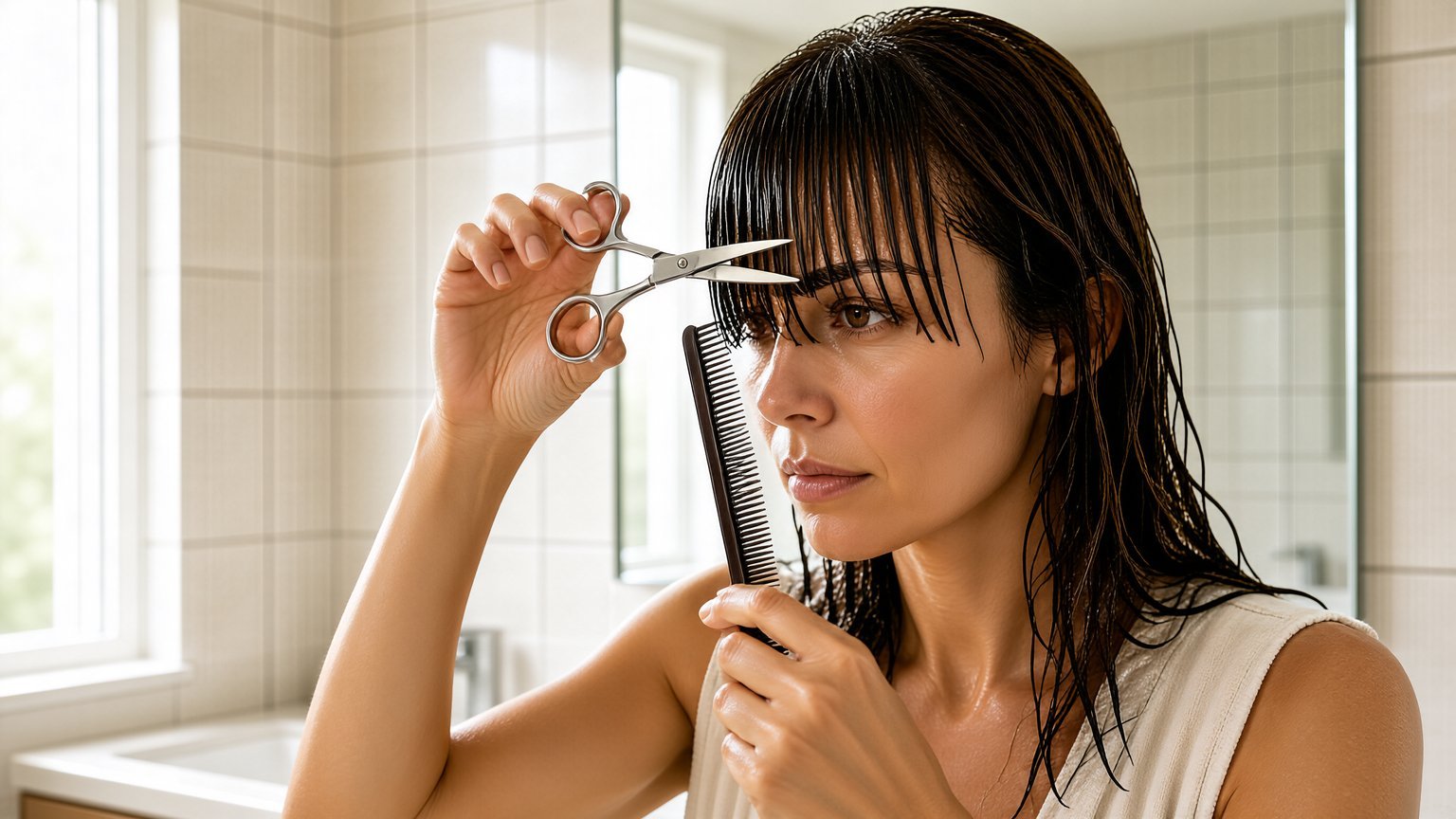
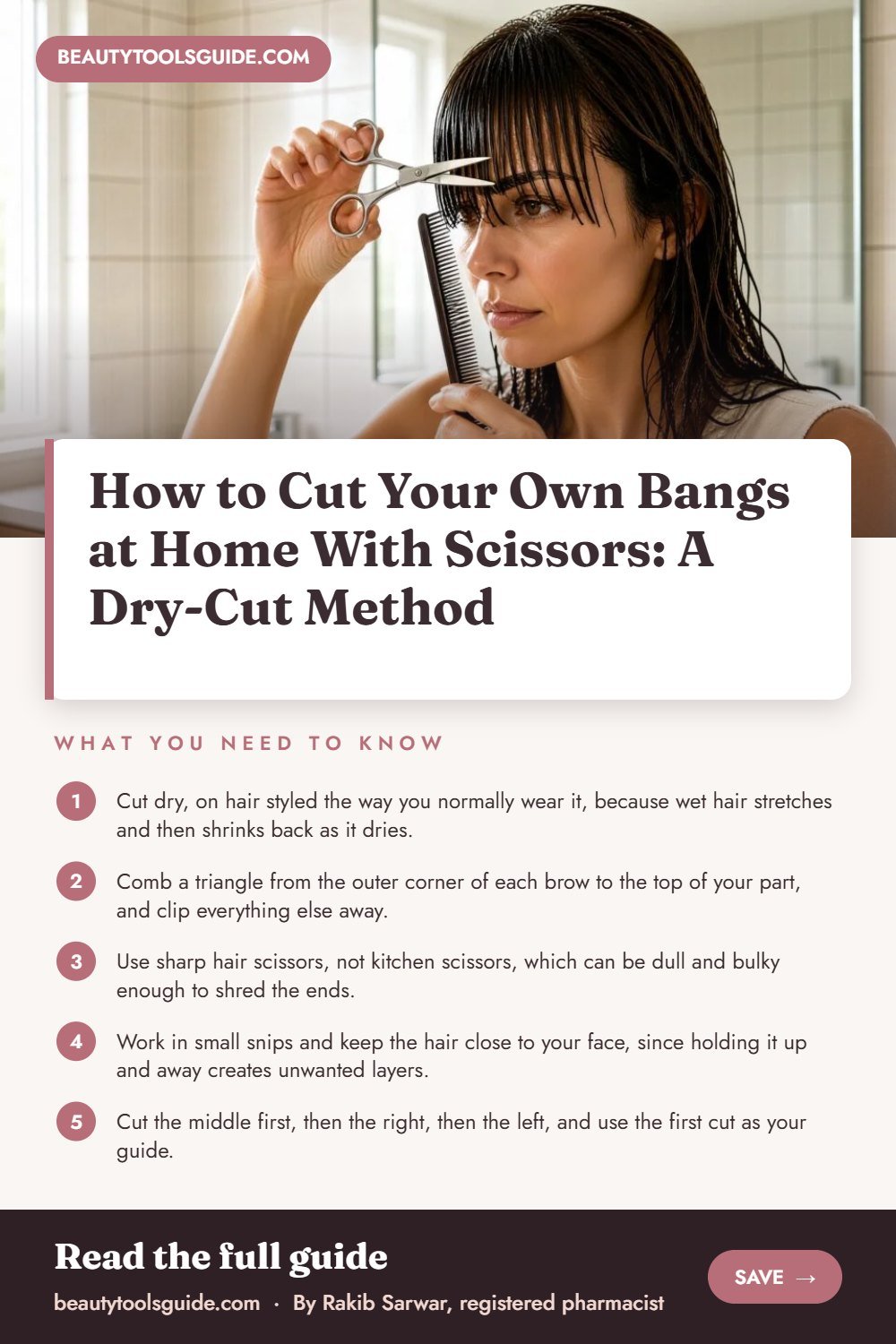
You can cut your own bangs at home and get a clean result, as long as you keep them long, cut them dry and take off less than you think you need. Most bad bangs come from three habits: trimming wet hair, grabbing the wrong scissors and snipping too much in one pass.
Quick answer: comb a small triangle of hair forward and clip the rest away. Trim the center section first with sharp hair scissors, using small snips and holding the hair close to your face. Compare each side to that first cut, then stop. If the length still bothers you, wait until the next day and trim again.
Stylists quoted by Fashion Magazine give the same core rules. Celebrity hairstylist Bridget Brager says to start slowly, because you can always take more off but you cannot put bangs back on. Toronto stylist Jason Lee adds that wet hair jumps up as it dries, so a wet trim leaves bangs shorter than planned.
The mechanism is simple. Water weakens hair and lets it stretch, so a strand cut while wet is longer than it will be once dry. Kitchen scissors add a second problem, because a dull or bulky blade can shred the ends instead of slicing them cleanly.
Below you will find a quick self-check, a step-by-step method, a comparison of blunt and point cuts, the mistakes that cause chopped bangs, and a guide to choosing scissors.
Recommended Hair Cutting Scissors for Trimming Bangs
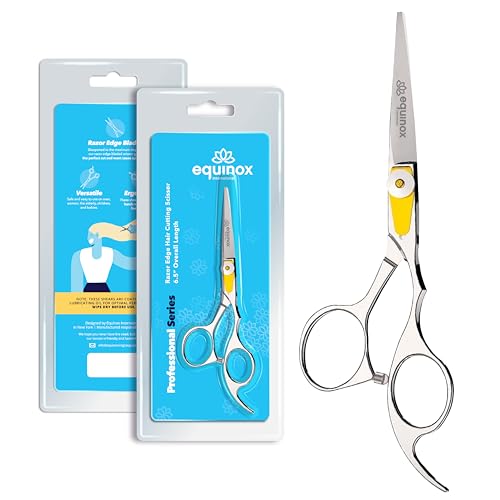
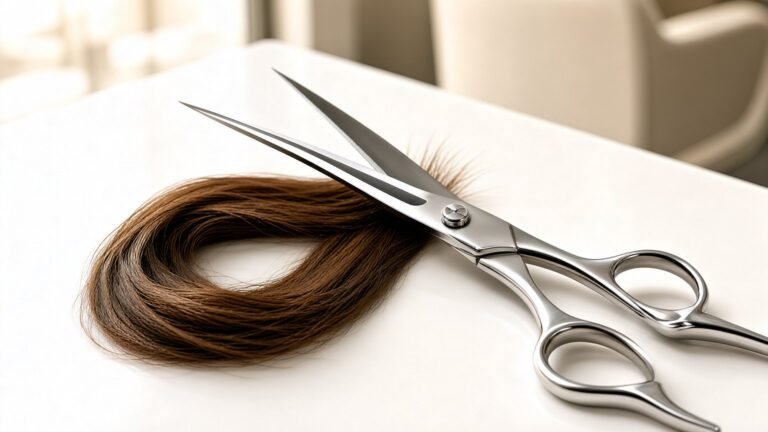
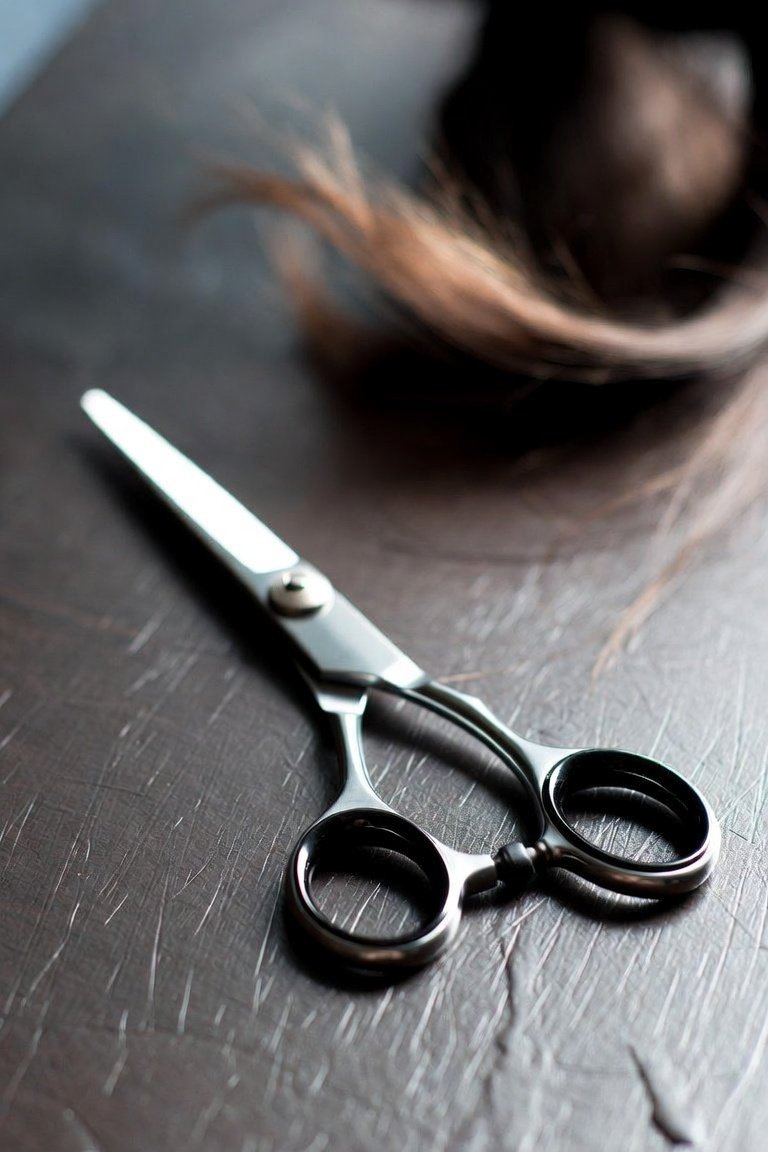
Every pick here is a pair of hair cutting scissors, the tool the stylists above recommend instead of kitchen scissors. Check the blade length and handle style on each listing against the buying notes in this guide. See how we test and choose products for the rules behind every pick.



Key Takeaways
- Cut dry, on hair styled the way you normally wear it, because wet hair stretches and then shrinks back as it dries.
- Comb a triangle from the outer corner of each brow to the top of your part, and clip everything else away.
- Use sharp hair scissors, not kitchen scissors, which can be dull and bulky enough to shred the ends.
- Work in small snips and keep the hair close to your face, since holding it up and away creates unwanted layers.
- Cut the middle first, then the right, then the left, and use the first cut as your guide.
- Stop early. You can always remove more, but you cannot add length back.
- Curly and coily hair springs up after cutting, so leave it longer than your target and trim again once it dries.
Why It Is Easy to Cut Your Own Bangs Badly (and How to Avoid It)
Bangs sit in the most visible spot on your head. A tiny error of a few millimeters shows right away, and there is no way to hide it. That is the main reason a short trim feels so risky.
Three forces work against you. First, wet hair is not at its final length. Michelle Wong, a chemistry PhD who writes the Lab Muffin Beauty Science blog, explains that wet hair is weaker and stretches more easily. As it dries, it shortens again, so bangs cut wet end up higher than they looked in the mirror. Curly hair shows this most. Wikipedia’s overview of hair notes that very tight curl patterns visibly shrink when wet.
Second, the angle matters. If you hold the hair up and away from your face while you snip, you cut at a different angle than the one at which it hangs. The result is a ragged edge or an accidental layer. Stylist Bridget Brager warns against this in her bangs guide for Fashion Magazine, and says to cut the hair as close to your face as you can.
Third, the tool counts. Both stylists in that article say to avoid kitchen scissors, because a dull or bulky blade can shred the ends and take off more than you meant. A proper pair of hair scissors cuts cleanly in one motion, so each snip is predictable.
The fix for all three is the same: dry hair, small cuts, close to the face, with the right scissors. The rest of this guide shows how.
A Quick Self-Check: Are Your Bangs Ready to Cut?
Answer these before you pick up the scissors. They take under a minute, and they stop most regrets.
- Is your hair dry and styled as usual? If not, wait. Bangs cut wet or half-dry change length while they dry.
- Do you have hair scissors? If you only own kitchen or craft scissors, hold off. Both can fray the ends.
- Do you know your goal? Pick between a solid blunt line and a softer, wispy edge. A photo helps.
- Is the room bright, with a mirror at eye level? A dim bathroom hides uneven spots.
- Are you in a hurry or upset about an event tomorrow? If yes, skip the cut. Rushed snips are the usual cause of chopped bangs.
If you answered “no” to the first four or “yes” to the last, book a stylist or trim only the very tips today. Otherwise, you are ready.
Gather Your Tools Before You Cut Your Own Bangs
You need very little. Collect everything first so you do not wander off mid-cut with half your hair clipped up.
- Hair cutting scissors. Wikipedia describes hairdressing shears as scissors made for cutting hair, usually about 5 to 7 inches long, often with a finger brace on one handle for control. Shorter blades feel easier for small bangs work.
- A fine-tooth comb. It lets you lay the hair flat and see where the line falls.
- Two or three clips. They hold the rest of your hair away from the bangs section.
- A mirror and good light. Face a window or a bright bulb so shadows do not hide mistakes.
As for scissors, look at blade length, a comfortable handle and an edge that stays sharp. Thinning shears and texturizing shears are for a different job. They remove part of the hair with each snip, so they suit softening and blending, not setting a length. Use plain hair cutting scissors for the length.
How to Cut Your Own Bangs, Step by Step
This method follows the sectioning described by Brager and Lee. It uses the “middle first” approach, so the center guides both sides.
- Wash and style your hair. Style it the way you usually wear it, then let it dry fully so you see the true length.
- Clip back the rest. Leave only the front hair loose, and clip everything else out of the way so no stray strands get cut.
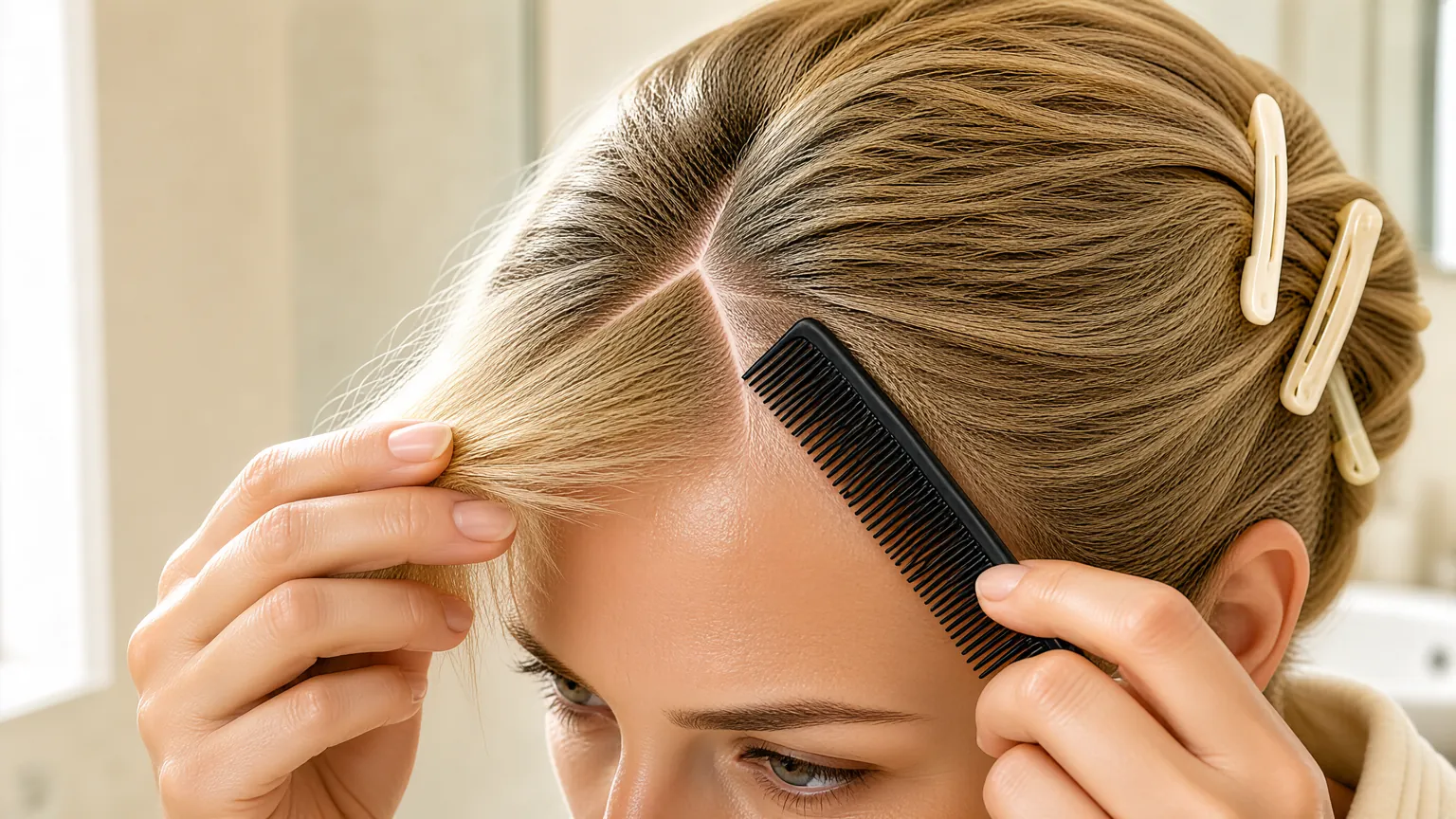
- Comb a triangle forward. Mark a triangle from the outer corner of each brow to the top of your part. A wider triangle that reaches further back gives thicker bangs.
- Set the guide in the middle. Comb the center section down, hold it taut between two fingers and pull it toward the tip of your nose. Cut the first small horizontal layer to set the length.
- Cut in small snips. For a solid line, cut straight across. For a softer look, snip diagonally in tiny cuts so the edge looks lived-in.
- Add the sides. Bring the right section into the middle, cut it to match the guide, then repeat on the left.
- Clean up and check. Pull the top layer up toward the crown, trim only the very tips, and step back from the mirror to compare both sides.
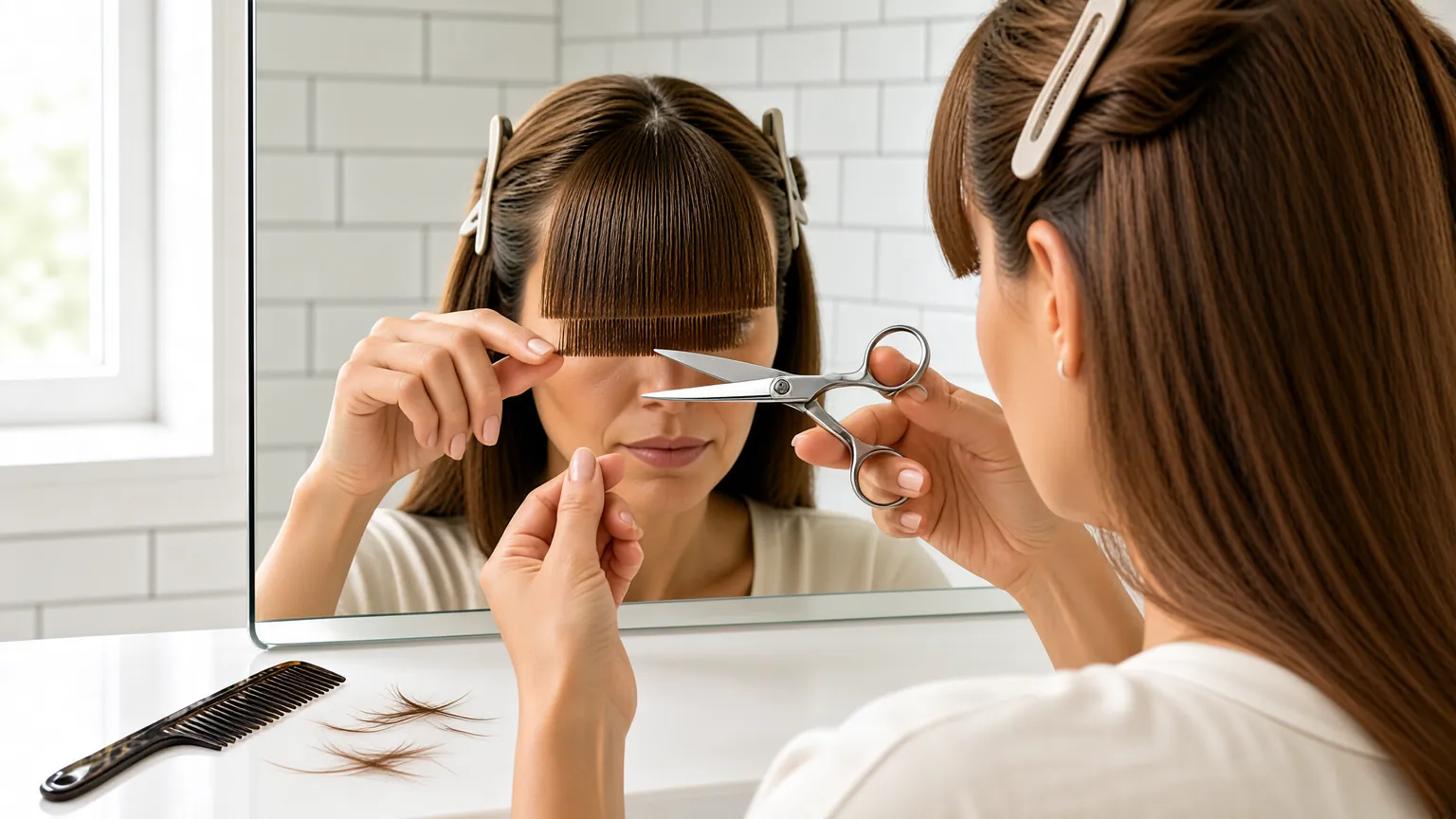
Most people want to cut a bit more after step seven. Resist that urge for a few hours. Bangs look different once they settle and you have moved your head around. If they still feel too long the next day, make one more tiny pass.
Blunt Cut or Point Cut: Pick Your Finish
Two cutting styles give very different looks, and many guides blur them together. A blunt cut uses straight snips across the hair. A point cut uses small diagonal snips into the ends. Brager describes both: straight across for a solid line, or diagonal snips for a softer, lived-in look.
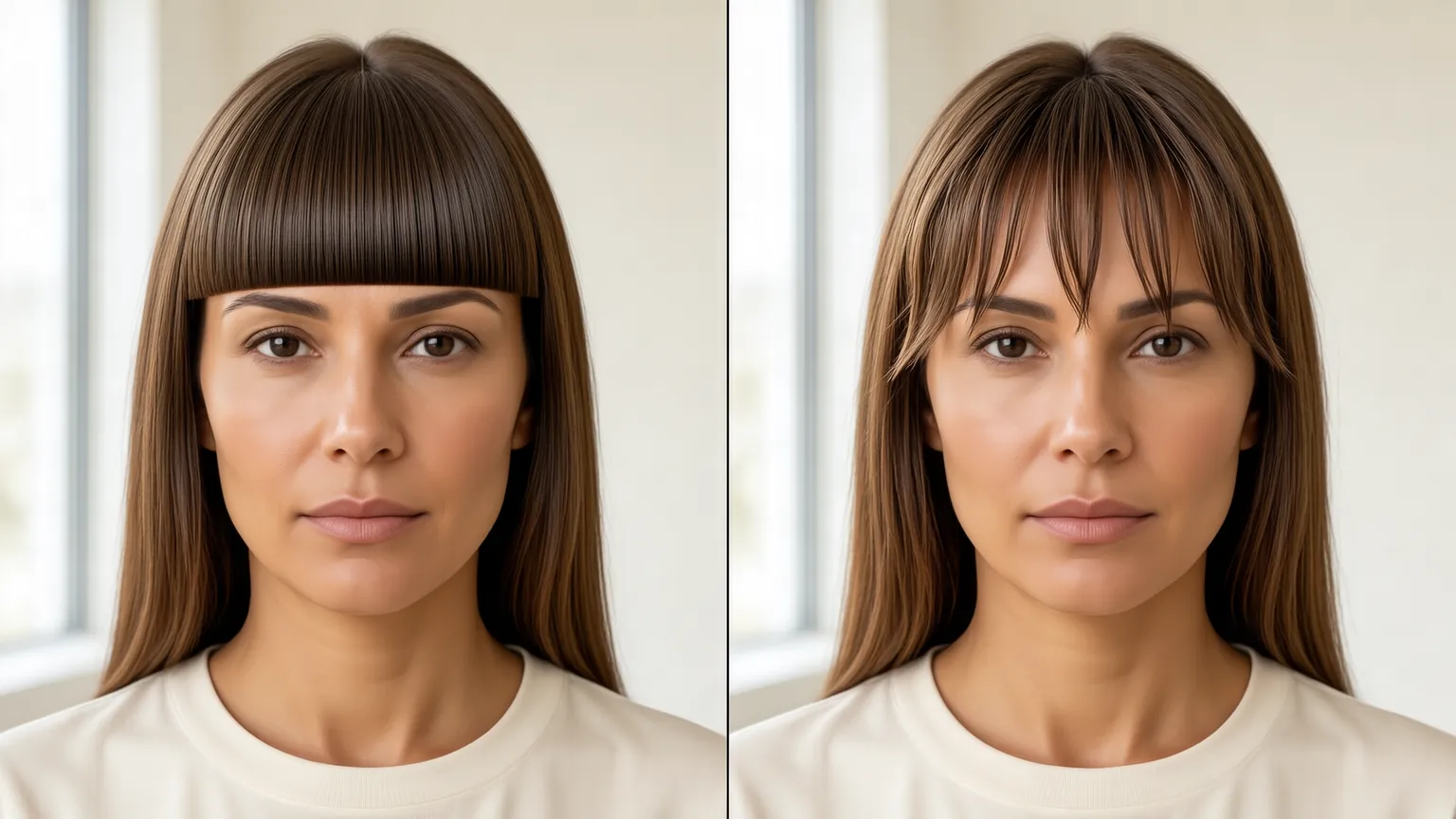
| Feature | Blunt cut | Point cut |
|---|---|---|
| How you snip | Straight across the section, in one clean line. | Small diagonal snips pointing into the ends. |
| Look | Solid, graphic edge that shows every mistake. | Soft, feathered edge that hides small unevenness. |
| Best for | Straight, fine or smooth hair with a defined shape. | Thick, wavy or textured hair, and first-time cutters. |
| Risk | A crooked line is obvious right away. | Too many snips can make the ends look thin or choppy. |
If this is your first time, the point cut is more forgiving. A slightly uneven edge blends in rather than standing out. Practice on the point cut, then try a blunt line when you trust your hand.
Straight, Wavy and Curly Hair: Bangs by Hair Type
Hair type changes how much the length moves after you cut. The table below shows what to expect, based on the stylist advice in the Fashion Magazine article and the hair-shrinkage points above.
| Hair type | What happens after cutting | What to do |
|---|---|---|
| Straight | Length changes little between wet and dry. | Cut dry, in small snips, close to the face. |
| Wavy | Some lift as the waves reform. | Style it first, then cut slightly longer than your goal. |
| Curly | Curls spring up once cut. | Dampen slightly, sculpt each curl downward and cut it a bit long. Let it dry, then trim any that are still too long. |
| Coily (4B, 4C) | Strong shrinkage and spring. | Leave the length longer than you think. Lee notes these patterns spring up when dry. |
If your hair curls tightly, cut individual curls instead of whole sections. Each curl behaves on its own, so a section cut can leave some strands long and others short.
Myths About Bangs That Lead to Regret
A few popular ideas sound sensible but cause trouble. Here is what the stylist advice says instead.
- “Wet hair is easier to cut.” It is easier to comb, but the length is wrong. Wet hair shrinks as it dries, so you end up with bangs shorter than expected.
- “Any sharp scissors will do.” Sharp is only half of it. Bulky kitchen scissors are hard to control near the face, and a dull pair can fray the ends.
- “Pull the bangs up for a straight line.” Lifting the hair away from your face creates layers. Keep it close to the face while you cut.
- “One big cut is faster.” It is faster, but it leaves no room to correct. Small snips let you adjust as you go.
- “I will keep the bangs I have now, but shorter.” Brager advises sticking to the style you already have, such as wispy side bangs, instead of jumping to short blunt bangs.
Do and Don’t When You Cut Your Own Bangs
- Cut on dry, styled hair.
- Use real hair cutting scissors.
- Start longer than your goal.
- Snip in small, shallow cuts.
- Keep hair close to your face.
- Check both sides in a mirror.
- Cut wet hair.
- Use kitchen or craft scissors.
- Take off a big chunk at once.
- Hold the bangs up and away.
- Over-trim during clean-up.
- Try a new style the night before an event.
Fixing Bangs That Came Out Too Short or Uneven
Everyone makes at least one mistake. The good news is that most are fixable, because bangs grow and styling can hide a lot.
- Too short: Brush them to the side, pin them back or use a headband while they grow. Do not trim further to “even it out”.
- Uneven by a little: Dry them fully, then trim only the longer side by a hair’s width, using small point cuts.
- Too blunt: Snip diagonally into the ends to soften the line, one tiny cut at a time.
- Separate layer: If you over-trimmed the top, blend by pulling the hair toward the crown and taking off only the very tips.
Honest Limits
The advice above comes from working stylists, not from controlled studies. No clinical research compares DIY bangs methods, so treat the steps as practical craft knowledge. Your cowlicks, hair density and growth pattern can change how bangs fall, and no guide can predict that.
The way hair stretches and shrinks also varies by person and by hair type. The sources here do not give exact amounts, so this guide does not either. Always leave extra length at first. If your hair is heavily textured or you have a strong cowlick, a stylist can read your growth pattern better than a mirror can.
When to Book a Stylist Instead
Home trims work for small touch-ups. A salon visit makes more sense in a few cases. First, you want a major change, such as going from none to short bangs. Second, you have a strong cowlick or an uneven hairline. Third, the bangs are part of a larger haircut, such as a shag or curtain style. A stylist can also fix a mistake you cannot hide.
Even a quick bang trim at the salon is often a short visit. Ask for a “bang trim” instead of a full appointment.
- Choosing hairdressing scissors: how blade shape and size change control.
- Toothed shears for softening: when to blend instead of cut.
- Removing bulk from thick hair: how cut rate works.
- Cutting a bob at home: sectioning, the line and point cutting the ends.
- Regular scissors on hair: why they fray ends and what to use instead.
Frequently Asked Questions
Is it hard to cut your own bangs?
Not if you go slowly. The method is simple: dry hair, a small triangle section, and tiny snips. Most errors come from rushing or cutting too much at once.
Should you cut your own bangs wet or dry?
Dry. Both stylists quoted by Fashion Magazine advise it, because wet hair shrinks as it dries and the final length becomes hard to predict.
How much hair should you cut off your own bangs at once?
Very little. Take small snips and check the length often. Brager’s rule is that you can always take more off, but you cannot put bangs back on.
Can you cut your own bangs with kitchen scissors?
It is better not to. Brager and Lee both say kitchen scissors can be dull and bulky, which can shred the ends and cut more than you intend. Hair cutting scissors are the safer tool.
Can you cut your own bangs if your hair is curly?
Yes, but cut each curl longer than your target. Dampen the curls slightly, sculpt them downward, then let them dry and trim any that are still too long. Tight patterns spring up, so leave extra length.
How often should you cut your own bangs?
There is no fixed schedule. Trim when the bangs begin to touch your eyes or lose their shape. Small, frequent touch-ups are easier to control than one big cut.
What length should I start with?
Start longer than your goal. Pulling the section toward the tip of your nose is the guide the stylists suggest. Then work shorter in small steps.
What is the difference between blunt and point cut bangs?
A blunt cut snips straight across for a solid line. A point cut uses small diagonal snips for a softer, feathered edge that hides small mistakes.
How do I fix bangs that are too short?
Do not cut more. Pin them back, brush them to the side or use a headband while they grow. A stylist can reshape them if needed.
When should I see a stylist instead?
See a stylist for a big style change, a strong cowlick, or a cut you cannot fix at home. A professional can also blend bangs into a larger haircut.
The Bottom Line
Good bangs come from a few steady habits. Cut dry, use real hair scissors, take a small triangle section and snip in tiny steps. Keep the hair close to your face, use the middle as your guide, and stop sooner than you think you should.
The sources behind this guide are stylist advice, so use them as a starting point and adjust to your own hair. For the full stylist walk-through, read how to trim your bangs at home, and for the science of why wet hair behaves differently see hair, hydration and water.

2 Comments