
Why Shears Pull Hair and How to Fix Folding Blades
You squeeze the handles, the hair bends away from the blades, and a few strands slide out past the tip uncut. When shears pull hair like this, the cause is rarely a mystery. It usually comes down to one of five things: tension, buildup, a worn edge, damage, or technique.
Quick answer: shears pull or fold hair most often because the tension screw is too loose, so the blades separate as they close and push hair along instead of shearing it. Dirt at the pivot, a dull or nicked edge, and too much thumb pressure come next. Clean the pivot, oil it lightly, then adjust the screw in tiny steps and test on a few strands. If the problem stays, the edge needs a professional sharpener.
Shear makers agree on the main causes but not on the exact test for tension. Hanzo describes a drop test with the blade held at 90 degrees, while Sam Villa says the blades should simply stay open when you lift the thumb handle. Both ideas are covered below, so you can pick the one that fits your pair. We also checked a third source, Keller, to see where the three agree.
This guide gives you a five-minute check that points to the real cause, a method for resetting tension without overshooting, and a list of myths that waste time. You will also see which problems are fixable at home and which need a specialist.
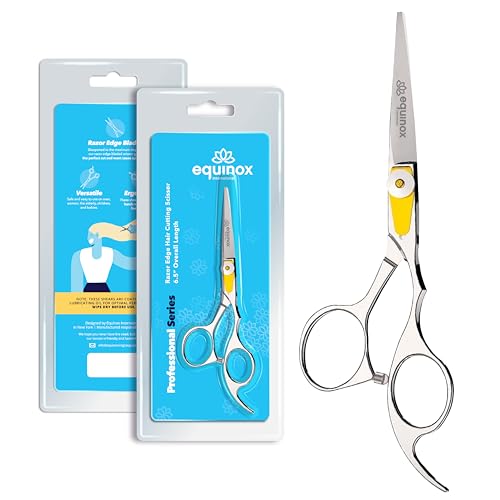
Recommended Hair Shears That Cut Without Pulling
These picks are hair-cutting shears with adjustable tension, so you can fine-tune the blade contact yourself. Check each listing for the blade length, handle style and whether a tension screw or dial is included. See how we test and choose products for the rules behind every pick.



Key Takeaways
- Shears pull hair when the blades fail to meet cleanly at the cutting point, so the hair bends away instead of being sheared.
- Loose tension is the most common cause, and it is also the easiest to fix with small screw turns.
- Buildup at the pivot and blade can mimic a dull edge, so clean and lightly oil the shears before judging them.
- A dull, rolled or nicked edge needs a professional sharpener, because oil and tension cannot repair metal.
- Tightening the screw too far causes drag, hand fatigue and faster wear, so stop as soon as the cut feels smooth.
- Heavy thumb pressure, sideways twisting and product-coated hair can all make good shears fold hair.
- Dropped shears should be checked by a specialist, even if they look fine.

What Pulling and Folding Really Mean
A good pair of shears works like a moving point of contact. As the blades close, the point where they touch travels from the pivot to the tip. Hair that sits in front of that point gets sliced.
If the blades drift apart, that point of contact disappears. A gap opens, and the hair slides into it. Then the closing blades either bend the strand sideways, which is folding, or drag it toward the tip, which is pulling. Sometimes the hair slips out the end completely uncut.
That explains why every cause on this page comes back to one question: are the blades touching along their full length as they close? Loose tension lets them separate. Dirt keeps them from gliding. A rolled edge cannot grip the strand. Sideways pressure pries them apart.
The Five-Minute Cause Check
Run through these tests in order before you adjust or send the shears away. Each one rules out a cause, so you stop guessing.
- Look at the pivot. Do you see hair, product or rust around the screw? If yes, go to the cleaning step first.
- Open and close the shears slowly in the air. Do they grind, click or feel gritty? Grit points to buildup. Wobble points to loose tension.
- Do the tension test. If the top blade swings shut with no resistance, the screw is too loose. If it barely moves, it is too tight.
- Cut a loose strand of clean, dry hair near the middle of the blade. Does it fold only there, or near the tip too?
- Try the same cut in the same spot three times. A catch that happens in exactly one place suggests a nick. Folding along the whole blade suggests tension or a dull edge.
Mostly “yes” on tests 1 and 2: clean and oil first. Test 3 fails: adjust tension. A catch in one spot or a pushing feel everywhere after tension is fixed: the edge needs service.
Tension: Why Loose Blades Make Shears Pull Hair
How Loose Tension Makes Shears Pull Hair
Tension is how firmly the screw presses the two blades together. Too little, and the blades part at the tip as they close. Too much, and they rub hard against each other, which feels stiff and wears the edges.
Hanzo, a shear maker, says pushing or folding hair suggests tension that is too loose, while grindy, resistant cutting suggests tension that is too tight. Sam Villa gives the same rule of thumb: if the shears bend or catch hair, the tension is likely loose. Sam Villa adds that new shears often need a small adjustment after the first few haircuts.
Three Tension Tests Compared
The trouble is that brands describe the correct setting differently. The table below puts three published tests side by side.
| Test | How you do it | What correct looks like | Source |
|---|---|---|---|
| Drop test | Hold the shears vertically, tips up, open the top blade to about 90 degrees, then release | The blade falls roughly halfway to two-thirds of the way down, then stops | Hanzo |
| Hold-open test | Hold the finger handle and lift the thumb handle | The blades stay open; if they close, tighten one or two clicks | Sam Villa |
| Slow-close test | Open the shears about halfway and let go | They close slowly on their own, without snapping shut or sticking open | Keller |
These tests do not agree exactly. A pair that passes the hold-open test may fail the drop test, because the shears have different pivots and blade weights. The safest approach is to use one test consistently, then confirm with a real cut on a few clean strands.
Also, tension is not a substitute for sharpness. Hanzo warns that over-tightening causes drag and fatigue, and that quick dulling may come from overtightening. If the shears still push hair after tension tests pass, move on to the edge.
Dirt and Dryness at the Pivot
Hair, styling product and disinfectant residue collect around the pivot screw. That residue changes how the blades ride against each other. The result is a draggy close and an inconsistent bite, which looks a lot like a dull edge.
A dry pivot causes a similar problem. Without a thin film of oil, the blades grind where they touch, and you tend to squeeze harder, which separates them.

The fix is short. Wipe the blades with a soft cloth. Open the shears and clean around the screw with a small brush or a cloth corner. Then put one small drop of shear oil at the pivot, work it in with several slow open-and-close movements, and wipe off the excess.
Dull, Rolled or Nicked Edges
If cleaning and tension do not help, the edge is the next suspect. A dull or rolled edge closes without gripping the hair, so it pushes strands instead of slicing them. This is most obvious on blunt cuts and thick sections.

A nick behaves differently. It creates a snag point, and you feel a crunchy catch in the same place each time. Dropped shears can also develop tiny misalignments that no screw turn will fix.
Both problems need a professional. Edges on hair shears are shaped with care, and a poor home sharpening job can change the geometry for good. Sharpening frequency depends on use. A busy stylist may need it often, while a home user may go much longer.
| Clue | Loose tension | Dull or damaged edge |
|---|---|---|
| When it happens | Mostly near the tips, or when the blades open wide | Along the whole blade, or in one fixed spot |
| What you feel | Wobble or a sloppy close | Pushing, crunching or a catch |
| After a tiny screw turn | Cutting improves at once | No real change |
| After cleaning and oiling | Smoother, but still folds | Smoother, but still pushes |
| Fix | Adjust tension in small steps | Professional sharpening or repair |
Technique That Makes Shears Pull Hair
Even a perfect pair can fold hair if the hands work against it. Hanzo lists excess thumb pressure, torquing and sideways force as causes, because they can pry the blades apart, especially in dry cutting.
Hair condition matters too. Heavy product, extreme dryness or a rubbery texture can resist the cut, which exposes borderline tension or a tired edge. Clarifying the section can help, and so can taking smaller sections.
- Move only the thumb blade and keep the finger blade still
- Cut small sections of clean hair
- Keep the wrist neutral as you close
- Let the blades do the cutting
- Check tension after the first few uses of new shears
- Squeeze harder when hair starts to fold
- Twist the shears sideways in the cut
- Cut thick, product-coated hair in one big chunk
- Use the shears on paper, thread or wire
- Keep cutting after you hear a crunch
How to Reset Shears That Pull Hair, Step by Step
Use this order so you change one thing at a time. That way you know which fix worked.
- Wipe the blades clean. Remove hair and product with a soft, dry cloth, then dry the pivot area completely.
- Oil the pivot. Open the blades slightly, add one small drop of shear oil at the pivot, and work it in with several slow movements.
- Wipe off the excess. The joint should feel smooth, not greasy, and should not leave oil on the hair.
- Run a tension test. Use the drop test or the hold-open test, and note whether the blades are too loose or too tight.
- Adjust in tiny steps. Turn the screw clockwise to tighten or counterclockwise to loosen, about one-sixteenth of a turn at a time, and retest after each step.
- Cut a few clean strands. Test near the middle and near the tip of the blade. Stop adjusting when the strands cut cleanly.
- Decide on service. If the shears still push hair or catch in one spot, stop and book a professional sharpener.
Myths That Waste Your Time
- “Just tighten the screw until it stops folding.” Over-tightening hides a dull edge for a few cuts, then speeds up wear and tires your hand.
- “Oil will fix a dull blade.” Oil reduces friction at the pivot. It cannot restore an edge, and relying on it only delays the repair.
- “Expensive shears never pull hair.” Any pair can pull when tension drifts or the edge wears. Quality shears simply hold their settings longer.
- “Home sharpening stones are fine.” Hair shears have specific edge shapes, and uneven sharpening can ruin the geometry.
- “Only old shears pull hair.” New shears often need a small tension adjustment after the first few haircuts, as Sam Villa notes.
Do Some Hair Shears Pull More Than Others?
Edge shape plays a role. Hanzo notes that regular scissors use a simple flat-ground blade, while hair shears use convex, semi-convex or beveled edges suited to different cutting techniques. A beveled edge cutting dry hair can create drag that mimics pushing, even when nothing is wrong.

That does not make one type bad. It means a pair that feels draggy on dry hair may cut well on damp hair, and the reverse can happen too. If you change cutting method, expect to adjust tension slightly.
For a broader look at choosing a pair, our guide to hairdressing scissors covers sizes, handle styles and what to check before you buy. If your shears have teeth, the notes on thinning and blending models explain why toothed blades can feel different.
Honest Limits
No checklist can diagnose shears you cannot hold. The tests here point to the likely cause, but a specialist can see wear, warping and alignment problems that you cannot.
The published tests also disagree about the exact tension target. Use them as starting points, and trust the result on real hair over any single rule. Finally, very low-cost shears may have loose tolerances, so they can keep drifting no matter how carefully you adjust.
When to See a Professional
- Hair still gets pushed after cleaning, oiling and a careful tension reset
- You feel a crunch or catch in the same spot every time
- Your pair was dropped, even if it looks undamaged
- You find the screw will not hold its position or turns without resistance
- The edge looks chipped, bent or visibly worn
Look for a sharpener who works on hair shears specifically, not a general knife service.
- Oiling hair shears: how often and exactly where the oil goes.
- Sharpening thinning shears: when they need it and who should do it.
Frequently Asked Questions
Why do my shears pull hair even though they are new?
New shears often need a small tension adjustment after the first few haircuts. Clean the pivot, oil it lightly, and test the tension before assuming the shears are faulty.
Why do my shears fold hair instead of cutting it?
Most often the tension screw is too loose, so the blades separate as they close. Dirt at the pivot, a dull edge or sideways pressure can also cause it.
Do dull shears pull hair?
Yes. A dull or rolled edge cannot grip the strand, so it pushes the hair along the blade. Oil and tension will not repair this, so the shears need sharpening.
Can loose tension make shears pull hair at the tips?
Yes. When tension is too loose, the blades separate most near the tips, so hair slips out the end or folds there first.
How tight should the tension be on hair shears?
Tight enough that the blades stay in contact as they close, but loose enough that cutting feels smooth. Brands give different tests, so confirm with a real cut.
Will oil stop my shears from pulling hair?
Only if dryness or buildup is the cause. A drop at the pivot reduces friction, but it cannot fix a dull edge or wrong tension.
Why do my shears pull hair only when I cut dry hair?
Dry hair gives the blades less lubrication, and a beveled edge can create more drag. Slight tension changes or damp cutting may help.
Can I sharpen hair shears at home?
It is risky. The edge shape matters, and uneven sharpening can damage it. Most makers recommend a professional shear sharpener.
How do I know if my shears are damaged?
A crunch or catch in the same spot every time suggests a nick. Dropped shears or a chipped edge also call for service.
Do regular scissors pull hair more than hair shears?
Often, yes. Regular scissors have flat-ground blades and may push or bend strands, which is why hair shears are built differently.
The Bottom Line
When shears pull hair, start with the simplest checks. Clean the pivot, add a drop of oil, and test the tension in small steps. Those three things solve most cases without a trip to a sharpener.
If the problem remains, the edge is the likely cause, and that is a job for a specialist. Keep a note of your tension setting, use light hands, and reserve the shears for hair so they stay sharp longer.