Can You Workout After Laser Hair Removal? Expert Tips Explained
After laser hair removal, many people wonder if they can return to their workout routine right away. Exercise supports health, stress relief, and mood, so waiting can feel frustrating. However, timing plays an important role in recovery.
In short, intense or sweaty exercise should wait. Laser treatment leaves the skin temporarily more sensitive. As a result, adding heat, sweat, and friction too soon can increase redness, irritation, and the risk of small bumps.
Most experts recommend waiting 24 to 48 hours before returning to full workouts. In this guide, we explain what happens to your skin, why timing matters, which activities are safer, and how you can balance fitness with proper aftercare.

Key Takeaways
- 1
Wait 24–48 hours before intense or heavily sweaty workouts - 2Light walking and gentle stretching are usually fine much sooner
- 3Heat + sweat + friction is the main combination to avoid
- 4Sensitive areas (face, underarms, bikini) often need closer to 48 hours
- 5Saunas, steam rooms, hot yoga, and swimming should wait at least 48 hours
- 6Listen to your skin — if it still feels warm or tender, give it more time
What Happens to Your Skin During Laser Hair Removal
Laser hair removal uses focused light to target hair follicles. The laser heats and damages the follicle so hair growth slows or stops. Although this process is effective, it also affects the surrounding skin.
After treatment, your skin may feel:
- Red or slightly swollen for several hours
- Warm or sensitive to touch
- Sometimes itchy or mildly irritated
These effects are normal. Therefore, your skin needs a short recovery window before it can comfortably handle extra heat, sweat, or friction.
Why Exercise Can Be Risky Too Soon
When you exercise, three things happen that can stress freshly treated skin:
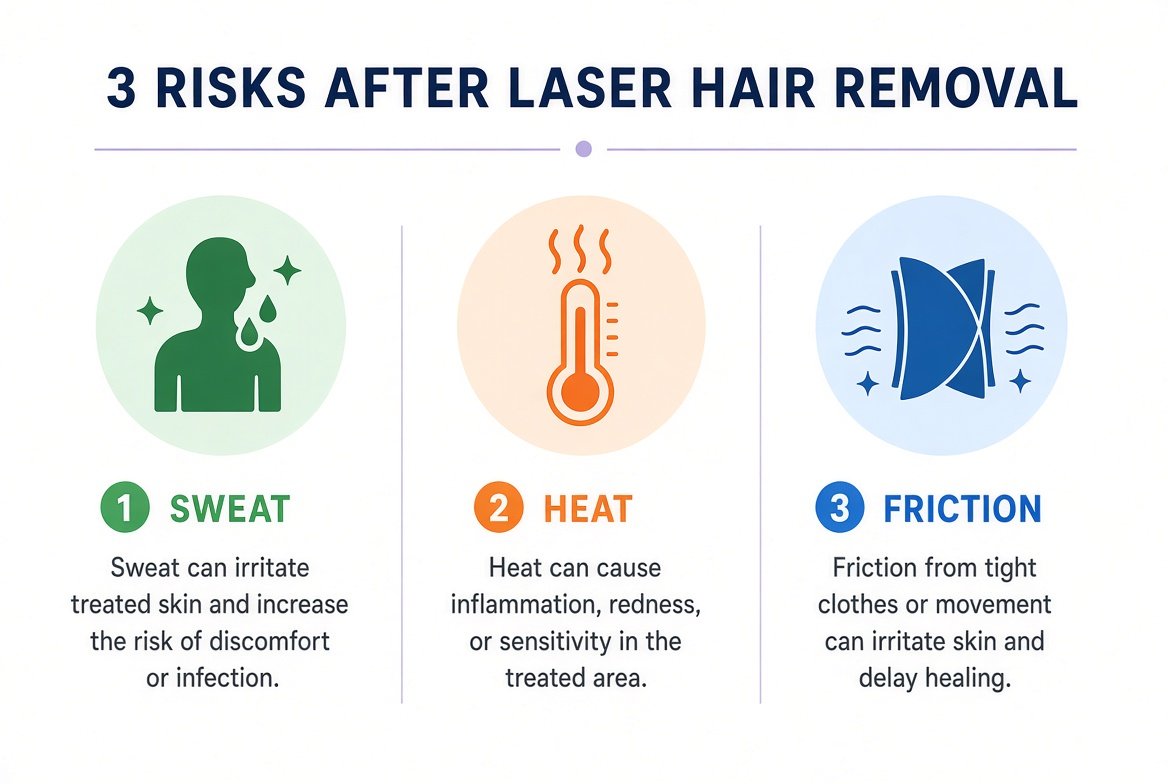
Together, these factors increase the chance of prolonged redness, stinging, or folliculitis (small red bumps). For this reason, waiting 24–48 hours significantly reduces these risks.
How Long Should You Wait Before Exercising?
Most experts recommend waiting 24 to 48 hours before returning to intense workouts. However, the exact time depends on the body area and how your skin responds.
| Body Area | Recommended Wait | Reason |
|---|---|---|
| Face | 48 hours | Thinner, more sensitive skin |
| Underarms | 48 hours | High sweat + friction |
| Bikini Area | 48 hours | Delicate skin, higher irritation risk |
| Legs | 24 hours | Usually lower risk (avoid tight clothing) |
| Back | 24–48 hours | Depends on sweat level and activity |
If redness or tenderness is still present, wait longer. In addition, always follow your clinic’s specific aftercare advice.
Safe Workout Options After Laser Hair Removal
Fortunately, you don’t have to stop moving completely. These lower-risk options are usually fine while your skin settles:
- Gentle stretching
- Indoor walking in a cool environment
- Light yoga (avoid hot yoga)
- Upper-body work if only legs were treated (and vice versa)

Here’s a quick comparison:
| Workout Type | Safe? | Why |
|---|---|---|
| Gentle stretching | Yes | Minimal sweat and friction |
| Walking (cool environment) | Yes | Low intensity |
| Running | No | High sweat + clothing friction |
| Hot yoga / sauna | No | Extra heat is hard on treated skin |
| Swimming | No | Chlorine and bacteria can irritate |
| Cycling | No | Tight clothing + sweat |
Practical Tips for Exercising After Laser
To protect your skin while staying active, keep these practical tips in mind:
- Wear loose, breathable clothing — This reduces friction and lets the skin breathe
- Choose cool environments — Skip hot studios, saunas, and outdoor heat when possible
- Keep skin clean — Gently cleanse after any activity to remove sweat
- Avoid deodorant or heavy products on treated areas for 24–48 hours (especially underarms)
- Monitor your skin — If redness or tenderness increases after exercise, rest longer
What If You Exercised Too Soon?
Don’t panic if you worked out earlier than recommended. In most cases, mild reactions settle with simple care:
- Apply a cool compress
- Avoid rubbing or scratching the area
- Skip the next workout and let the skin recover
- Use a gentle, fragrance-free moisturizer if the skin feels dry
However, if you notice blisters, severe pain, or signs of infection, contact your provider promptly.
When Can You Resume Your Full Routine?
You can usually return to normal exercise when the following conditions are met:
- Redness and swelling have settled
- The skin no longer feels tender
- At least 24–48 hours have passed
If you have regular sessions, plan intense workouts between treatments and keep activity lighter on treatment days. This approach helps you stay consistent without putting extra stress on recovering skin.
Frequently Asked Questions
Can I sweat after laser hair removal?
It’s best to avoid heavy sweating for 24–48 hours. Sweat can irritate healing skin and increase the chance of irritation.
How soon can I swim after laser hair removal?
Wait at least 48 hours. Chlorine and pool bacteria can irritate treated skin and slow the recovery process.
Is it safe to use the sauna after my session?
No. Extra heat can worsen redness and swelling. Therefore, wait at least 48 hours before using saunas or steam rooms.
Can I use deodorant after underarm laser?
Avoid deodorant for 24–48 hours. It can irritate sensitive skin and cause rashes during the early recovery period.
Final Thoughts
Laser hair removal can give you smoother skin and less daily maintenance. However, returning to exercise too soon can slow healing or cause temporary irritation.
By waiting just 24–48 hours, choosing gentle movement, and wearing loose clothing, you protect your skin and support better results. With a little planning, you can stay active and still get the most from your treatments.