
Can You Use an Electric Shaver on Your Face and Bikini Line?
One shaver for the beard line and the bikini line sounds efficient. It is also where plenty of irritation starts. An electric shaver for face and bikini line use can work, but the face and the bikini area are very different places for a blade to travel.
Quick answer: yes, you can use electric shavers on both areas, but not every shaver is built for both. Check the maker’s list of approved areas, because some body groomers are rated for below the neck only. Use the trimmer comb on the bikini line, shave with the direction of hair growth, and keep the foil clean and undamaged. Never share the device, and see a dermatologist if bumps keep coming back.
The evidence here is mostly dermatologist advice and manufacturer guidance, not head-to-head trials of specific models. The American Academy of Dermatology (AAD) suggests electric or disposable razors for people with facial acne and says to shave with the grain. Philips says its lady shaver foil can shave body hair below the neckline, including the bikini area, but only with the trimmer comb on the intimate zone.
This guide shows what the labels mean, how to tell foil from rotary heads, a short self-check, and step-by-step use on both areas. It also covers razor bumps, cleaning, and the limits of home shaving, so you know when a dermatologist is the better call than a new gadget.
Recommended Electric Shavers for Face and Bikini Line
These picks include foil shavers for the face and shavers or trimmers made for the bikini line, since one head rarely suits both. Read each listing for its stated use areas before you buy. See how we test and choose products for the rules behind every pick.


Key Takeaways
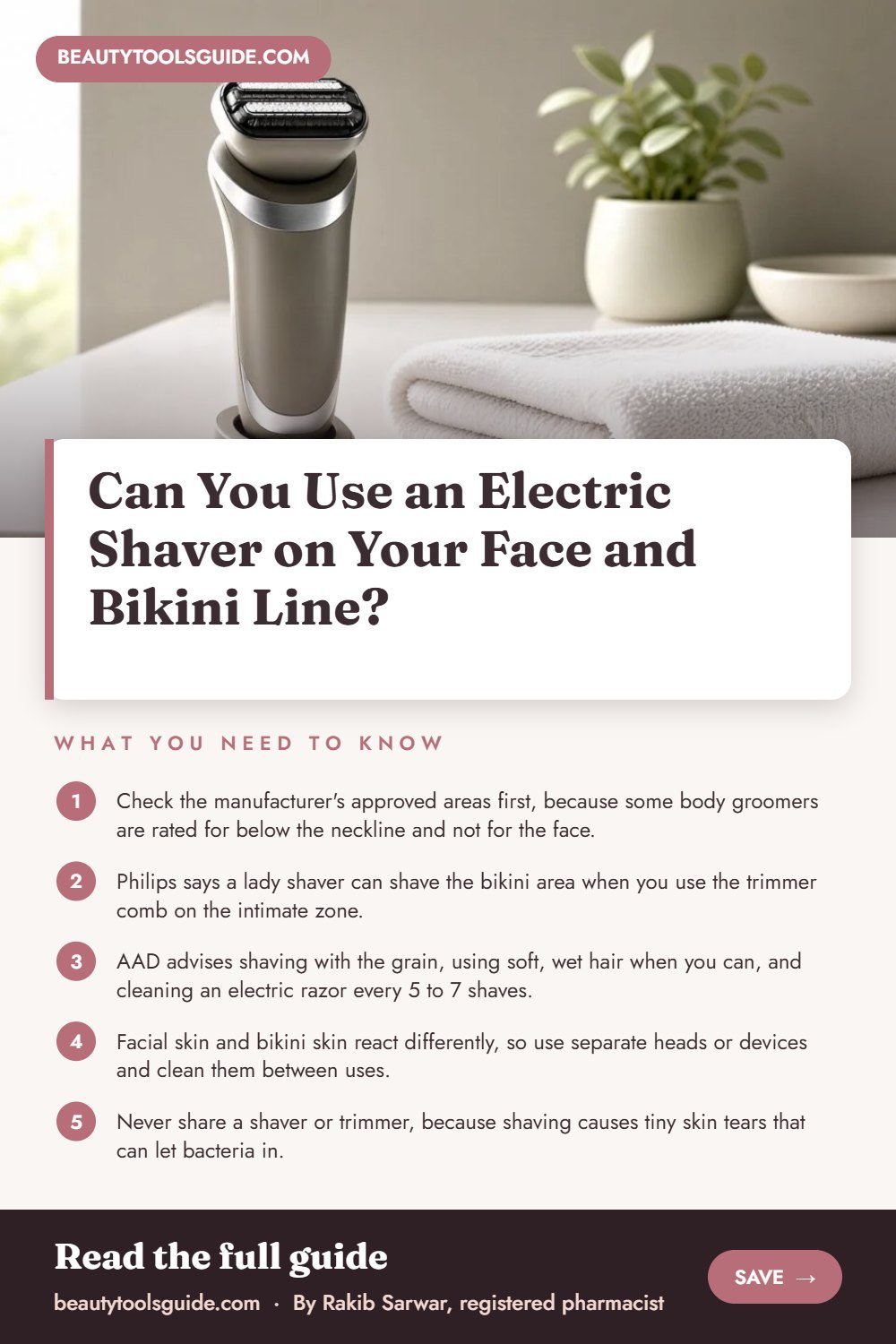
- Check the manufacturer’s approved areas first, because some body groomers are rated for below the neckline and not for the face.
- Philips says a lady shaver can shave the bikini area when you use the trimmer comb on the intimate zone.
- AAD advises shaving with the grain, using soft, wet hair when you can, and cleaning an electric razor every 5 to 7 shaves.
- Facial skin and bikini skin react differently, so use separate heads or devices and clean them between uses.
- Never share a shaver or trimmer, because shaving causes tiny skin tears that can let bacteria in.
- If razor bumps or breakouts keep returning after you change your routine, see a board-certified dermatologist.
Can You Use One Electric Shaver for Face and Bikini Line?
Sometimes, yes. The answer depends on what the manufacturer says the device is for. A shaver is built around its cutting head, its guard and its power, and those choices decide which skin it suits.
Philips gives a useful example. Its support page says the body groomer is for hair below the neckline and lists the armpits, chest, back and pubic area. The face sits above the neckline, so that device is outside its approved zones. A separate Philips page says the foil of its lady shaver can shave the armpits, arms, legs and bikini area, but that you must use the trimmer comb whenever you shave close to the intimate area.
So the label comes first. If the box says “body” or “bikini,” do not assume it is safe for a beard line, and the reverse is true for a face shaver. When a single device lists both zones, keep reading the instructions for each head.
Electric Shaver for Face and Bikini Line: Foil, Rotary and Trimmer Heads
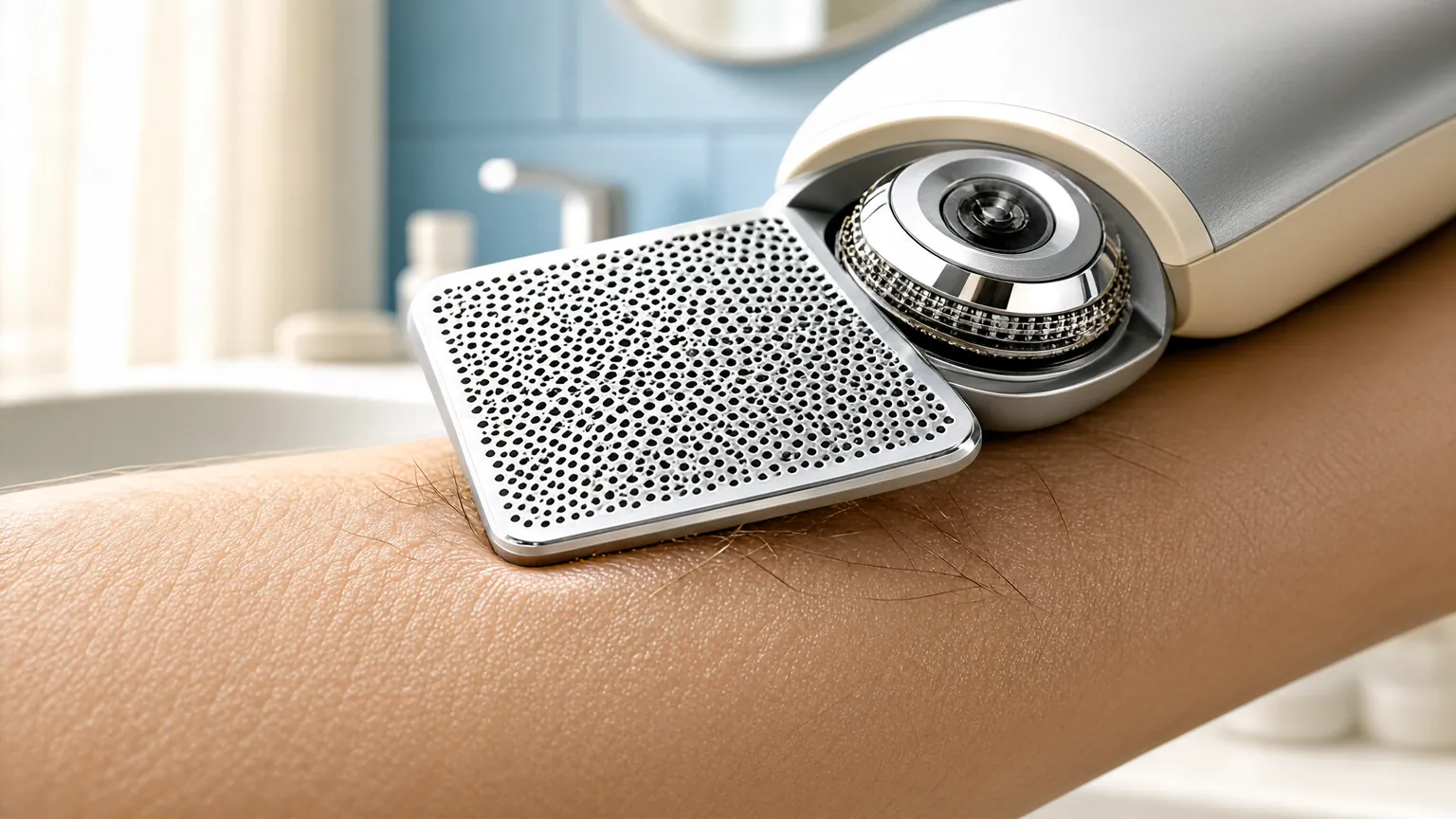
Most electric shavers fall into three families. They cut hair in different ways, so each behaves differently around curves and around the sensitive skin of the bikini line.
| Head type | How it works | Where it is usually used |
|---|---|---|
| Foil shaver | Thin cutters move behind a perforated metal screen, so hair passes through small holes | Faces, underarms and legs; many lady shavers use a foil |
| Rotary shaver | Circular heads with rotating blades under a guard, designed to follow curves | Faces and necks, often on short beard growth |
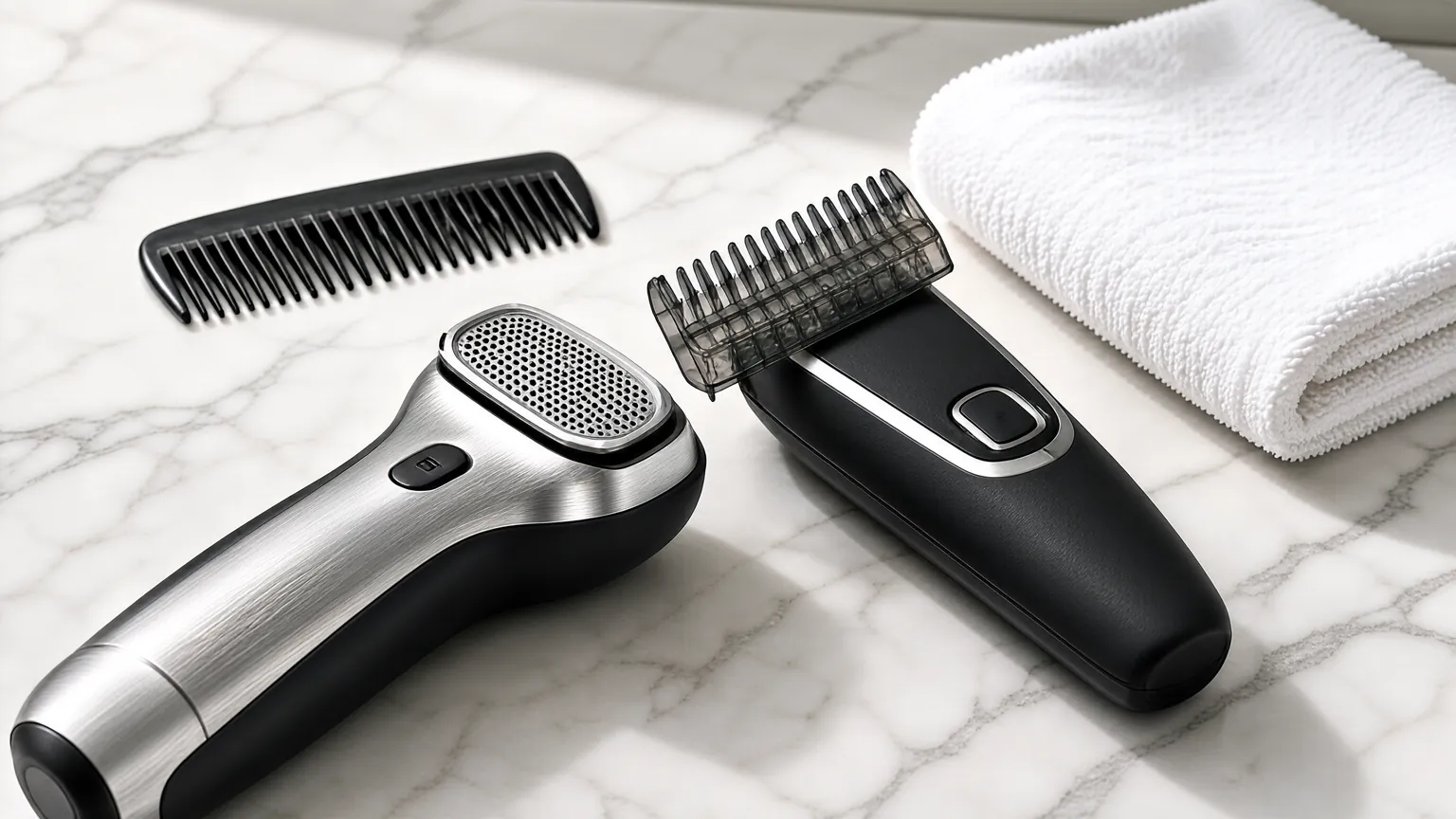
| Trimmer or bikini trimmer | Exposed or guarded blades that shorten hair, often with comb attachments | Bikini line, edging and sideburns |
| Trimmer comb | A guard that holds the foil or blade slightly away from the skin | The bikini area, as Philips requires near the intimate zone |
The table does not rank the heads. Which one suits you depends on how your hair grows, how reactive your skin is and how you move the device. Our guide to the best electric shaver for sensitive skin goes further on picking a head for reactive skin.
Self-Check: Which Electric Shaver for Face and Bikini Line Fits You?
Answer these four questions to find a sensible starting setup. They also show when to talk to a professional first.
- Which area do you shave most? Face (A), bikini line (B), or both (C)?
- How does your skin react to shaving? Rarely at all (A), some redness (B), or bumps, burning or breakouts (C)?
- How long is the hair? Short stubble (A), a few days of growth (B), or longer than a few millimeters (C)?
- Does your device list the area you want? Yes (A), or no, or I have not checked (B)?
Mostly A: a foil shaver or the matching head for each area, used with the grain, is a reasonable start.
Any C on question 1: plan on two heads or two devices, one for the face and one for the bikini area, and clean each after use.
Any B or C on question 2: shave less often and with a clean head, and read the razor bump section below. If problems persist, see a dermatologist.
C on question 3: trim long hair first with a trimmer and comb, then shave. B on question 4: check the instructions before use.
Face vs Bikini Line: Why the Same Technique Does Not Transfer
The two areas ask different things of a shaver. Think of them as separate jobs, even when one device handles both.
| Factor | Face | Bikini line |
|---|---|---|
| Hair direction | Often varies by area; AAD suggests finding the grain by pulling the skin taut in a mirror | Often changes direction around curves; take extra care |
| Manufacturer note | Face shavers are made for the face | Philips says to use the trimmer comb near the intimate zone |
| Hygiene | Wash and dry the head after use | AAD warns against sharing products, since skin tears can let bacteria and viruses in |
| Injury risk | Cuts and irritation along the jaw | AAD says people with trimming injuries were often lying down, so stand to shave |
How to Use an Electric Shaver on Face and Bikini Line Step by Step
This routine works for either area. Repeat it with the right head or device for each zone, and never use the same head on both until you have cleaned it.
- Check the device and the head. Make sure it is clean, and look at the foil for damage. Philips says to replace a worn or damaged foil.
- Prepare the skin. Philips suggests exfoliating a couple of days before shaving. Wash the area and dry it, or wet it if you shave wet.
- Choose the right attachment. Use the trimmer comb for the bikini line. Keep the face head for facial hair.
- Find the grain. AAD says to shave in the direction the hair grows. Pull the skin gently taut to see it.
- Glide, do not press. Use light, slow strokes. Press harder and you raise your risk of irritation.
- Move to the second area only after cleaning. Rinse and dry the head, or switch to a second device.
- Finish with a cool, damp cloth and moisturizer. AAD suggests a cool washcloth and a fragrance-free moisturizer afterward.
Bikini Line Safety Notes
The bikini area needs extra care, because skin is thin and injuries can be hard to spot. AAD’s advice on trimming pubic hair is brief but practical.
- Stand while you shave. You can see and feel what the shaver is doing.
- Do it yourself. AAD says injuries are more common when a partner does the trimming, possibly because they cannot feel what is happening.
- Keep the device private. Sharing hair removal products can spread infection, so keep your own shaver.
- Choose a fragrance-free moisturizer. AAD says “unscented” products may still contain masking fragrance.
If shaving the area keeps causing trouble, a longer-term option is laser. AAD says it can prevent trimming injuries, and our guide to whether laser hair removal hurts explains what to expect.
Dry or Wet Shaving With an Electric Shaver for Face and Bikini Line
The two sources we read do not give the same advice. AAD’s general shaving guide says to wet your skin and hair before you shave, because moist, warm skin is softer. The Philips page for its lady shaver says you can use it in the bath or shower, or on clean, dry skin.
That is not a contradiction so much as a difference in tools. Blade razors need moisture and a gel, while many electric shavers are designed to work dry as well. If your skin feels tight or hot after a dry shave, try a wet one. If wet shaving clogs the head, try dry and clean the foil more often.
Razor Bumps and Irritation: How to Prevent Them
Razor bumps happen when cut hair curls back into the skin. AAD lists several ways to prevent them, and most apply to electric shavers too.
- Choose a time when the hair is soft, such as at the end of a shower or after holding a warm damp washcloth on the skin.
- Shave with the grain, rinse with warm water, then apply a cool, damp washcloth.
- Shave daily or every two to three days so hair has less time to grow and curve back into the skin.
- Use a moisturizing product and a soothing aftershave made to reduce bumps.
If bumps continue after you change your routine, AAD advises seeing a board-certified dermatologist. Untreated bumps can cause lasting changes such as deep grooves and raised scars. For cleansing before shaving, our guide to the best facial cleanser for combination skin may help.
Cleaning an Electric Shaver for Face and Bikini Line Use
A clean shaver cuts better and irritates less. AAD says to clean an electric razor every 5 to 7 shaves. Philips tells users to check the foil before each use and replace it when worn or damaged.
- Switch the shaver off and, if it plugs in, unplug it.
- Remove the head and tap out hair clippings.
- Rinse the head if the maker says it is washable, then let it dry fully.
- Store the shaver somewhere dry and covered.
Follow the user manual for your model, because the cleaning steps differ between designs. Some heads rinse under water, while others need a brush only, and using the wrong method can damage the foil or the motor.
Do and Don’t
This short list sums up the safe habits from the sources above.
- Check the device’s approved areas
- Use the trimmer comb near the intimate zone
- Shave with the direction of growth
- Clean the head every 5 to 7 shaves
- Replace a worn or damaged foil
- Moisturize with a fragrance-free product
- Use a below-the-neck groomer on your face
- Share a shaver or trimmer
- Press hard or go over the same spot repeatedly
- Shave over cuts or rashes
- Use a wet device that is not waterproof
- Lie down while shaving the bikini line
Honest Limits
No electric shaver is proven to prevent razor bumps for every skin type. The advice here comes from dermatology pages and a manufacturer, not from comparisons of specific models. People with coarse or curly hair can still get bumps, even with careful habits.
We also found no independent source that rates specific shavers for the bikini line. Ratings on Amazon tell you about durability and satisfaction, not about how a device behaves on your skin. Treat the product list as a starting point, and read the instructions for any model you buy.
Finally, shaving is temporary. Hair grows back, and frequent shaving means frequent exposure to friction. Some people prefer a longer-term option, but that is a decision for a dermatologist. It is also worth remembering that any single guide, including this one, cannot see your skin, so adjust the routine to what your skin shows you over a few weeks.
When to See a Professional
See a board-certified dermatologist if shaving leads to any of the following.
- Bumps, pus or breakouts that keep returning
- Deep grooves or raised scars after bumps heal
- Cuts that do not heal, or signs of infection such as spreading redness and heat
- Pain or injury in the bikini area, since AAD notes any genital injury can make it easier to catch an infection
- Dark, thick or ingrown hair that needs a different approach
- Preventing razor bumps: a simple routine that works.
- Electric shaver on a plane: the carry-on rules.
Frequently Asked Questions
Can you use an electric shaver for face and bikini line?
Often yes, but check the manufacturer’s list of approved areas. Some body groomers are rated for below the neckline only, and the bikini area needs the trimmer comb.
Is an electric shaver for face and bikini line safe for sensitive skin?
It can be gentler than a blade for some people, but sensitive skin still reacts to pressure and dirty heads. Shave lightly, with the grain, and moisturize afterward.
Can I use my face shaver on my bikini line?
Only if the maker lists that use. A face shaver is built for facial hair, and the bikini area may need a comb attachment.
Can I use a body groomer on my face?
Not if it is rated below the neckline. Philips says its body groomer is for below the neck, so use a shaver made for the face.
Should I shave dry or wet?
AAD recommends wetting skin and hair before blade shaving. Philips says its lady shaver works wet or dry. Pick what your device allows and your skin tolerates.
Do I need a trimmer comb on the bikini line?
Philips says to use the trimmer comb whenever you shave close to the intimate area with its lady shaver foil. Follow your own manual.
How often should I clean an electric shaver?
AAD says to clean an electric razor every 5 to 7 shaves. Rinse and dry the head more often if you move between areas.
Can I share my electric shaver?
No. Shaving causes tiny skin tears, and sharing hair removal products can spread infection.
What do I do about razor bumps from electric shaving?
Shave with the grain, shave when hair is soft, and moisturize. If bumps keep returning, see a board-certified dermatologist.
How often can I shave my bikini line?
AAD says shaving daily or every two to three days can reduce razor bumps. Shave less often if your skin looks irritated.
The Bottom Line
An electric shaver can serve both the face and the bikini line, but only if the device is rated for each area and you treat them as separate jobs. Use the trimmer comb near the intimate zone, shave with the grain, and clean the head between uses.
Keep your device to yourself, watch for razor bumps, and see a dermatologist if irritation keeps returning. Check each product’s own instructions before you buy, because makers define their approved areas differently.