
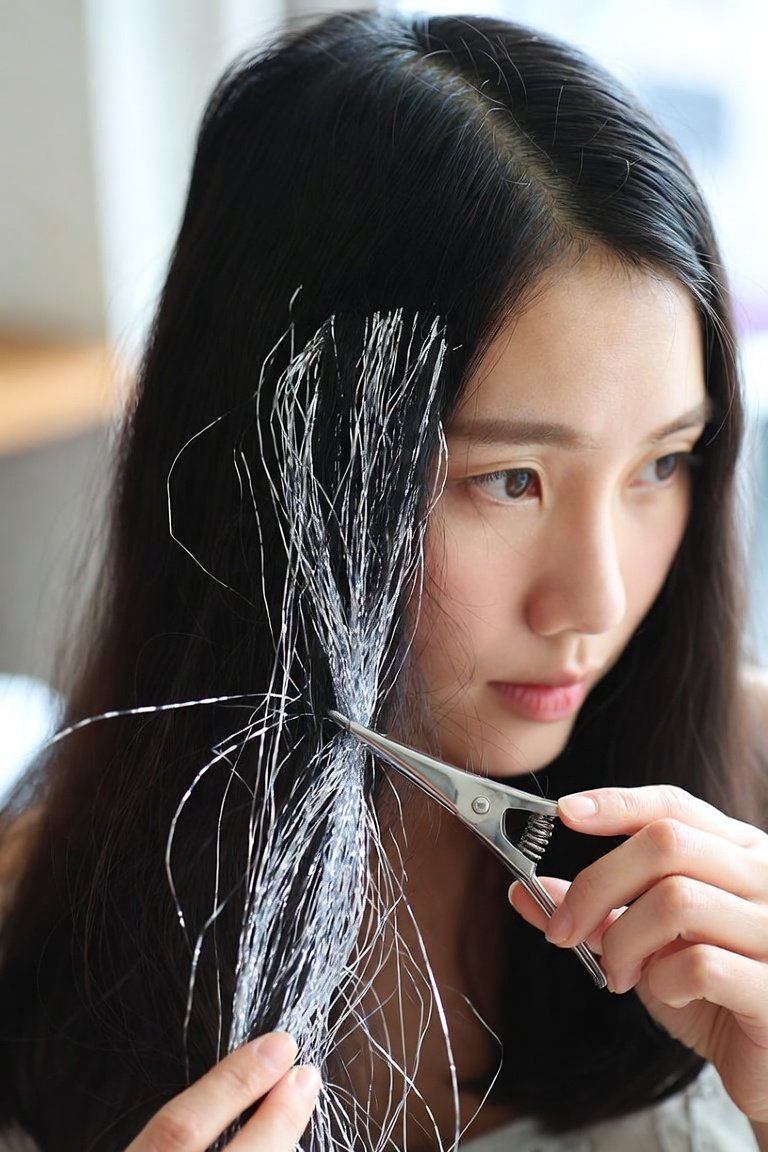
How to Remove Hair Tinsel: Knots, Clamped Beads, With or Without the Tool
Tinsel goes in within seconds, yet taking it out is where most hair gets hurt. People tug at a knot, cut too close to the root or crush a bead the wrong way. So before you try to remove hair tinsel, take one minute to check how it was attached. After all, that single detail decides whether you need your fingers, a pin or the clamp tool.
Quick answer: for knotted tinsel, find the knot at the root and loosen it with a fingernail or a pin, then slide the strand out. For tinsel held by a clamped bead, squeeze the bead gently on the opposite sides from where it was crimped, so it pops back open, and slide it off. Without pliers, try small flat-nosed pliers with care, or snip only the tinsel. In every case, add a little conditioner and go slowly.
These steps also follow what salons and tinsel makers describe. Buzz Cuts, a kids’ salon, says slip-knot tinsel usually lasts one to two weeks, while bead-attached strands can last months. SISHAIR, a hair extension brand, explains that a clamped bead opens when you squeeze the sides opposite the original crimp.
Gentle handling matters too, because the American Academy of Dermatology advises removing tangles gently and avoiding pulling and tugging.
Finally, below you will find a quick attachment check, a knot-versus-bead table, step-by-step removal with and without the tool, safe cutting rules and aftercare.
Recommended Tinsel Kits With Tools to Remove Hair Tinsel
Every pick is a hair tinsel kit or tinsel bead kit, and most include pliers, a hook or beads. That way, you already own the tool that opens the beads later. Still, check each listing for exactly which tools come in the box. See how we test and choose products for the rules behind every pick.


Key Takeaways
- Check the attachment first, because knots and clamped beads need different removal methods.
- Knots loosen with a fingernail or a pin; they rarely need cutting.
- A clamped bead opens when you squeeze the sides opposite the original crimp.
- No pliers? Small flat-nosed pliers can work, or you can snip the tinsel only and deal with the bead later.
- Never cut near the root, since it is easy to snip your own hair instead.
- A little conditioner or oil helps strands slide, so you pull less.
- If a bead will not open or hair is matted, then a stylist can remove it safely.

First, Check How Your Tinsel Was Attached
First, part the hair right next to a tinsel strand and look at the root. Then answer these quick questions. They take a minute, and they tell you which method to use.
- Is there a small bead or ring at the root? Yes, a tiny metal or silicone-lined bead (B). No, just folded tinsel (A).
- What do you feel between your fingers? A soft little knot (A), or a hard, flat or round lump (B).
- Who put it in? You or a friend with just tinsel (usually A), or a salon or kit with pliers (usually B).
- How long has it been in? Under two weeks (either), or several weeks or more (more likely B, and possibly tangled).
Mostly A: slip-knot tinsel. Skip to the knotted tinsel section, because you will not need pliers.
Mostly B: clamped bead tinsel. Use the clamp tool method, or read the no-tool section if the pliers are missing.
Tangled or matted around the root: start with the aftercare detangling tips first, and then remove it.
If you cannot tell, treat it as a bead anyway. That way, you will not yank on a knot that is actually clamped.
Knot vs Clamped Bead: Two Different Removal Jobs
Many guides lump all tinsel together. In practice, however, the two attachment styles come out in completely different ways.
| Feature | Slip-knot tinsel | Clamped bead (micro-link) tinsel |
|---|---|---|
| How it is attached | Tinsel folded and knotted around a few hairs | Hair and tinsel pulled through a tiny bead, then crushed flat with pliers |
| Typical wear | About one to two weeks, per Buzz Cuts Salon | Up to several months, per the same salon |
| What you need | Fingers, a pin, conditioner | The clamp pliers or small flat-nosed pliers |
| Main risk | Pulling or snapping hair when you tug | Crushing hair or cutting it near the bead |
| Can you cut it out? | Rarely needed | You can snip the tinsel, but the bead stays |
So the tool question only applies to beads. For knots, patience and a little slip are enough.
There is also a middle case. Some kits clip tinsel in with a tiny snap clip instead of a bead. Those open like a hair clip, so you simply press the clip open and slide it off. Because clips sit on top of the hair rather than around it, they are the gentlest of the three to take out.
How to Remove Hair Tinsel Step by Step
This general method covers both types. Then the next sections give you the exact move for each attachment.
- Work on dry, detangled hair. Brush gently from the ends upward while you hold the hair at the root, so you do not pull on the attachment.
- Isolate one strand. Clip the surrounding hair away, so you can see the root clearly.
- Add a little slip. Rub a small amount of conditioner or hair oil onto the knot or bead area, so strands glide.
- Open the attachment. Loosen a knot with a fingernail or pin, or squeeze a clamped bead on its uncrimped sides until it opens.
- Slide it down and off. Hold your hair near the root with one hand, and ease the tinsel or bead down the strand with the other.
- Comb through gently. Then use a wide-tooth comb to lift out shed hairs and any small tangles left behind.
- Repeat and check. Work one strand at a time, then check in a mirror for any tinsel you missed.
Using the Clamp Tool to Remove Hair Tinsel Beads
Most tinsel kits with beads also include pliers with small grooves or holes. They clamp the bead shut during application, so they can also help reopen it.
The key is direction. SISHAIR explains that you gently squeeze the sides of the bead opposite to where it was first crimped. In other words, if the bead is flat side to side, you press on its narrow edges. As a result, the flat bead rounds out again and releases the hair.
- Turn the bead so its narrow edges face the plier jaws.
- Squeeze gently and briefly, then check whether it has opened.
- Once it feels loose, slide the bead down and off the ends of your hair.
- If it only opens a little, squeeze again rather than pull harder.
Silicone-lined beads usually release more gently, because the lining cushions the hair. Even so, stay slow, since a bead that is only half open can still grab strands.
How to Remove Hair Tinsel Without the Tool
Lost the kit pliers? You still have options, although each needs extra care.
| Option | Works for | Watch out for |
|---|---|---|
| Small flat-nosed pliers | Clamped beads; SISHAIR mentions them as a careful substitute | Large jaws can crush hair, so grip only the bead |
| Fingernail or a pin | Slip knots | Pins can scratch skin, so work along the hair, not into the scalp |
| Small scissors or thread snips | Cutting tinsel strands only | Never cut at the root; the bead stays in place |
| Conditioner or oil | Both types | Use a small amount, then wash it out afterwards |
For a bead, therefore, flat-nosed pliers are the closest match to the kit tool. First, wrap the tips in a little tape so they grip without slipping. Then squeeze the bead on its narrow edges, exactly as you would with the kit pliers.
Why the extra care? Household pliers have wider, ridged jaws than kit pliers. As a result, they can catch nearby strands along with the bead. So part the hair well, hold the strand away from the head, and grip only the metal.
If you have nothing that can grip the bead, snip the tinsel strands close to the bead instead. The bead will stay in, but you can then take it out later with pliers or at a salon. Meanwhile, the hair is not harmed by a bead left in for a few extra days.
Knotted Tinsel: Your Fingers Are Enough
In general, slip-knot tinsel is the easiest to take out. Buzz Cuts Salon describes finding the tiny knot at the root, opening it with your fingernails and sliding the hair out.
- Hold the hair below the knot, so any pulling stays off your scalp.
- Then work a fingernail or pin into the center of the knot to loosen it.
- When it is loose, pull the two tinsel ends apart and slide the loop off.
- If the knot is tight, add conditioner and wait a minute before you try again.
Tinsel itself is thin plastic film, so it slides easily once the knot opens. Consequently, there is rarely any need to cut knotted tinsel.
When and Where to Cut
Cutting is a last resort. When you do cut, cut only the tinsel, and cut well away from the root.
- Pull the tinsel taut and away from your hair first
- Use small, sharp scissors so the cut stays precise
- Cut the tinsel a little below the knot or bead
- Check that no hair is inside the blades before you close them
- Remove the leftover bead afterwards with pliers
- Ask someone to help with strands you cannot see
- Snip right at the scalp or root
- Cut a tangled clump of hair and tinsel together
- Use large kitchen scissors, because they are hard to control near the head
- Rip a strand out because it seems loose
- Crush a bead flatter to break it
- Rush when the hair is wet and stretchy
SISHAIR also advises small scissors or thread snips for the tinsel, taking care to avoid your natural hair. Hair is easy to miss in a tangle, so check twice before every cut.
Aftercare: Detangling and Checking Your Hair
Once the tinsel is out, give the hair near the root a little attention as well. Beads and knots can leave small tangles behind, especially after several weeks.
The American Academy of Dermatology advises removing tangles gently, using a moisturizing conditioner if needed, and combing with a wide-tooth comb without pulling or tugging. That is exactly what you need here.
- Wash and condition, so any oil you used rinses out.
- Detangle from the ends upward, holding the hair above the tangle.
- Expect a few loose hairs, because shed hairs get trapped at the attachment.
- Rest the same spot for a while before you add new tinsel there.
What to do after you remove hair tinsel
First, look closely at the root area in a mirror. A few shed hairs are normal, because hair sheds every day and those hairs get trapped at the attachment. However, a bald patch, broken stubs or a sore scalp are not normal, so give that spot a rest and see a professional if it does not settle.
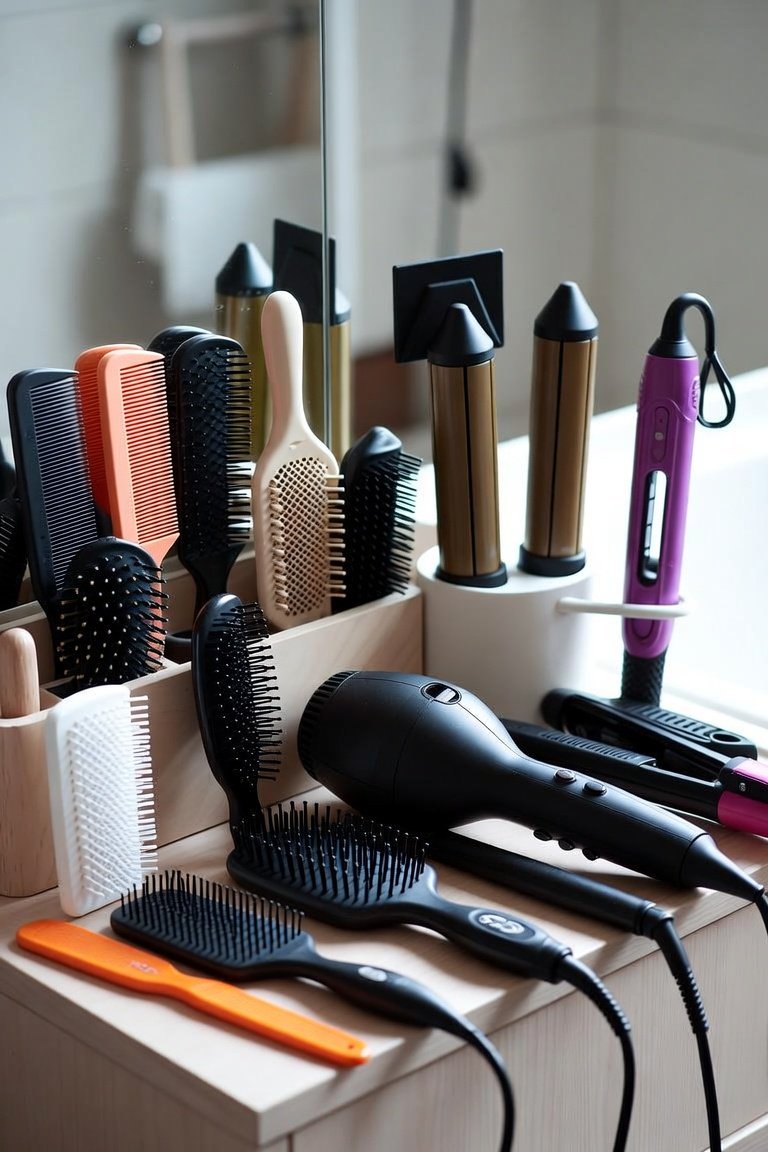
Also, store the kit pliers with your other tools, so you have them next time. For example, our guide to storing styling tools and small accessories has ideas for that.
How Long to Leave Tinsel In
In short, tinsel does not need to come out on a strict schedule. However, knots and beads slide down as hair grows, and tangles build up over time.
- Slip knots: about one to two weeks, according to Buzz Cuts Salon.
- Clamped beads: up to several months with care, according to the same salon.
- Any type: take it out sooner if it pulls, itches or starts to tangle at the root.
Tinsel also sits well with other easy styles in the meantime. For example, a flipped topsy tail ponytail shows off strands without much handling.
Honest Limits
These methods work for most home tinsel, but not every case. Some beads are very small or crimped hard, so they may not reopen fully without the right pliers. In that case, forcing it risks more damage than waiting.
Also, advice online varies. Many videos show quick hacks, yet few explain which attachment they are removing. So stick to the method that matches your tinsel.
There is one more limit. Tinsel removal is not a fix for hair that was already dry or breaking. If strands snap easily near the attachment, the hair may need a break from accessories, and a stylist can advise on that.
Finally, product ratings reflect how the tinsel looked and how easy the kit felt. They say little about removal, so keep the kit pliers even after the tinsel is in.
When to See a Professional
Most tinsel comes out easily at home. Still, book a stylist when:
- A bead will not open after several gentle tries
- Hair around the tinsel is matted into a clump
- You cannot see or reach the strands, and nobody else can help
- The scalp is sore, red or has bumps at the attachment points
- A child is upset or cannot sit still near scissors
A stylist has the right pliers and good light, so removal usually takes only a few minutes. However, for ongoing scalp pain or hair loss, see a dermatologist instead.
- Razor combs: how a razor comb softens and thins hair, and when to avoid it.
- Taking hair tools on a plane: carry-on and checked-bag rules for straighteners and dryers.
- Electric shavers for sensitive skin: foil versus rotary heads and how to limit irritation.
Frequently Asked Questions
How do you remove hair tinsel tied with a knot?
First find the knot at the root, then loosen it with a fingernail or pin, and slide the strand out. Add conditioner if it is tight.
How do you remove hair tinsel with the clamp tool?
Squeeze the bead gently on the sides opposite the original crimp, so it rounds out. Then slide it down and off the hair.
Can I remove hair tinsel without the tool?
Yes. Use small flat-nosed pliers carefully on beads, or a fingernail on knots. Otherwise, snip only the tinsel and remove the bead later.
Can I just cut hair tinsel out?
You can cut the tinsel itself, as long as you stay well away from the root. However, never cut at the scalp, because it is easy to snip your own hair.
Does removing tinsel damage hair?
Gentle removal should not. Damage usually comes from yanking, crushing a bead or cutting too close to the root.
What is the easiest way to remove hair tinsel from a child?
Most kids’ tinsel is knotted, so loosen the knot with a fingernail. Also, work in good light and keep scissors away.
Why will the bead not open?
You may be squeezing the flat sides. Instead, turn it and press the narrow edges, so it returns to a round shape.
Should hair be wet or dry for removal?
Dry and detangled is easiest. Wet hair stretches and tangles more, so it breaks more easily.
How long can I leave tinsel in my hair?
Buzz Cuts Salon says about one to two weeks for knots and up to several months for beads, with care.
Can I reuse tinsel after removal?
Usually not, because strands get short and crinkled. Beads can often be reused if they still open and close cleanly.
The Bottom Line
Getting tinsel out is easy as soon as you know what is holding it. Knots need a fingernail, a pin and a little conditioner. Clamped beads need the kit pliers, pressed on the narrow edges so they open again.
Without the tool, careful flat-nosed pliers or a clean snip of the tinsel alone will do. Above all, never cut near the root, never crush a bead flatter, and ask a stylist for help with anything stubborn.




2 Comments