
Do Hair Tools Damage Hair? What Heat, Tension and Habits Really Do
Do hair tools damage hair? Yes, they can, but the tool is rarely the whole story. Damage comes from how hot the plates or barrel get, how long they sit on one section, how often you style and what state your hair is in when you do. That is why two people with the same flat iron can end up with very different hair.
Quick answer: heat tools can damage hair, and the risk rises with temperature, frequency and wet or already weakened hair. The American Academy of Dermatology (AAD) advises flat irons on dry hair only, at low or medium heat, and no more often than every other day. Keep a curling iron on each section for a second or two, add a heat protectant, and trim ends that have already split.
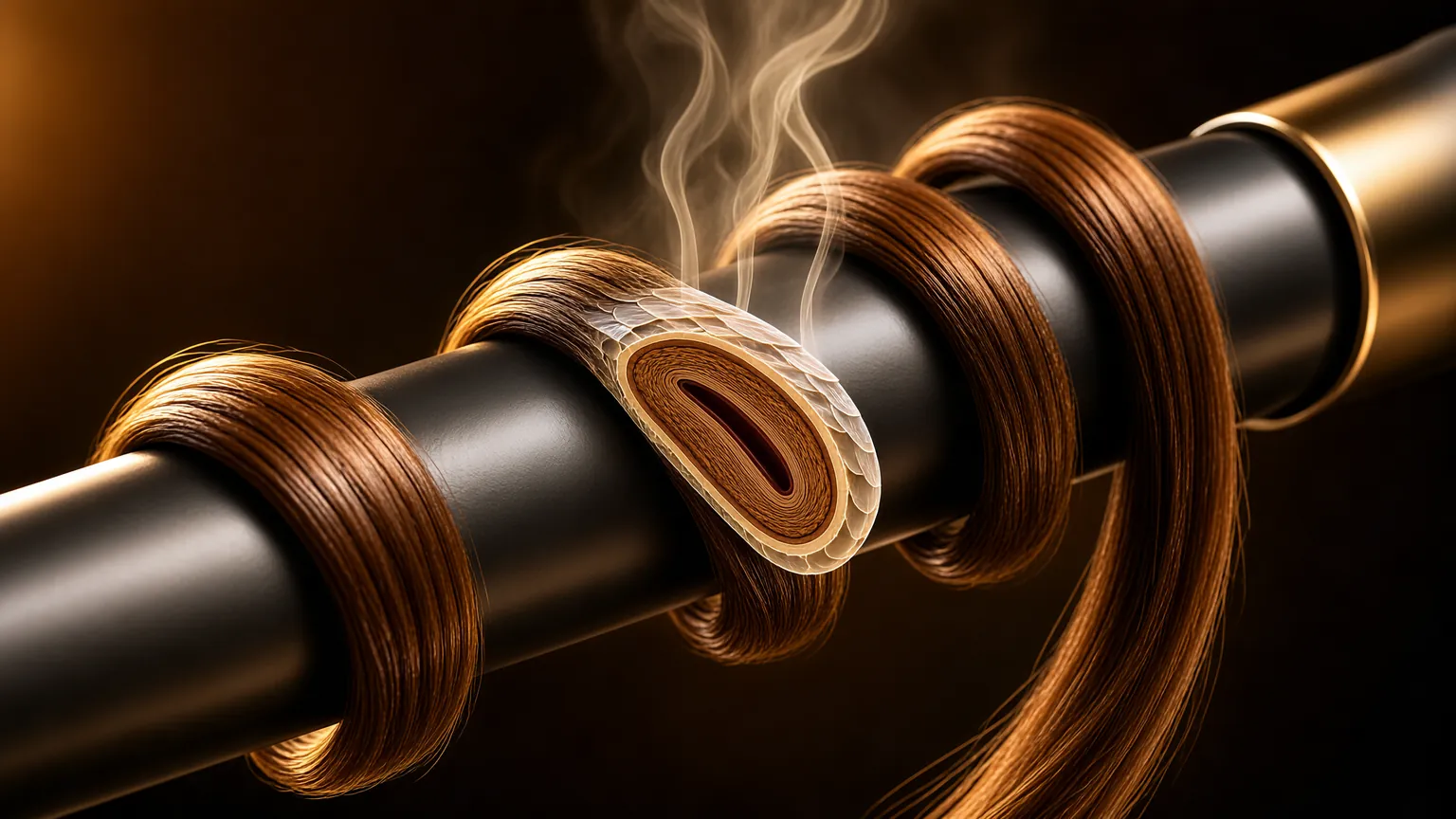
The research points the same way. An AAD news release says earlier studies found that 347 to 419 F (175 to 215 C) can damage most hair in as little as five minutes, and that damp, colored or permed hair may be harmed at lower temperatures. A 2025 lab study in the Journal of Cosmetic Dermatology dried hair tresses at 60 C for 24 hours, a stand-in for a month of daily blow-drying. The cuticle lifted and the hair released more protein.
Below you will find a quick self-check, a tool-by-tool table, a step-by-step routine that lowers the risk, the myths worth dropping and the signs that mean it is time to see a dermatologist.
Recommended Heat Protectants and a Ceramic Straightener
The title question is about tools, so these picks are heat protectant sprays plus one ceramic-plate straightener. No product makes heat styling risk-free, so read the advice below before you choose. See how we test and choose products for the rules behind every pick.


Key Takeaways
- Heat tools can damage hair of any type, according to the AAD, and the damage depends on temperature, contact time and how often you style.
- Flat irons belong on dry hair only, at low or medium heat, and no more than every other day.
- Wet hair breaks more easily, so let it dry before a hot tool touches it.
- Heat is only one cause. Tight styles, rough brushing and chemical services add their own damage.
- A heat protectant is a sensible step that dermatologists recommend, but no spray removes the risk.
- Split or broken lengths do not repair themselves, so trimming the ends is part of the plan.
- Sudden shedding, bald patches or a sore scalp are not styling damage until a dermatologist says so.

How Hair Tools Damage Hair: What Heat Does to the Strand
A hair strand is dead protein. It has no blood supply and no way to patch itself, so any harm you do stays in that length until it grows out or gets cut off. The outer layer, the cuticle, works like overlapping roof tiles. When those tiles lie flat, hair looks smooth and reflects light.
Heat changes that. In the 2025 Journal of Cosmetic Dermatology study, researchers dried tresses at 60 C for 24 hours to mimic a month of daily blow-drying. Compared with untouched hair, the heated hair showed lifted cuticles, lower water content, weaker mechanical properties and a lower tryptophan level, which is a marker of protein change. It also released more protein.
That is a lab model, not a person in a bathroom. The tresses were not on a living scalp, and an oven is not a flat iron. Still, the pattern matches what people see: rough, dull, brittle hair that tangles and snaps. So the honest answer to “do hair tools damage hair” is that repeated heat degrades the structure that keeps hair smooth and strong.
The AAD puts it plainly on its styling page. Excessive heat can damage hair regardless of hair type. The word “excessive” matters, because it tells you the goal is control, not abstinence.
A Two-Minute Risk Check: Is Your Routine Hard on Your Hair?
Most heat damage comes from a few habits. Tick every statement that is true for you, then read the result below.
- You flat iron more than every other day. The AAD limit is no more often than that.
- You straighten before the hair is fully dry. Steam and sizzle are warning signs.
- You run the iron at the top setting by default. Many ceramic irons reach about 410 F (210 C).
- You hold a curling iron on one section for several seconds. The AAD says a second or two is enough.
- You skip heat protectant. Dermatologists recommend one before straightening.
- Your hair is colored, permed or relaxed. Treated hair may take damage at lower temperatures.
- You go over the same section again and again. Extra passes are extra heat.
0 to 1 ticks: your routine is fairly gentle, so keep the habits and watch the ends. 2 to 4 ticks: change the top two first, usually temperature and wet hair. 5 or more: pause heat for a few weeks, then restart with the routine in the steps section.
Which Hair Tools Damage Hair Most? A Tool-by-Tool Look
Every tool delivers heat, but the contact and the temperature differ. The AAD gives specific numbers for some tools and none for others, so the table marks what is sourced and what is general logic.
| Tool | Main way it harms hair | What the sources say |
|---|---|---|
| Flat iron | Plates press and drag hot metal along the strand, often at high heat. | AAD: dry hair only, low or medium heat, no more than every other day. |
| Curling iron | Hair wraps around a hot barrel, so contact is long and close. | AAD: leave it on a section for only a second or two. |
| Blow dryer | Hot air dries the strand fast and can lift the cuticle with repeated use. | AAD: cut down how often you blow-dry each week. No temperature is given. |
| Hot brush or heated comb | Heat plus pulling in one pass. | No specific AAD figure. The same rules apply: dry hair, lower heat, fewer passes. |
| Hot rollers | Heat sits on the hair for minutes while it cools. | No specific AAD figure. Shorter wear and lower heat reduce the load. |
An AAD news release from 2008 adds a warning about ceramic flat irons. Ceramic plates are sold for fast, even heat, but many reach 410 F (210 C), and the dermatologist quoted advised a maximum of 347 F (175 C), or a low or medium setting. The release is old, so treat the numbers as a conservative guide, not a lab-grade rule. The AAD styling page itself gives no temperature.
If you travel with your tools, our guide to carrying styling gear through airport security covers the practical side.
Heat Damage Versus Mechanical Damage: Two Problems People Mix Up
Many articles blame the iron for everything. In practice, hair breaks for two different reasons, and the fix for one does not solve the other. Separating them tells you where to spend your effort.
| Heat damage | Mechanical damage | |
|---|---|---|
| Cause | Hot plates, barrels and dryers | Pulling, tight styles, rough brushing, friction |
| Typical look | Dry, rough, dull, brittle, rough cuticle | Split ends, breakage at one point, thinning at the hairline |
| Source guidance | AAD: lower heat, dry hair, less often | AAD: avoid constant braids, cornrows, ponytails and extensions, and keep brushing to a minimum |
| What helps | Lower setting, fewer passes, protectant | Looser styles, gentle detangling, wide-tooth comb |
| Risk if ignored | Ongoing breakage and dull hair | The AAD warns that continued tension can cause permanent hair loss |
The AAD also warns that brushing 100 strokes a day can cause split ends, and that wet hair breaks more easily when combed or brushed. People with tightly curled or textured hair are an exception: the AAD advises them to brush wet hair to reduce breakage. Texture changes the rules, so use the advice that matches your hair.
How to Use Hair Tools and Damage Hair Less: The Routine
This order puts the biggest risk reducers first. Start from the top, because the first three steps matter more than the rest.
- Dry the hair first. Wrap it in a towel, then let it air-dry or use a blow dryer until no dampness is left. The AAD says to use a flat iron on dry hair only.
- Pick the lowest setting that works. The AAD advises low or medium heat. Start low and raise it only if a section will not style.
- Apply a heat protectant. Spread it evenly from mid-length to ends, then let it dry before the tool touches the hair.
- Work in small, clean sections. Thin sections heat evenly, so you need fewer passes.
- Limit contact time. Keep a curling iron on each section for a second or two, as the AAD advises, and make one slow pass with a flat iron instead of several fast ones.
- Let the hair cool before brushing. Hot hair is softer, so brushing right away can stretch and snap it.
- Space out heat days. Use a flat iron no more often than every other day, and give your dryer a break when you can.
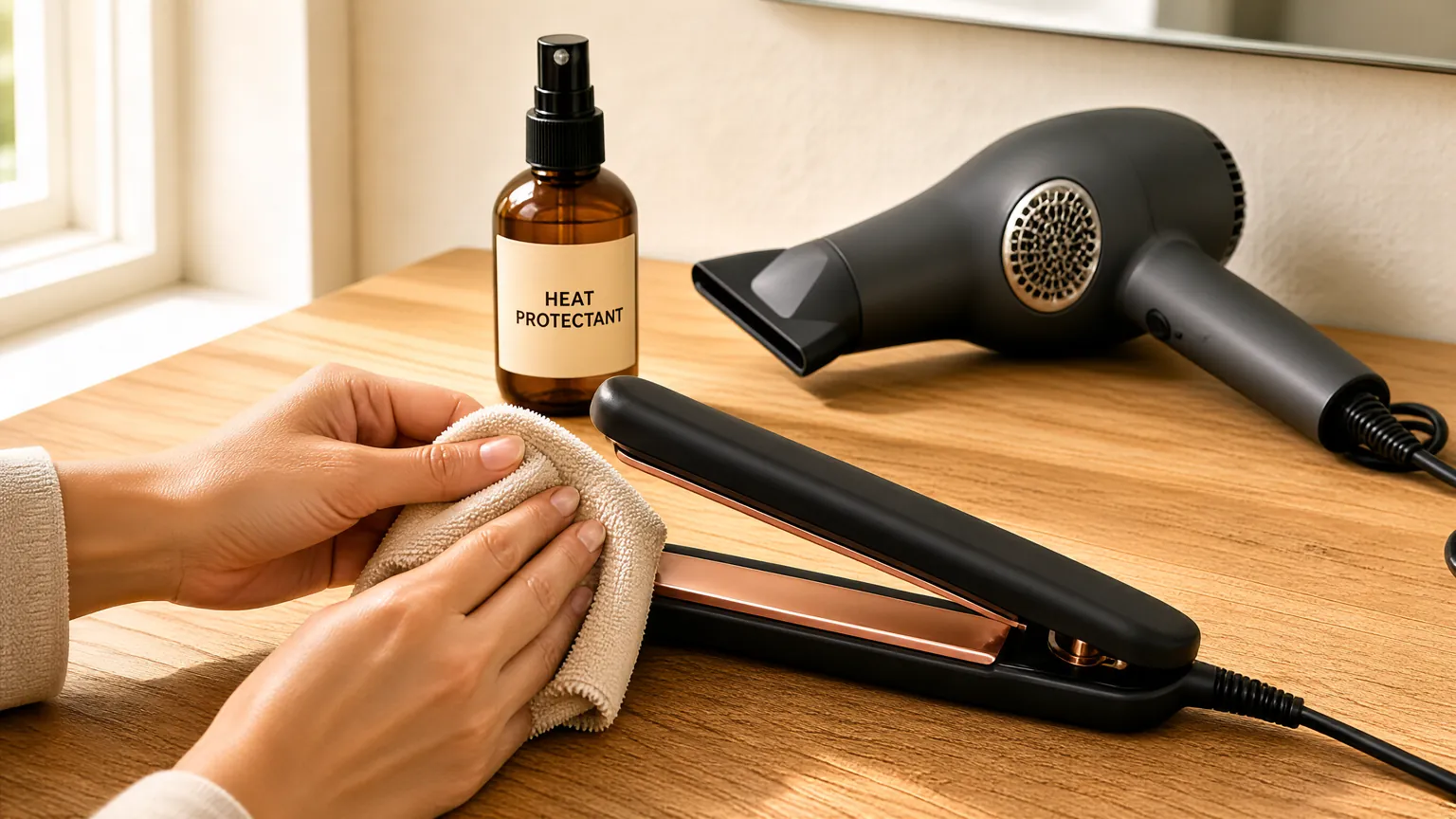
- Clean the plates. Product buildup can create hot spots and drag, so wipe cooled plates with a soft cloth as the maker advises.
Do Hair Tools Damage Hair Less With a Heat Protectant?
An AAD news release tells people to apply a heat-protectant styling product before straightening, so the advice has a dermatology source. These products generally coat the strand and slow heat transfer, which is a reasonable idea, but this guide found no independent study that measures how much protection a given spray gives.
That gap matters when you read labels. A number such as 450 F on a bottle is the maker’s claim about use with a tool, not a promise that hair is safe at that temperature. Treat the spray as a seatbelt, not permission to drive faster.
- Apply to damp or dry hair as the label says. Some sprays are meant for towel-dried hair, others for dry hair.
- Do not soak the hair. A wet coating can sizzle on a hot plate.
- Let it dry. Wet product plus a hot iron is a bad mix.
- Keep the setting low anyway. A protectant lowers risk at a given temperature, so it works best alongside lower heat.
Myths About Hair Tools and Damage
When people ask whether hair tools damage hair, the answers online are often louder than the evidence. Here is what the sources do and do not support.
- “Ceramic means safe.” The AAD release warns that ceramic irons used at the highest setting every day can damage the hair’s structure.
- “A little steam is fine.” Steam or sizzle means water is boiling out of the hair. Let it dry first.
- “A higher setting means fewer passes, so less damage.” Earlier studies cited by the AAD found that 347 to 419 F can damage most hair in about five minutes, so a high setting is not a shortcut.
- “Air-drying is always better.” It avoids dryer heat, but the AAD also says wet hair breaks more easily when handled, so go gently.
- “Damage can be reversed with the right serum.” Products can smooth and coat, but they do not rebuild a broken strand. Cutting the ends is the real fix.
- “Hair tools cause all hair loss.” Breakage and shedding from the root are different, and a dermatologist can tell them apart.
How Often Is Too Often? Frequency by Hair Type
The AAD gives one hard number, no flat iron more often than every other day. The 2008 AAD release suggested about two to three times a week, depending on hair type. Your own limit depends on how fragile your hair is.
- Fine hair: it has less mass to absorb heat, so it tends to show wear sooner. Stay at the low end.
- Thick, coarse hair: it may tolerate a medium setting, but it also needs more passes, so section it well.
- Tightly curled or textured hair: heat can loosen the curl pattern. Many people alternate stretched styles with heat-free days. Detangle gently, and note the AAD advice to brush wet textured hair to reduce breakage.
- Color-treated, permed or relaxed hair: the AAD release says the damage threshold can be lower, so use the lowest setting and fewer sessions.
- Already damaged hair: the same release advises avoiding heat and chemical treatments and cutting off damaged ends.
Do and Don’t: A Quick Reference
Keep this list near the mirror. Most heat damage traces back to the right-hand column.
- Dry hair fully first
- Start on a low or medium setting
- Use a heat protectant
- Work in small sections
- Keep curling iron contact short
- Space out flat iron days
- Trim split ends
- Iron damp hair
- Use the top setting by default
- Repeat passes on one section
- Style daily without a break
- Brush hot hair hard
- Stack heat on top of chemical services
- Wear tight styles all the time
Repairing the Damage Hair Tools Leave Behind
The 2008 AAD release says damaged hair can take up to two years to fully repair, which is really the time it takes for healthy hair to grow in. Plan for that timeline instead of hunting for a quick reset.
- Trim. Cutting off split or broken ends stops splits from traveling up the strand.
- Rest. Give the hair a few heat-free weeks, then return with a lower setting and a protectant.
- Be gentle when wet. Towel-wrap instead of rubbing, and detangle from the ends upward.
- Cut friction. A smooth pillowcase and loose styles lower rubbing and tension.
- Keep the tools clean. A residue-free plate glides, so you need fewer passes.
If you store several tools together, our guide to storing styling tools safely shows ways to keep hot plates away from cords and cloth.
Honest Limits
This guide cannot tell you the exact temperature that is safe for your hair. The AAD styling page names low and medium settings but no degrees, and the one source with numbers is a 2008 news release that cites even earlier studies. Newer lab work, such as the 2025 study, uses treated tresses and an oven, so it supports the direction of the risk more than a precise limit.
We also found no strong independent evidence on how well individual heat protectants work, or on whether ceramic plates differ from other plates in real-world damage. Reviews and star ratings describe buyer experience, not hair science. Use them as a hint, not as proof.
When to See a Professional
Styling damage affects the hair shaft. Other problems start at the scalp or follicle, and a dermatologist can sort them out. Book a visit if you notice:
- Hair that sheds from the root, not just snaps off
- Thin or bald patches, especially along the hairline where tension styles sit
- A sore, red, itchy or flaking scalp
- Breakage that continues after several heat-free months
- Sudden change in hair texture or density
- Removing hair tinsel: with a clamp or without a tool.
Frequently Asked Questions
Do hair tools damage hair every time you use them?
Not necessarily. Damage builds up with high heat, long contact, frequent use and wet or treated hair, so a careful routine lowers the risk.
Which hair tools damage hair the most?
Any tool that combines high heat with long contact, such as a flat iron or curling iron on a top setting. Used on dry hair at low or medium heat, the risk is lower.
Can hair tools damage hair even with heat protectant?
Yes. A protectant is advised by dermatologists, but it does not stop damage if the heat is high or you use the tool every day.
How often can I use a flat iron?
The AAD says no more often than every other day, on dry hair and at low or medium heat.
How long should a curling iron stay on my hair?
The AAD advises a second or two per section.
Do hair tools damage hair less if the plates are ceramic?
Not by default. An AAD release warns that ceramic irons used at high settings every day can still damage hair structure.
Is blow-drying worse than air-drying?
Frequent heat can lift the cuticle, and the AAD suggests blow-drying less often. However, rough handling of wet hair also causes breakage, so be gentle either way.
Can damaged hair be repaired?
Products can smooth the surface, but a broken strand does not rebuild itself. Trimming ends and reducing heat let healthy hair grow in.
Do hair tools damage hair on curly or textured hair differently?
Heat can loosen curl patterns, and textured hair breaks easily when dry and tangled. Use low heat, detangle gently and follow the AAD advice about brushing wet textured hair.
When is hair loss more than styling damage?
If hair sheds from the root, you see patches or the scalp is sore, see a dermatologist. Those signs point beyond the hair shaft.
The Bottom Line
So, do hair tools damage hair? They can, and they do it gradually. Heat tools are not a trap, but they are not harmless either. Keep the heat low, work on dry hair, limit contact and space out your sessions. Add a protectant and trim ends that have already given up.
If you change just two habits, make them ironing damp hair and using the highest setting every time. Those two cause more preventable harm than almost anything else on the list.