How to Stop a Curling Iron From Burning Your Hair
Curling iron burning hair is rarely a single accident. It is a slow build: a setting a little too high, a section held a few seconds too long, a protectant skipped on a rushed morning. The strands say nothing until the ends turn rough, dull and brittle.
Quick answer: to stop a curling iron from burning your hair, curl only dry hair, apply a heat protectant first, and use the lowest setting that still holds a curl. Keep each wrap short and each section small. The American Academy of Dermatology advises low or medium heat, a protectant, and limiting how often you use hot tools.
The mechanism explains the advice. Heat moves from the iron through the outer cuticle into the strand. In damp hair, water inside the fiber can boil and form bubbles, according to a review in the International Journal of Trichology. A silicone-based protectant helps spread the heat across the surface, so no single spot takes the full load.
Older research helps set expectations too. A 2008 American Academy of Dermatology release said earlier studies found that 347 to 419 F held for about five minutes can damage most hair, and that the limit is lower for damp or chemically treated hair. Those numbers came from flat iron work, so treat them as a guide, not a rule for your barrel.
Below you will find a self-check for your own habits, a table of what actually drives damage, a step-by-step curling routine, and a short guide to choosing an iron.
Recommended Curling Irons for Heat-Aware Styling
Every pick here is a 1-inch curling iron from a well-reviewed line. Look for adjustable temperature where the listing offers it, because a fixed-heat iron gives you no way to turn the heat down. See how we test and choose products for the rules behind every pick.


Key Takeaways
- Heat, contact time and moisture decide how much a curling iron harms hair, so adjust all three, not only the dial.
- Curl dry hair only. Damp hair holds water that can boil inside the strand.
- Dermatologists advise low or medium heat plus a heat protectant, and fewer hot-tool days overall.
- Smaller sections and shorter wraps cut the time each strand sits against the barrel.
- A heat protectant spreads heat but does not make any setting safe, so it supports good habits instead of replacing them.
- Material labels such as ceramic or tourmaline describe heat delivery, not safety.
- If hair already feels rough or snaps, rest it from heat and trim the worst ends.
Why a Curling Iron Keeps Burning Hair
A strand of hair has a protective outer layer, the cuticle, made of overlapping scales. Beneath it sits the cortex, which gives hair its strength. A hot barrel pushes heat through the cuticle into the cortex. Hair can handle some of that, but repeated, intense heat roughens the scales and dries the fiber.
Damage shows up in a recognizable order. First the ends feel dry and the shine fades. Then flyaways and split ends appear. In the American Academy of Dermatology’s words, as reported in its 2008 release on hot tools, heat can damage the cuticle and lead to dry ends, flyaways and breakage.
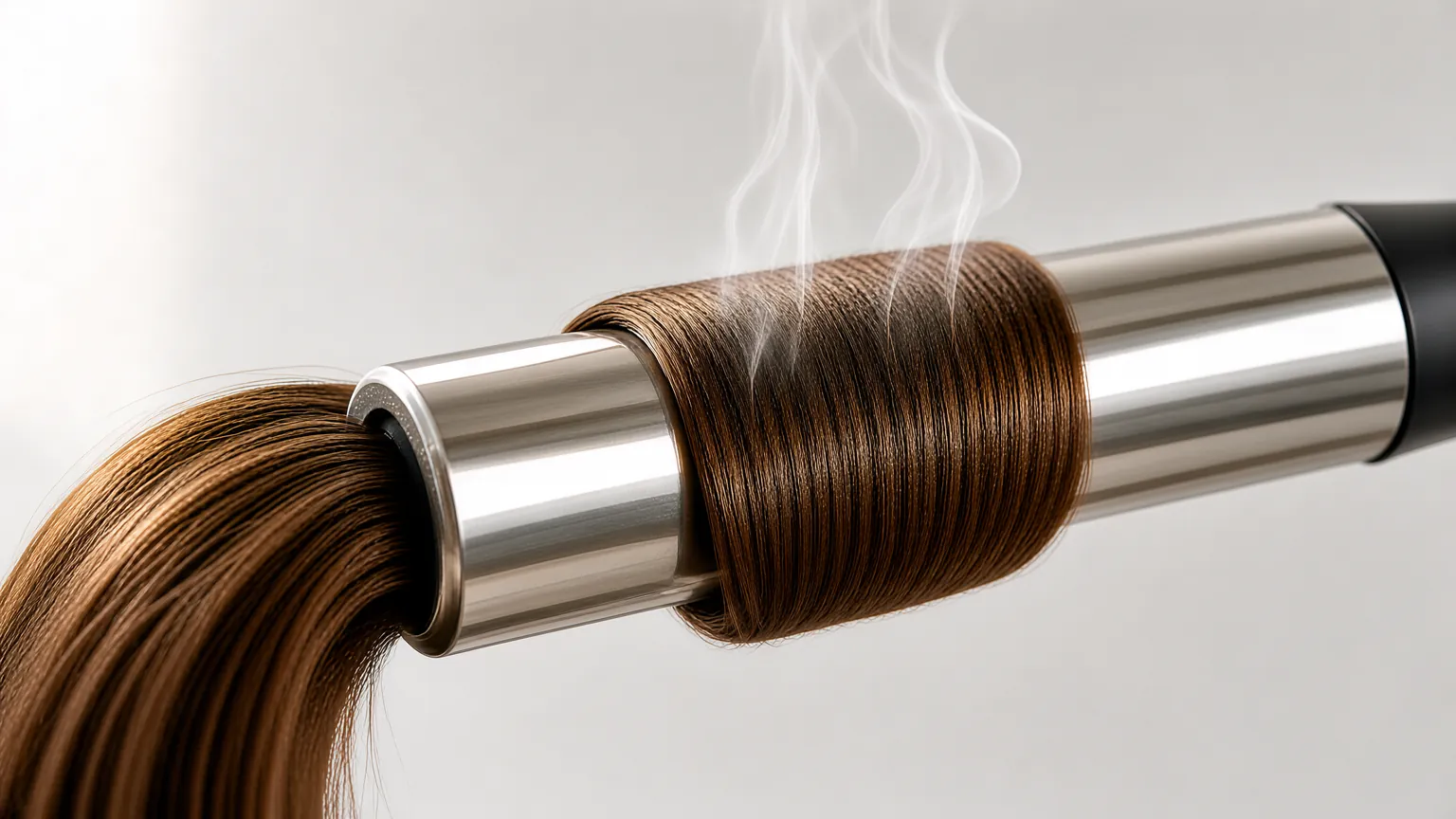
Moisture adds a second problem. A review by M. F. R. G. Dias in the International Journal of Trichology notes that heat applied to wet hair can make water inside the fiber boil, which produces bubbles. That is why a quiet sizzle when the barrel meets a damp section is a warning, not a sign that the curl is setting.
So curling iron burning hair comes down to three things working together: how hot the barrel is, how long hair touches it, and how much water is in the strand. Change one and the risk shifts. Change all three and it drops a lot.
Curling Iron Burning Hair? A Two-Minute Self-Check
Read each statement and note which ones sound like you. The first match is usually the habit to fix first.
- The iron sizzles or steams. You are curling hair that is not fully dry. Dry it completely, then try again.
- Curls fall out unless the dial is at maximum. You are using heat to make up for a different problem, often sections that are too large or hair coated in product.
- Your ends feel rough while the roots feel fine. Ends are older and more worn, and they usually get the longest contact. Shorten the wrap and skip re-curling them.
- You curl every day. Frequency is the issue. Alternate heat-free styles on some days.
- You go over the same section more than once. Each pass adds heat. Make one clean wrap per section.
- You never use a protectant. Add one. It will not fix the habits above, but it does reduce hot spots.
- Your hair is colored, bleached or relaxed. Treated hair tolerates less heat, so start lower and wrap for less time.
Two or more matches mean the routine, not the iron, is the main cause.
What Research Says About a Curling Iron Burning Hair
The most useful public guidance comes from dermatologists. The American Academy of Dermatology advises limiting blow drying and the use of flat or curling irons, using low or medium heat, and applying a product that protects hair from heat. It adds that excessive heat can damage every hair type.
A 2008 AAD presentation on ceramic flat irons gave more specific numbers. The dermatologist cautioned that daily use at the highest settings can damage hair structure. She recommended using the tool only on dry hair, applying a protectant, staying at or below 347 F (175 C) or on a low or medium setting, and limiting use to two or three times a week depending on hair type. The release also cited earlier studies showing that 347 to 419 F held for about five minutes can damage most hair.
There are two honest caveats. First, that work looked at flat irons, not curling irons, so the numbers are a guide by analogy. Second, it is more than a decade old and was presented at a meeting, not published as a trial. Still, the logic of lower heat, less frequency and dry hair carries over because the damage mechanism is the same.
Researchers have also tried to model the problem. A Purdue University dissertation on flat ironing links four settings to damage and curl loss: temperature, gliding speed, number of passes and exposure time. Its abstract does not report how much each one matters, but the list is a useful reminder that temperature is only one of four levers.
What Drives a Curling Iron Burning Hair: Heat, Time and Size
People often focus on temperature alone. This table shows what each lever changes and the easiest fix for it.
| Lever | How it harms hair | Easiest fix |
|---|---|---|
| Temperature | Hotter barrels deliver more heat per second to the cuticle | Start at the lowest setting that holds a curl and raise it only in small steps |
| Contact time | Longer holds let heat keep soaking into the cortex | Shorten the wrap and release as soon as the section feels warm, not hot |
| Section size | Thick sections force you to hold longer and raise the heat | Take thinner sections so the curl sets quickly |
| Moisture | Water in the strand can boil under heat | Dry hair completely before you start |
| Frequency | Damage adds up across days | Alternate with heat-free styles |
| Hair condition | Color-treated or already damaged hair has less margin | Lower heat and a shorter wrap |
Notice that two of the six levers, section size and contact time, cost nothing to change. That is why a patient routine often protects hair better than an expensive tool.
Choosing a Safer Curling Iron
No iron makes heat harmless. Still, some features give you more control, and control is what protects hair.
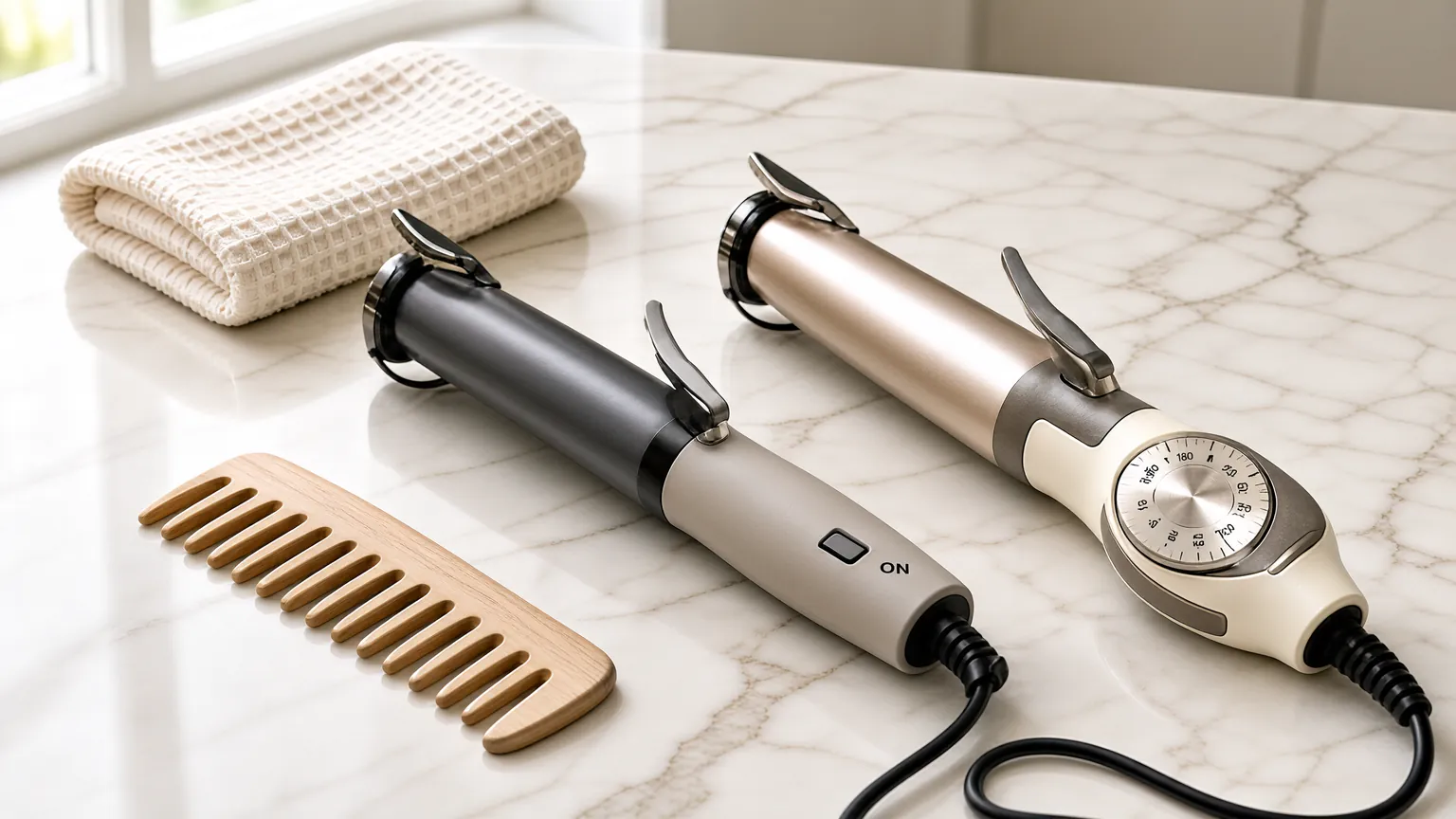
Marketing often confuses two different things: how a barrel is made and how the iron is controlled. The table separates them.
| Feature | What it tells you | What it does not tell you |
|---|---|---|
| Ceramic, tourmaline or titanium barrel | The coating or material used on the barrel | That your hair is safe at any setting. The AAD’s 2008 comment on ceramic irons was “buyer beware”. |
| Adjustable temperature | You can lower the heat for fine or treated hair | The real temperature at the barrel surface, which varies between products |
| Fixed single heat | The iron always runs at its set temperature | Whether that temperature suits your hair. You cannot reduce it. |
| Barrel size | The curl shape you will get | How hot the barrel is |
| Auto shut-off | The iron turns itself off after a time | Anything about hair safety, but it lowers burn and fire risk |
- Adjustable heat. This matters most for fine, color-treated or damaged hair, which tolerates less.
- A heat-resistant tip or glove. These help protect fingers and the scalp while you work.
- Clamp or wand. Clamps hold hair against the barrel, so keep wraps brief. Wands have no clamp and need a glove.
- Stable stand. A good rest keeps the hot barrel off surfaces and away from hair you are not curling.
How to Curl Without a Curling Iron Burning Hair
Follow this order every time. It puts the biggest protective habits first.
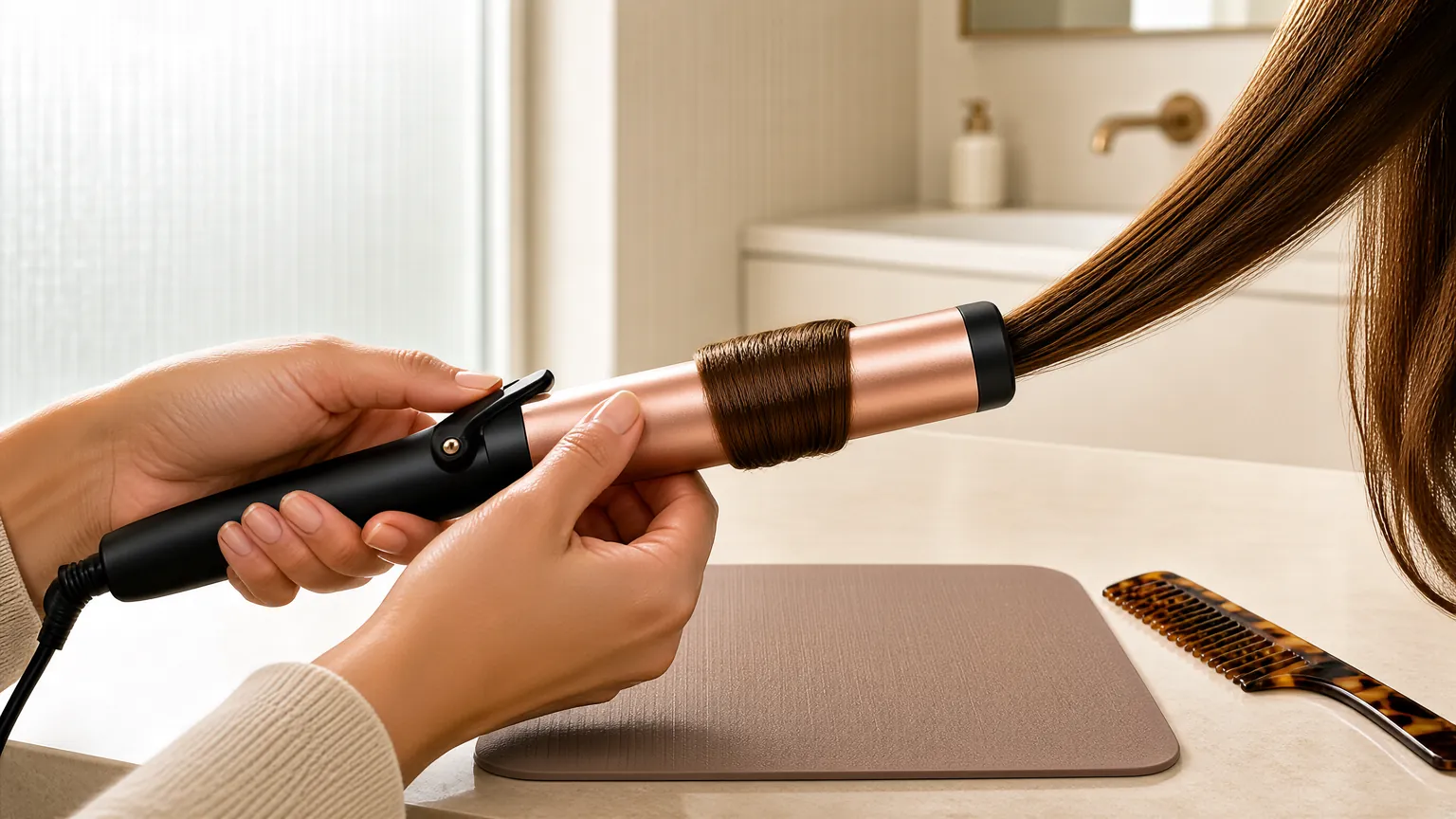
- Dry hair completely. Blow dry on a low or medium setting or air dry. Do not curl until the strands feel dry to the touch.
- Apply a heat protectant. Mist or work it through evenly, then comb it in so no section is missed.
- Start at the lowest setting. Switch the iron on and let it reach temperature before you begin.
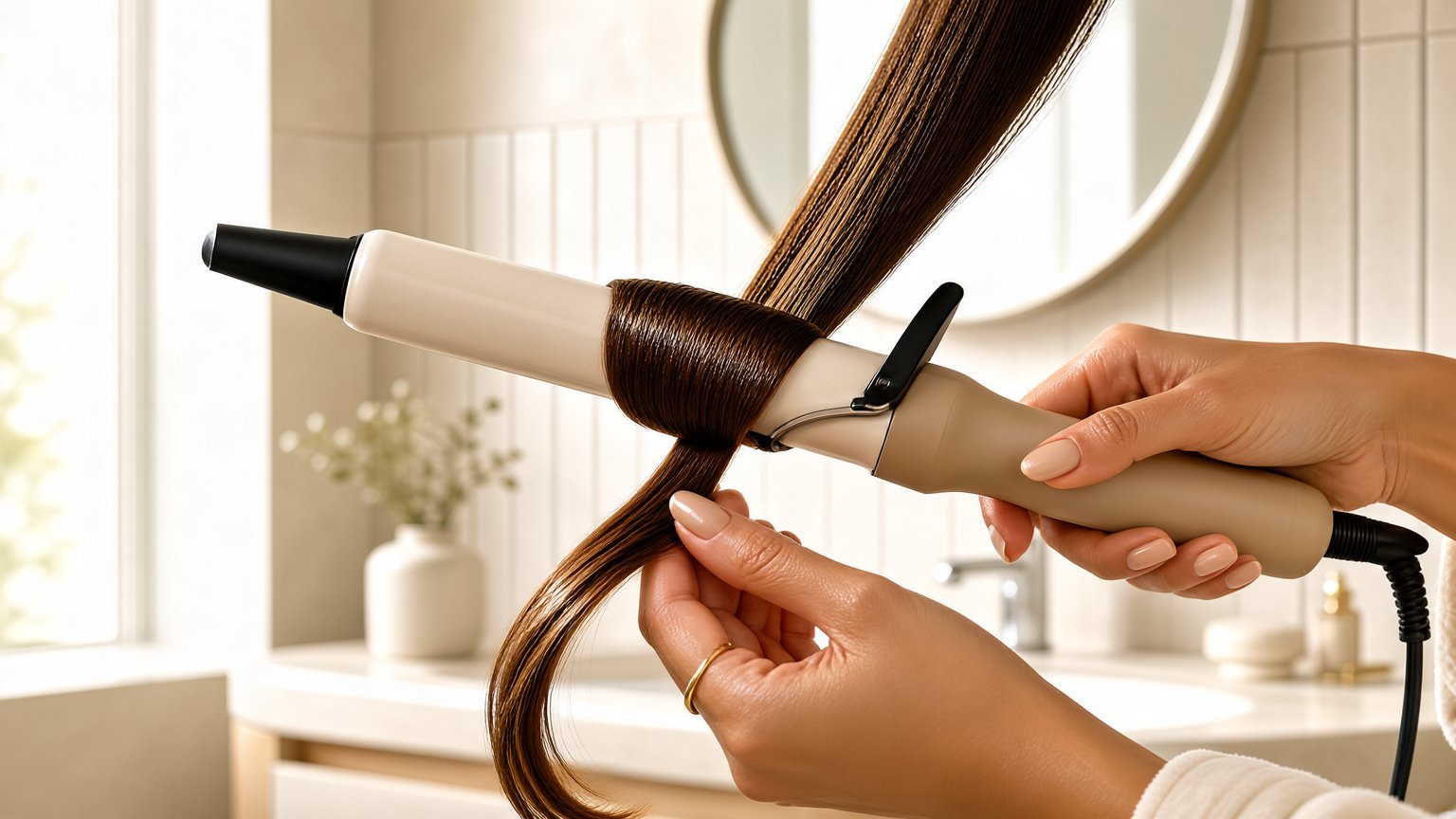
- Divide hair into small sections. Clip the rest out of the way so each piece is thin.
- Wrap and hold briefly. Wrap one section around the barrel and hold for a short count, then release.
- Test the curl. If it sets, keep the same setting. If it drops, raise the heat one notch or thin the section instead of holding longer.
- Let each curl cool before touching it. A curl sets as it cools, so leave it alone for a moment.
- Finish and switch off. Turn the iron off, rest it on its stand, and brush the curls out gently when everything is cool.
Myths About a Curling Iron Burning Hair
- Myth: a higher setting makes curls last longer. Fact: a higher setting mainly adds heat. Better curl memory usually comes from dry hair, thin sections and letting each curl cool.
- Myth: a protectant makes high heat safe. Fact: it helps spread heat, but the AAD still advises low or medium settings alongside it.
- Myth: ceramic irons cannot damage hair. Fact: dermatologists cautioned in 2008 that ceramic flat irons can cause breakage when used too hot or too often.
- Myth: damage only shows up right away. Fact: it often builds across days and weeks, and a protectant or oil can make hair feel smoother at first.
- Myth: damp hair curls faster. Fact: it may seem faster, but water can boil inside the strand under heat.
Do and Don’t
- Curl fully dry hair
- Apply protectant first
- Use small sections
- Start low and adjust slowly
- Rest hair from heat on some days
- Let the iron cool before storing
- Curl damp hair
- Hold a section until it feels hot
- Go over the same piece repeatedly
- Curl hair layered with heavy product
- Use maximum heat as a default
- Touch the barrel to the scalp
Aftercare for Hair That Is Already Damaged
If your hair already feels rough, the first step is to stop adding heat. The AAD’s guidance for hair damaged by hot tools is to avoid heat and chemical treatments, cut off damaged sections and minimize friction. Gentle handling helps too.
The AAD also advises detangling wet hair with a wide-tooth comb, starting at the ends and working upward, because hair is delicate when wet. Blotting with a towel or soft shirt is gentler than rubbing.
Honest Limits
No technique removes heat risk entirely. Every pass of a hot tool applies some stress, so the safest approach is to use it less. Protectants help, but the evidence for exactly how much they help is mostly manufacturer and lab work, not large trials on people.
The temperature figures in this guide come from flat iron research. Curling irons differ in barrel shape and contact pattern, so the numbers are only a guide. Real surface temperatures also vary between products, and many listings do not publish them.
Finally, hair type matters. Fine, bleached and relaxed hair has less margin than thick, virgin hair, so one routine will not fit everyone.
When to See a Professional
A stylist or dermatologist can help when:
- Hair snaps or stretches when wet
- You see patches of breakage or thinning, not only dry ends
- Your scalp is sore, red or blistered after heat contact
- Color-treated hair feels gummy or limp
- You want a cut that removes damage while keeping length
Scalp burns or unexplained hair loss belong with a doctor or dermatologist, not a styling guide.
- Topsy turvy hair tool: how to use it step by step.
Frequently Asked Questions
Why is my curling iron burning my hair?
Usually because of too much heat, too long a hold, or damp hair. Lower the setting, shorten each wrap, and curl only dry hair.
What heat setting is safe for a curling iron?
The AAD advises low or medium heat. Fine, treated or damaged hair does best at the lower end.
Is a heat protectant really necessary?
It is recommended. A review in the International Journal of Trichology says silicone protectants spread heat across the fiber surface, which helps prevent boiling water and bubbles.
Can I curl damp hair?
It is best not to. Water in damp hair can boil under heat, which can damage the strand.
How do I stop a curling iron burning hair at the ends?
Hold each wrap briefly, only until the section is warm and shaped. If it will not set, thin the section or raise the heat a little.
How often is it safe to use a curling iron?
There is no single number. The 2008 AAD advice for flat irons was two to three times a week at most, so use that as a cautious ceiling.
Is a ceramic curling iron burning hair less?
Not necessarily. Ceramic describes the barrel material, and dermatologists have cautioned that ceramic tools can still cause breakage when used too hot or too often.
How do I know if a curling iron burning hair has done damage?
Common signs are dry ends, frizz, split ends, rough texture and breakage. Hair that snaps when wet needs a break from heat.
Can burned hair be repaired?
Not truly. You can trim damaged ends, avoid more heat and handle the hair gently while healthier hair grows in.
Is a curling wand safer than a curling iron?
Neither is automatically safer. A wand has no clamp, so you hold the hair yourself and may need a glove. Heat, time and moisture still decide the damage.
The Bottom Line
Preventing damage from a curling iron is about habits, not a single trick. Curl dry hair, use a protectant, keep the setting low or medium, and let thin sections do the work so you never need a long hold.
Then give your hair regular breaks, handle it gently when it is wet, and trim damaged ends. If breakage or scalp irritation keeps appearing, see a professional. For storing the tools safely between uses, read our guide to keeping hair styling tools organized, and if you travel with a hot iron, see how hair tools are handled at airport security.